Signs a well pump may be failing, and what can imitate pump failure
A submersible pump sits out of sight, so it gets blamed for every symptom at the tap. Some of those symptoms really are the pump. Many are the well, the wiring, the controls or the tank. Diagnose before pulling the pump: this guide shows how each symptom splits.
June 25, 2026 · 8 min read
Pulling a submersible pump on Koh Samui means bringing the whole column of pipe, cable and pump up out of the bore, often from a depth of many tens of metres. It is worth doing when the pump is the problem and wasted when it is not. The difficulty is that a worn pump, a well that has drawn down, a failing capacitor, a tripping protection relay and a waterlogged pressure tank can all produce the same complaint from the tap. What separates them is a handful of measurements and observations made at the surface first.
Diagnose before pulling the pump
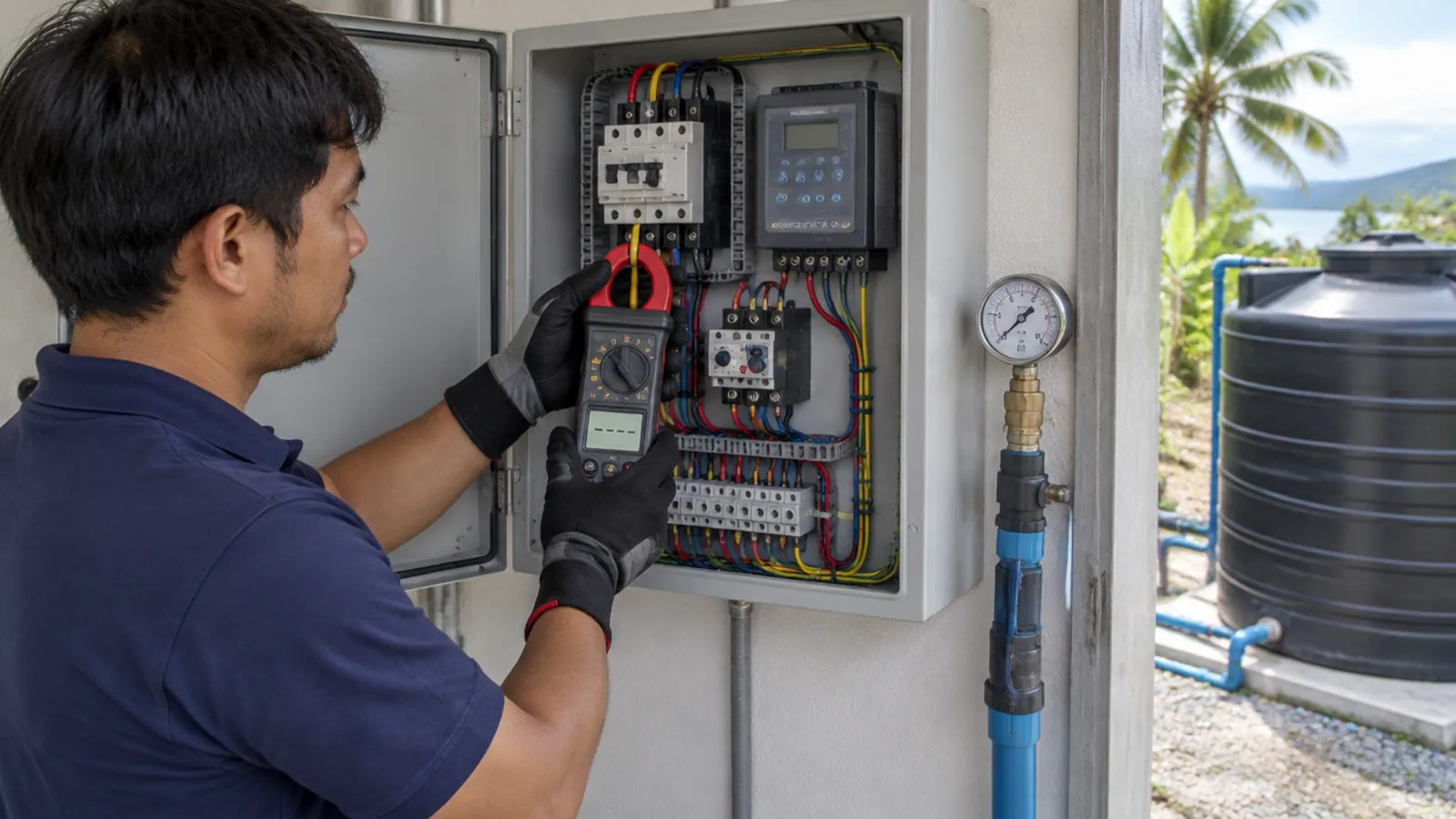
A good diagnosis starts where it is cheap and safe to look: the tank, the gauges, the control panel's indicators and the history of when the problem happens. A technician then measures the pump's supply voltage, its running current and the insulation of the cable down the well, all from the wellhead and panel. Those numbers say a lot about what is happening at the bottom of the bore. Only when they point to the pump, or the evidence is truly inconclusive, does the column come up.
Symptom matrix
Pump, or something that looks like it?
Each symptom has a pump explanation and at least one that has nothing to do with the pump. The last column is what is worth checking before anything is pulled.
No water at all
Could be the pump
Seized motor, failed winding or a broken shaft coupling.
Could also be
No power, a tripped breaker or overload, a failed capacitor or contactor, a damaged cable, or a well that has dropped below the pump.
Check next
Supply at the panel, what the protection relay shows, cable insulation, and the water level in the well.
Low flow from a running pump
Could be the pump
Worn impellers or a partly blocked intake screen.
Could also be
A leak in the rising main, a stuck check valve, a loaded filter or a partly closed valve.
Check next
Running current against the pump's rating, discharge pressure at the wellhead, and the line for leaks.
Tank refills more slowly than it used to
Could be the pump
Pump output falling as it wears.
Could also be
Lower well yield in the dry season, more use than before, or a float valve not opening fully.
Check next
Refill time against previous records, and the water level while pumping.
Pump trips or stops by itself
Could be the pump
A motor drawing too much current as bearings or windings wear.
Could also be
Low or unstable supply voltage, dry-run protection doing its job, or an undersized cable.
Check next
Voltage under load, which protection tripped and when, and whether it follows power cuts or storms.
Pump starts and stops too often
Could be the pump
Rarely the pump itself.
Could also be
A pressure vessel that has lost its air charge, a switch set too narrow, or a leaking check valve or fixture.
Check next
Vessel air pre-charge, switch settings, and whether pressure falls with every tap closed.
Sand, cloudiness or air in the water
Could be the pump
Pump set too low or worn, stirring sediment from the bottom.
Could also be
A well drawn down to its intake, a damaged screen, or air entering through a leak on the suction side.
Check next
Pumping level against pump depth, and when the sand or air appears.
Voltage, current and insulation tests are for a qualified technician with the circuit isolated or properly protected. An owner can note the symptoms, the timing and what the panel shows.
Symptom by symptom
No water at all
This is the symptom that most often leads straight to a new pump, and it is the one that most often turns out to be something else. Before the pump is blamed, someone should confirm that power reaches the panel, that the breaker and overload are set, that the capacitor and contactor are working and that the cable down the well has not been damaged. A protection relay that has tripped on dry-run tells you the well level fell below the pump, not that the pump died. If trips follow storms or power cuts, the panel's protection is the first place to look; our guide to protecting a pump from power cuts explains what it should include.
The pump runs but delivers less
A pump that runs and moves less water than it did may be wearing: sand-worn impellers lose flow gradually. The same symptom comes from a hole in the rising main that sends part of the flow back down the well, from a check valve that sticks, or from a filter between the well and the tank that has loaded up. A pressure reading at the wellhead and a current reading at the panel together help separate a weak pump from a leaking or restricted line. If the weak flow shows up indoors rather than at the tank, the problem is more likely on the house side, which our guide to finding where pressure is lost covers.
The tank takes longer to fill
If you know how long the storage used to take to refill, a longer time is useful information. It can mean the pump is producing less, but on Samui it often means the well is giving less: water levels fall through the dry months and a well can draw down to the point where the pump has less water above it. Measuring the pumping level separates the two. Our guide to how much water a well will produce explains why yield and pump output are different numbers.
The pump trips or cuts out
Protection that trips is doing its job, and the question is what it is protecting against. A motor that draws more current than it should may have worn bearings or windings. Equally, low voltage at the end of a long supply run makes a healthy motor draw more current, and a dry-run relay trips when the well cannot keep up. Writing down when it trips, at what time of day and after what, is the most useful thing an owner can do here.
The pump cycles on and off
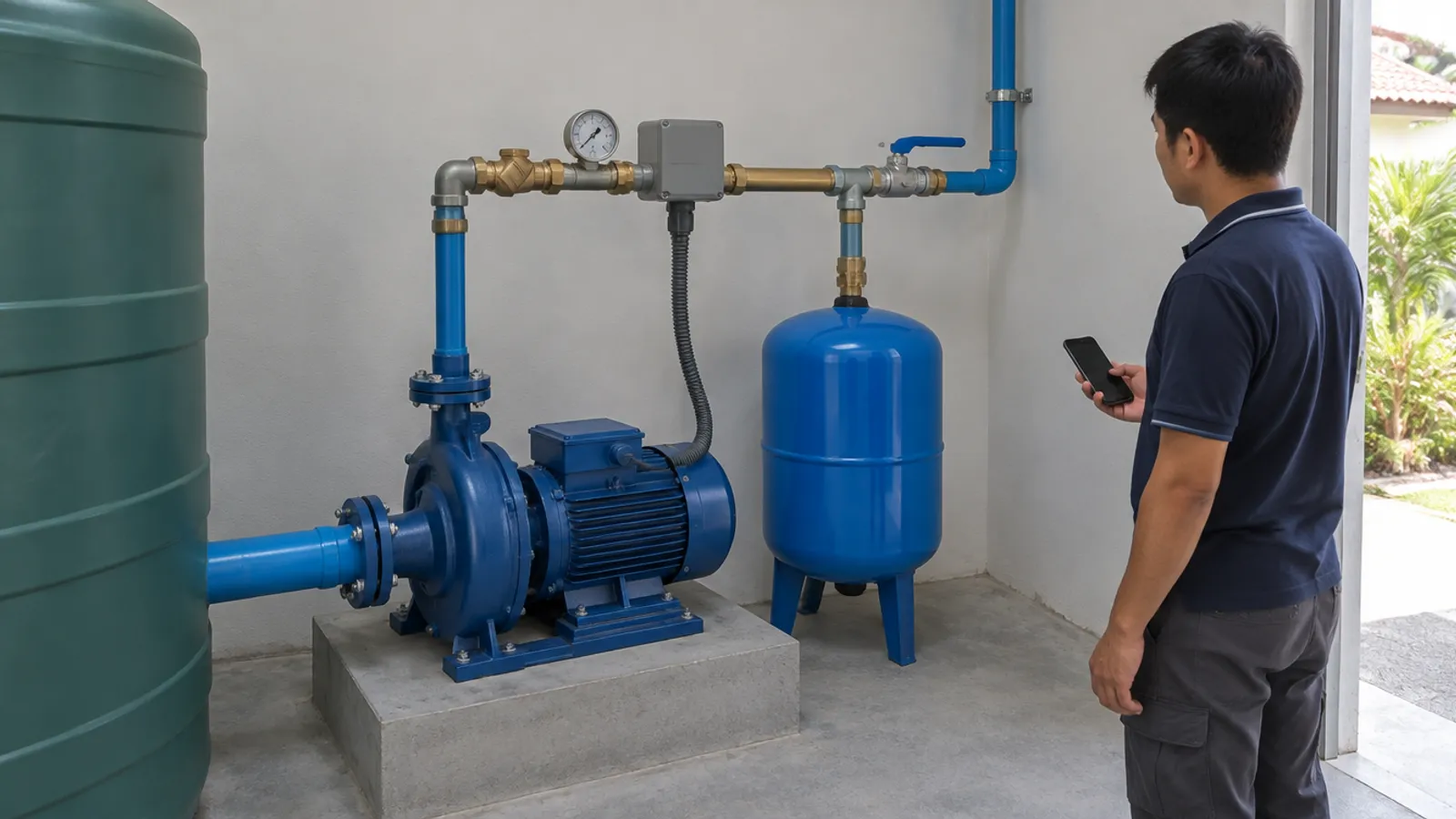
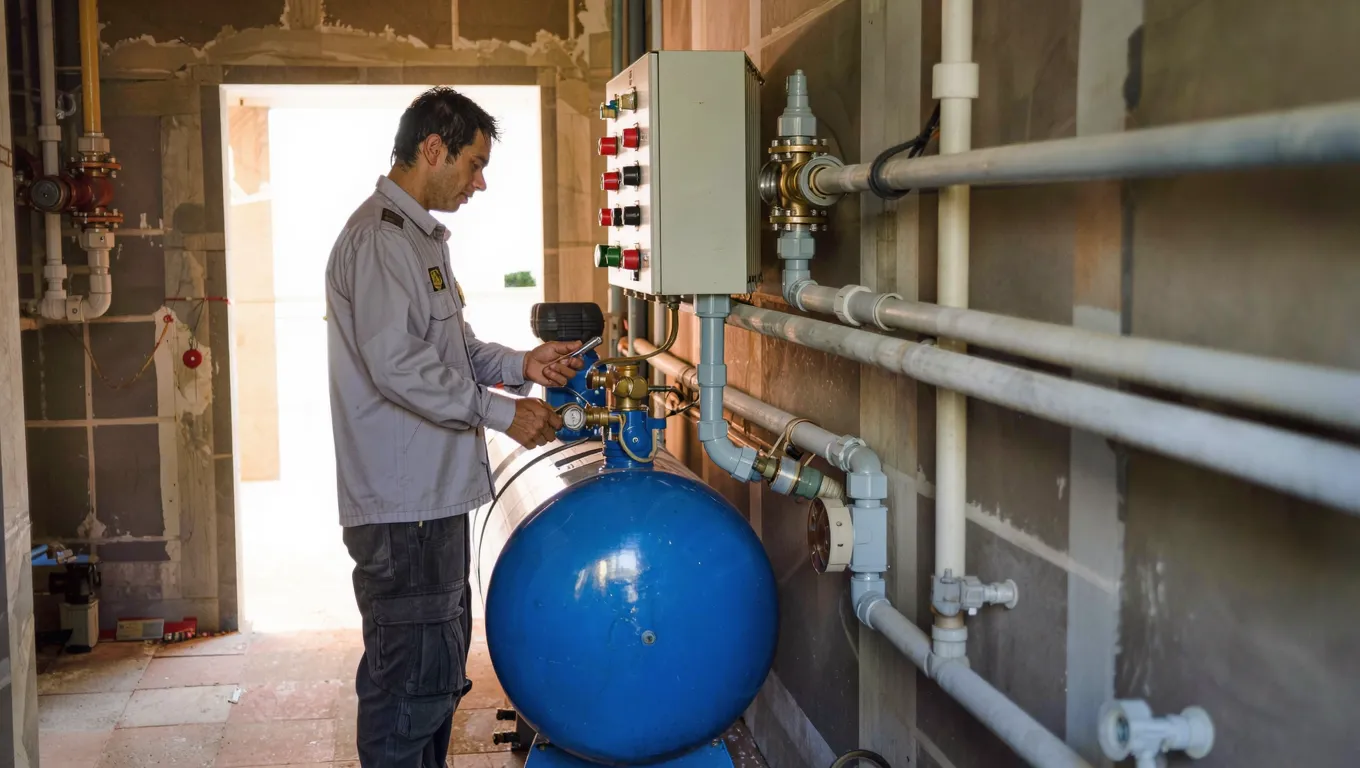
Rapid on-off cycling is almost never the pump's fault, though it shortens the pump's life quickly. The usual causes are a pressure vessel that has lost its air charge, a pressure switch with too narrow a band, or a leak that lets pressure bleed away with every tap closed. It is covered in detail in our guide to a pump that keeps turning on and off.
Sand, cloudiness or air
Sand or air at the tap can come from a pump set too close to the bottom, but more often it means the water level is reaching the pump intake while it runs, or that the well's screen or casing is letting fines through. Air that appears only after long pumping points to drawdown. Our guide to sand and cloudy well water covers the well side of this.
When the pump really is the problem
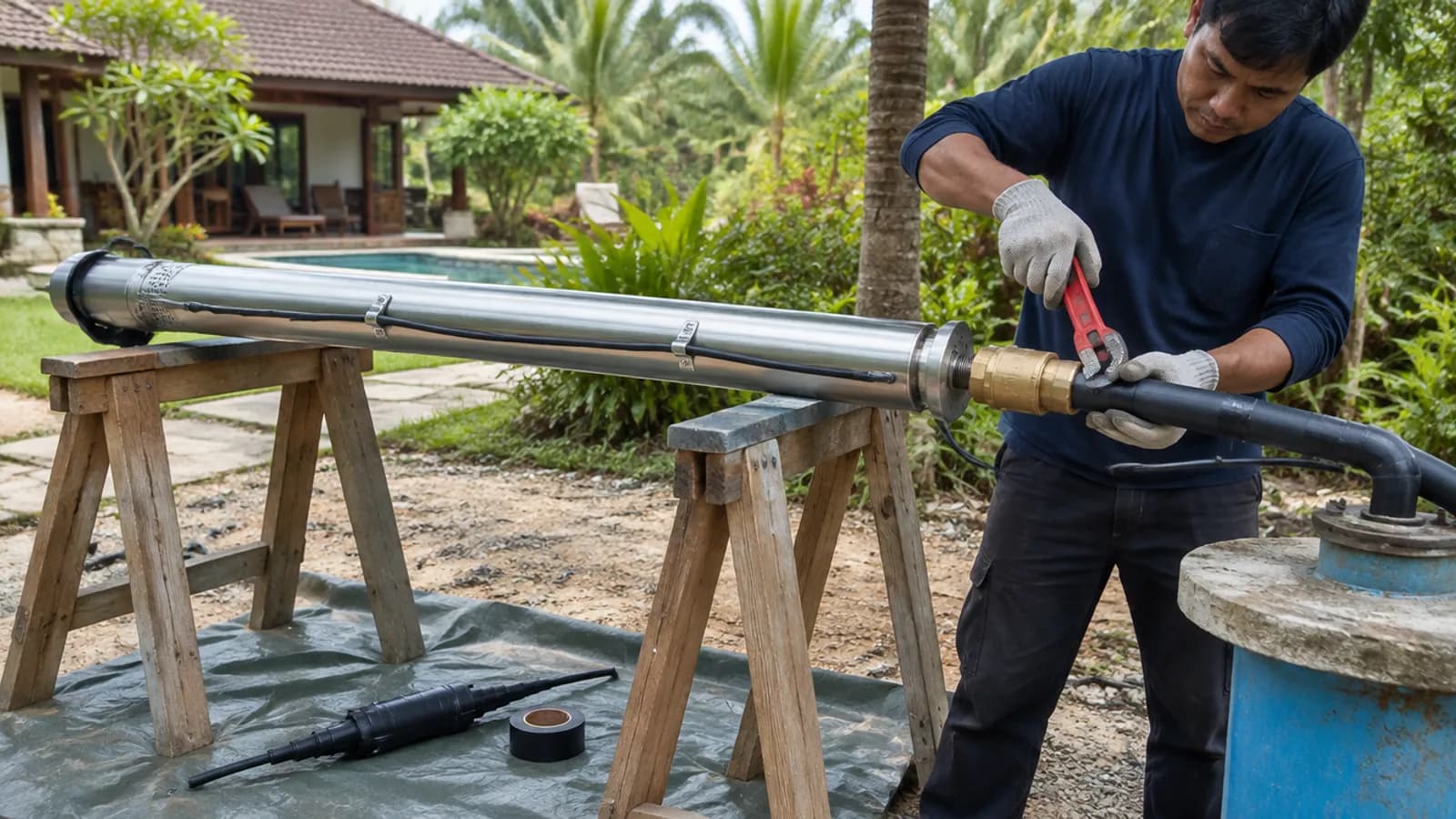
When the supply is sound, the controls work, the cable insulation is good and the pump still draws the wrong current or delivers far less than its rating at the measured level, the pump is the likely cause. Age and sand matter: a pump that has run for many years in a well that carries some sand wears faster. At that point the column comes up, the pump is inspected and either repaired or replaced, and the cable and joints are checked on the way. Our guide to replacing a submersible well pump describes that job step by step.
If something has changed with your pump, tell our pump team what you are seeing before any equipment is replaced: when it happens, what the panel shows and whether the tank is full. A clear description often narrows the visit to one or two causes.
Common questions
Does no water mean the submersible pump has failed?
Not necessarily. A tripped breaker or overload, a failed capacitor or contactor, a damaged cable or a well level below the pump all produce the same dry tap. Those are checked at the surface before the pump is blamed.
Should the pump be pulled before electrical tests?
No. Voltage, running current and cable insulation can all be measured at the panel and wellhead, and they usually show whether the pump is at fault. Pulling comes after those tests point to it.
Can low well yield look like pump failure?
Yes. When the water level falls to the pump intake, flow drops, air or sand appears and dry-run protection trips. The pump is fine; the well cannot keep up with the demand placed on it, which is common late in the dry season.