How often should a private well and pump be serviced on Koh Samui?
The borehole itself asks for very little. The pump, controls and tanks around it are machinery, and machinery rewards being looked at before it stops.
August 27, 2026 · 6 min read
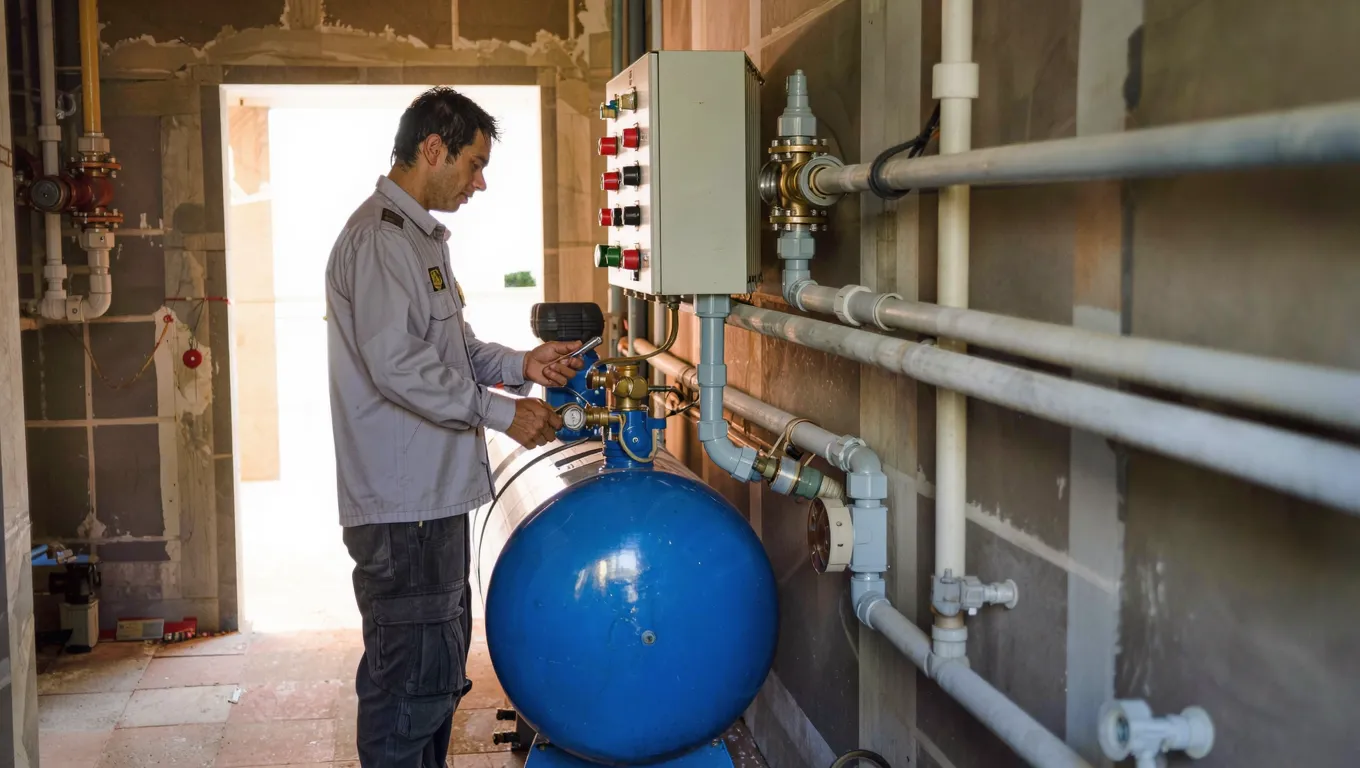
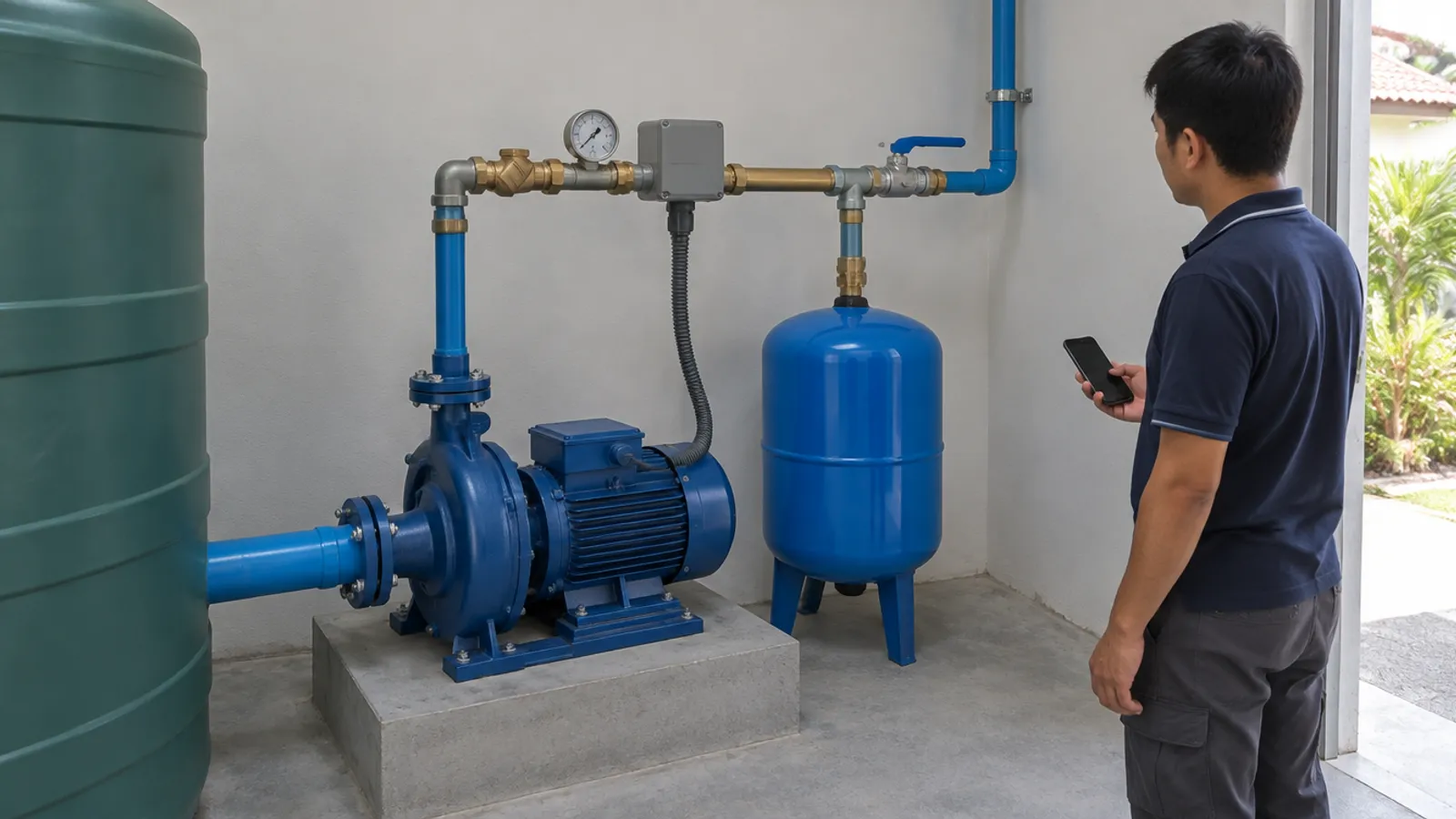
A properly drilled and cased borehole is one of the lowest-maintenance things on a property. It sits in the ground and does its job for decades. What needs attention is everything bolted to it: a submersible pump working underwater around the clock, a control panel taking island power, a pressure tank breathing with every tap opened, valves, floats and filtration. None of that is high maintenance either. It just should not be ignored until the taps run dry.
What actually wears
The submersible pump: the only major moving part, and the one doing all the work.
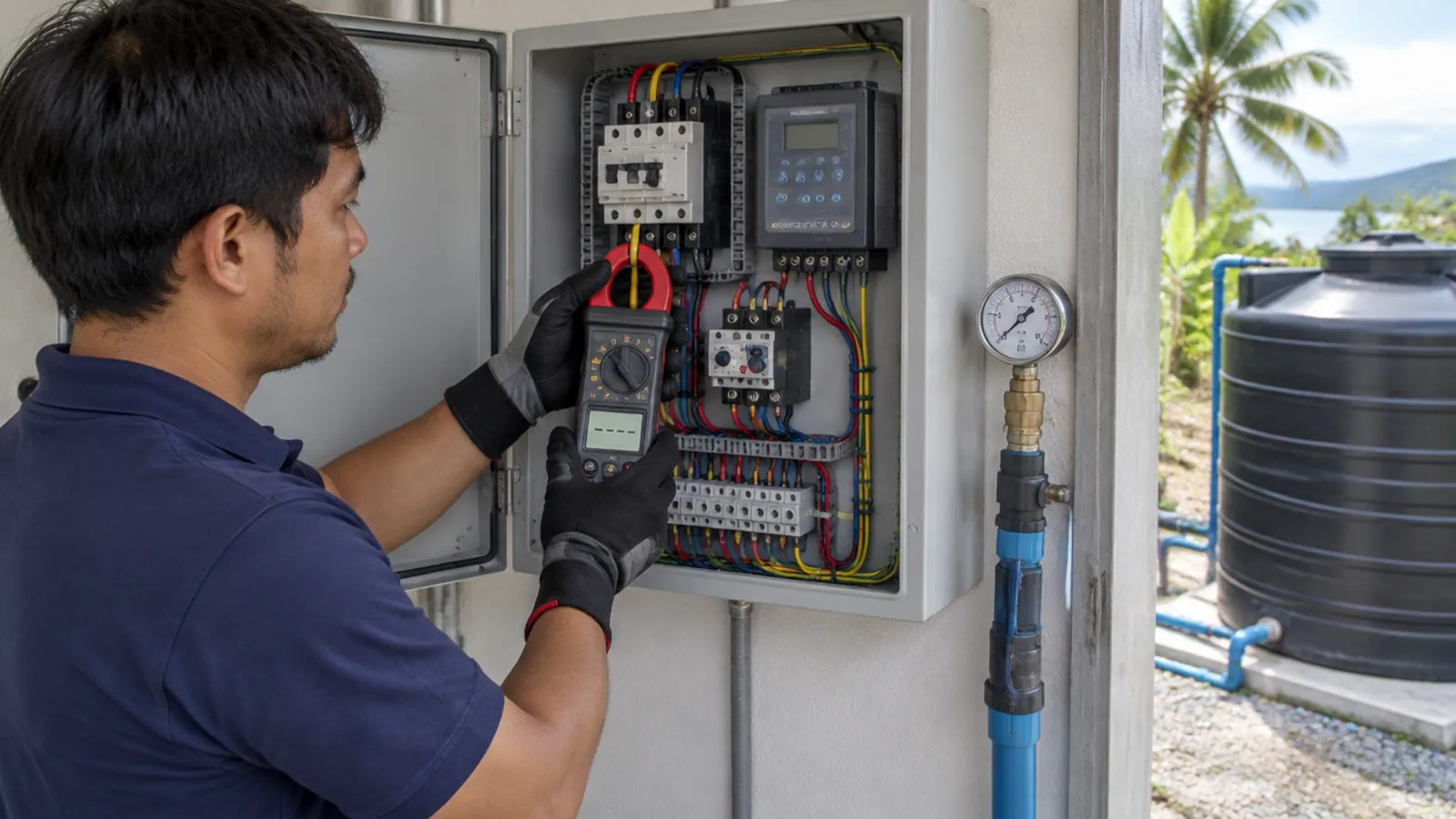
The control panel: contactors, overload and dry-run protection that act dozens of times a day.
The pressure tank: its air charge slowly leaks down, which changes how the pump cycles.
The pressure switch and non-return valves: small parts whose faults imitate big ones.
Cable joints and connections: humidity and time are hard on electrics everywhere on the islands.
Filtration: media and cartridges have a service life, and skipping it undoes the water quality they bought.
What an owner can watch, month to month
No tools needed for any of this. What matters is noticing changes, so a note on your phone with a date beats memory.
Water pressure at the taps: steady, or sagging when two outlets run together?
The electricity bill: a slow climb with no other explanation often means the pump is working harder than it used to.
Water appearance and smell: new cloudiness, sand, colour or odour that was not there before.
Visible leaks or damp around the wellhead, tank connections and pipe runs.
Tank floats and levels, if you have storage: refills should follow the usual pattern.
What a technician should check, roughly yearly
An annual visit is about measuring what an owner cannot see from the outside. The exact interval depends on the system and how hard it works, so treat yearly as a sensible baseline rather than a law.
Motor current draw and insulation, which reveal a pump's condition long before it fails outright.
Dry-run and overload protection: tested, not assumed. A protector that never trips might be set wrong.
Pressure tank pre-charge and switch settings, so the pump cycles the way it was designed to.
Valves, unions and the wellhead seal, including checking that surface water cannot reach the bore.
Flow and pressure against the original figures. Falling numbers point at wear, blockage or a changing well.
A basic water quality check, since gradual changes are easy to miss from the kitchen tap.
Filtration service: backwash performance, media condition, cartridge changes.
When the schedule should be tighter
Yearly suits a typical household. Some systems deserve more frequent eyes: rental villas where a dry tap means refunds, resorts running near capacity in high season, wells with a history of sand or iron scale, and pumps already close to the end of their expected life. For properties like these a maintenance arrangement with scheduled visits, the kind offered under well and pump maintenance, replaces surprises with appointments.
Trends matter more than moments
Almost every genuine emergency we attend was visible earlier as a trend: pressure that faded over months, cycling that got a little faster each week, yield that drifted down season by season. A well whose output has slipped over years can often be brought back, as happened with a rehabilitated well in Bang Por, and a pump replaced on evidence rather than on failure day is a planned job instead of a crisis. If your system was installed without records, a first inspection that documents the pump and its settings gives every future check something to compare against.
Not sure when your system was last looked at? Book a site survey and we will establish where everything stands. The survey is free.
Common questions
Does the borehole itself ever need cleaning?
Not routinely. If yield falls over the years or sediment appears, an inspection can establish whether the screen is scaling up, and a well can often be rehabilitated rather than redrilled.
How long does a submersible pump last?
There is no honest universal number. Sizing, power quality, sediment and how often it cycles all matter more than the calendar. Well-matched pumps commonly run for many years; badly matched ones fail in a couple.
Is an annual check worth it for a small house?
The visit is cheap next to an emergency callout, a burned motor or a villa full of guests without water. For a lightly used house it may be the only attention the system needs all year.
What should I actually write down?
Dates, tap pressure behaviour, anything unusual you hear, the electricity bill, and any water changes. Trends across those few notes catch most developing faults.