Equipment
How to choose a submersible pump for a deep well on Koh Samui
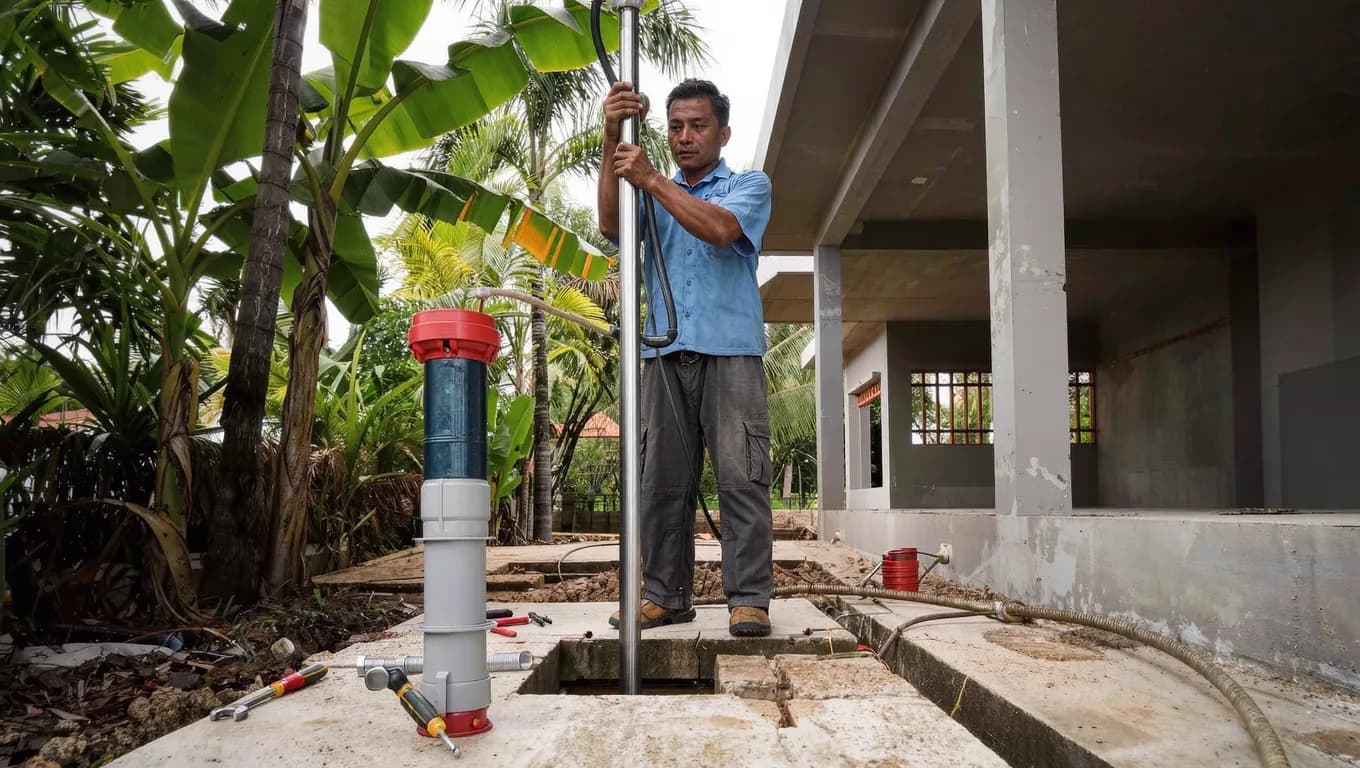
Horsepower is the last number to look at. A pump is matched to what the well can give and what the property needs, and both sides can be measured.
August 27, 2026 · 6 min read
Equipment
The pump at the bottom of your well is the most expensive part of the water system to replace and the hardest to reach. On an island grid, the electricity feeding it does more damage than wear ever will, unless the control panel is built to stop it.
October 7, 2026 · 9 min read
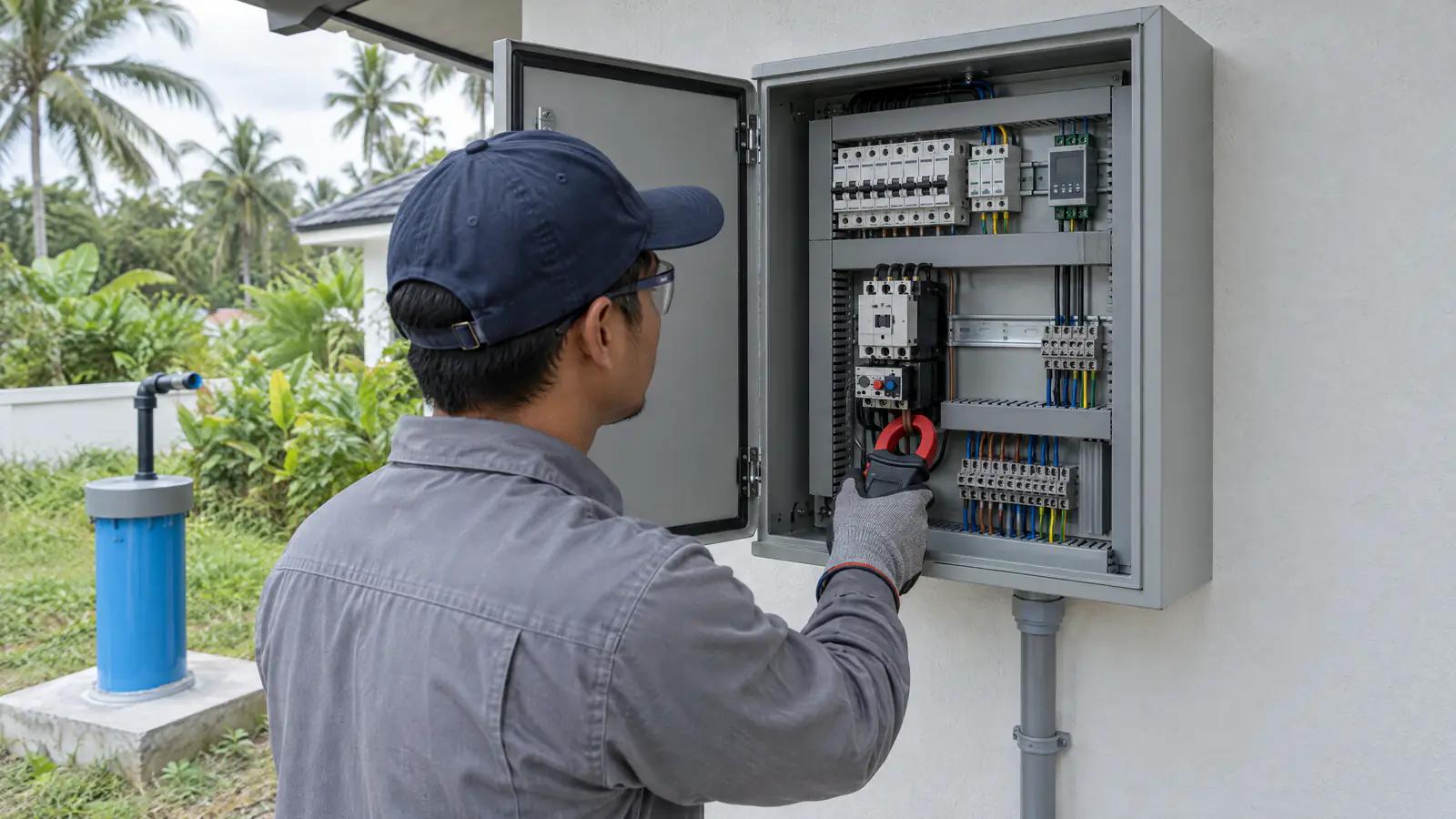
Storms take the power out, high season drags the voltage down at the end of long supply lines, and when the electricity comes back it often arrives in a few hard flickers rather than one clean return. A submersible pump hanging tens of metres down a borehole sees all of it through a long cable, with no one watching. Most of the burnt-out pumps we pull on Samui did not wear out. The supply killed them, and a properly protected control panel would have switched them off first.
This guide covers what a power cut actually does to a villa's water, which electrical faults damage well pumps, the protection a pump panel should carry, and the realistic backup options: generator, storage, or both.
The well pump stops, which matters less than most owners expect, because the house is normally fed from storage rather than straight from the well. What matters is how the house gets water out of that storage. On most villas a booster pump draws from the tank and keeps the taps pressurised. When the power goes, the booster stops too, and a full tank sits there with no way to the showers. The pressure tank holds a small reserve, enough to flush a toilet or wash hands, not to run a household.
Hillside properties sometimes have a real advantage here: a tank set high enough above the house can feed it by gravity, at low but usable pressure, with no power at all. Everywhere else, keeping water during an outage means keeping the booster running, which shapes every backup decision further down. Our overview of how a villa water system works shows where the booster sits in the chain.
Schematic
Each stage stops a different fault. A pump panel missing any of them leaves the motor exposed to that fault.
The island grid: outages, voltage sag at the end of long lines, spikes on return.
Optional backup, sized for the pump's starting current, not just its running load.
Connects the house to either mains or generator, never both, so the generator can't feed back into the grid.
Diverts voltage spikes to earth before they reach the panel and the cable down the well.
Disconnect on short circuit and protect people from earth leakage.
Keeps the motor off when voltage is too low or high or a phase is lost, and delays restart after power returns.
Contactor, motor overload set to the nameplate current, and the start capacitor on single-phase motors.
Starts the well pump when the tank needs water and stops it when full.
Stops the pump when the well level falls to the intake, by a level probe or by sensing the motor's low load.
The asset being protected, plus a drop cable sized for its length and current.
| Fault | Protection | What it does |
|---|---|---|
| Voltage spikes and lightning | Surge protective device | Clamps the spike and sends it to earth; needs a good earth to work |
| Overload, jammed pump | Thermal overload or motor protection relay | Trips when current stays above the motor's rating |
| Low or high voltage, lost phase | Voltage and phase-failure relay | Holds the motor off outside the safe range |
| Flickering return of power | Restart delay | Waits until the supply has settled before starting |
| Well drawn down to the intake | Dry-run protection | Stops the pump before it runs without water |
| Rapid on-off cycling | Correct pressure and level settings, minimum run time | Keeps starts per hour within the motor's limit |
| Earth leakage | RCD and proper earthing | Protects people working on or near the system |
Devices only protect if they are set correctly. An overload left at a default setting far above the motor's nameplate current will watch the pump burn. Settings belong on a label inside the panel door, written down by whoever commissioned it.
A submersible motor is cooled by the water flowing past it. Run it without water and it overheats in minutes, while the pump end wears on itself. On Samui this happens most at the end of the dry season, when wells sit lower and gardens demand more. It also happens with any pump that draws more than its well can give, which our article on a pump that keeps turning on and off covers in detail.
There are two common ways to sense it. Level probes hung in the well stop the pump when the water falls below them. Electronic motor protection watches the current and recognises the light load of a pump moving air instead of water. Either works if it is installed and left in service. The dangerous moment is after a nuisance trip, when someone bridges the protection out to get water flowing "for now" and nobody puts it back. If your dry-run protection trips often, the trips are telling you something about the well or the pump size. They are not a fault in the protection.
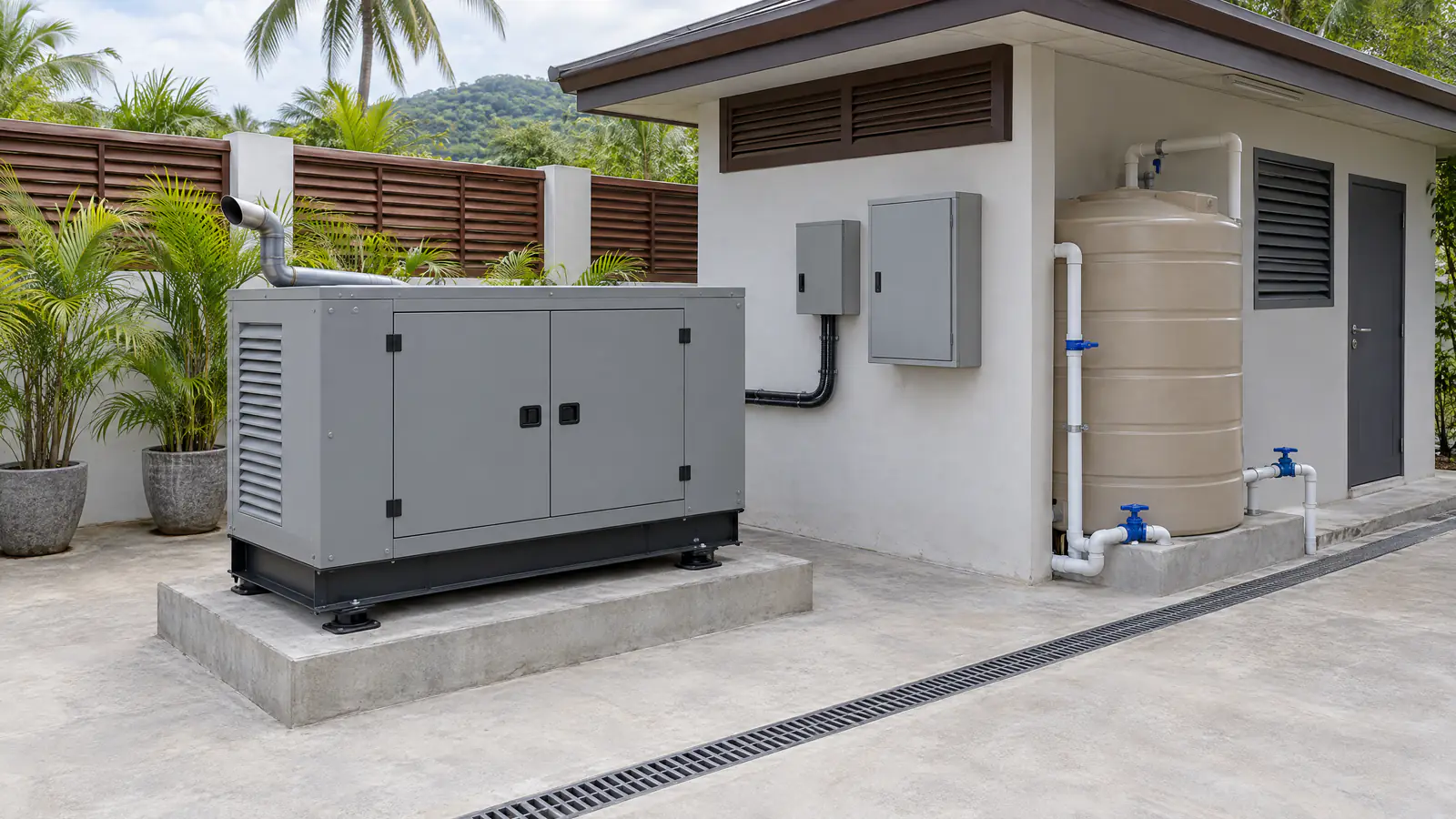
Start with storage, because it is the cheapest backup and needs nothing to start. A villa with a day or two of water in its tanks barely notices a short outage, provided the booster pump keeps working. That makes the realistic question: what keeps the booster running? Our guide to storage tank size covers how much buffer a villa needs.
These are owner-level checks. Anything inside the panel beyond reading its indicator lights is work for a qualified electrician. Our checklist of warning signs that a well pump is failing covers the symptoms that come before a breakdown.
If the pump does not come back after an outage, the fault is proven above ground before anything is pulled; see replacing a submersible pump for the diagnostic sequence.
If your pump trips, hums or stops working after power cuts, ask us to inspect the panel and its protection. We check what is fitted against what the motor and the island supply need, then install or upgrade the pump and its controls so the next storm costs you nothing.
Equipment
Horsepower is the last number to look at. A pump is matched to what the well can give and what the property needs, and both sides can be measured.
August 27, 2026 · 6 min read
Equipment
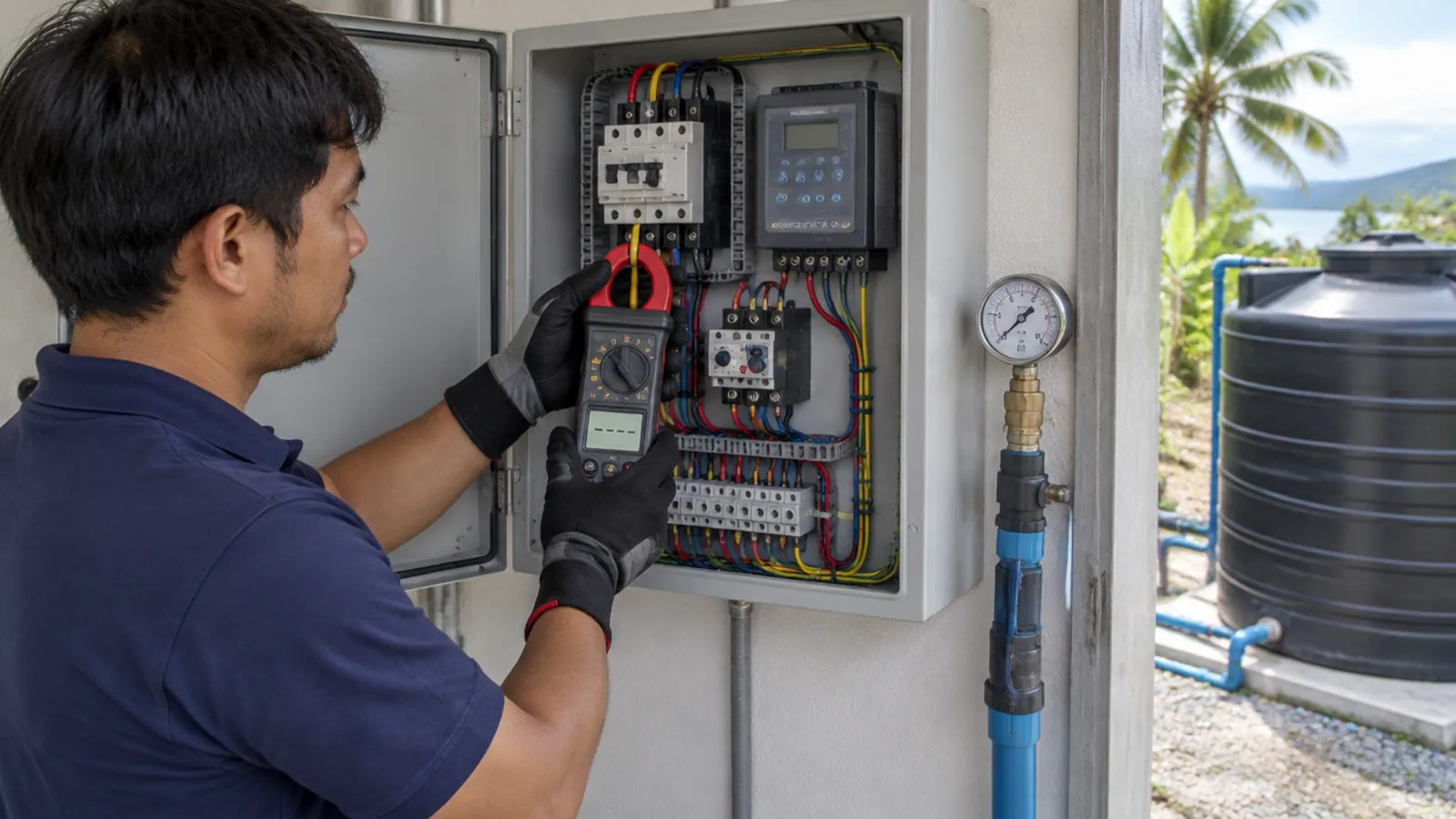
A submersible pump sits out of sight, so it gets blamed for every symptom at the tap. Some of those symptoms really are the pump. Many are the well, the wiring, the controls or the tank. Diagnose before pulling the pump: this guide shows how each symptom splits.
June 25, 2026 · 8 min read
Equipment
The right tank is a buffer against the gaps in your supply — sized from how many people use the water and how long resupply really takes.
June 22, 2026 · 5 min read