How to choose a submersible pump for a deep well on Koh Samui
Horsepower is the last number to look at. A pump is matched to what the well can give and what the property needs, and both sides can be measured.
August 27, 2026 · 6 min read
Ask three shops for a well pump and you will usually get three horsepower numbers and not much else. That is backwards. A submersible pump is matched to a specific borehole and a specific property. Both sides of that match can be measured, and on an island where wells a hundred meters apart behave differently, measuring beats guessing every time.
Why horsepower is the wrong starting point
Horsepower describes how much power the motor draws. It says very little about whether the pump suits your well. Two pumps with the same rating can deliver completely different flow at depth, and the model that works perfectly in a neighbour's bore can be wrong in yours. The well itself sets the limits: how deep the water stands, how far the level drops under pumping, and how much it can give hour after hour without being pulled down to the intake.
The four numbers that actually size a pump
Static water level: where the water stands in the casing when nothing is pumping.
Dynamic water level: where the level stabilises while the pump runs. The drop between the two is called drawdown.
Sustainable yield: the flow the well holds steadily over time. This comes from test pumping, not from estimates.
Required flow and pressure: what the property draws at its busiest hour. Bathrooms, kitchen, laundry, irrigation and pool top-up all stack.
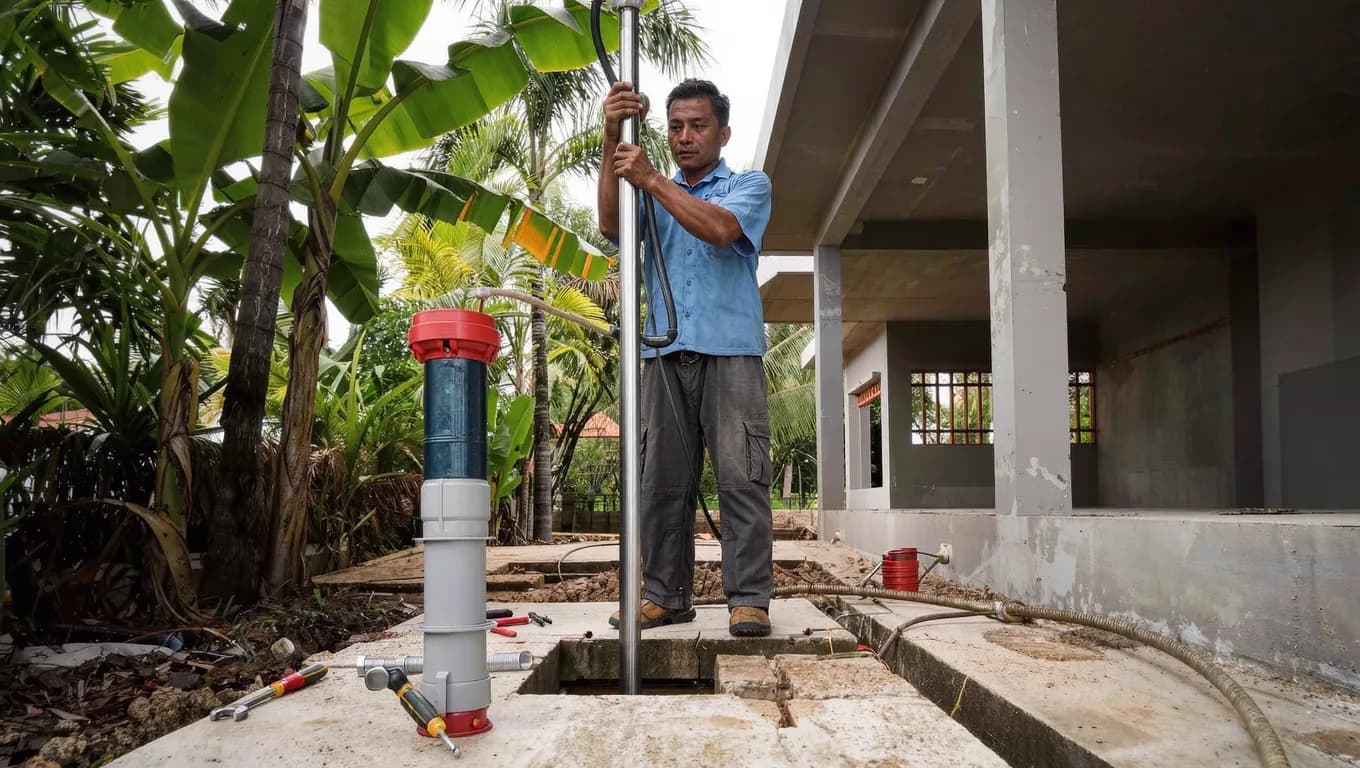
The pump has to lift water from the dynamic level, not the static one, push it through the riser pipe and the supply line with their friction losses, and still arrive at the tank or the taps with usable pressure. Engineers fold all of that into a single figure called total dynamic head. Every pump model has a performance curve showing the flow it delivers at a given head. Proper selection means placing your well's numbers on that curve. A horsepower figure on its own places nothing.
Why a bigger pump makes things worse
Oversizing feels like playing it safe. It is the opposite. A pump that moves more water than the bore can recharge drags the level down to its own intake, starts drawing air, runs hot and wears out early. Dry-running protection will cut the motor before it burns out, but a system that leans on its protection every afternoon in the dry season is a badly specified system, not a protected one.
The reliable order is simple. Drill the bore, develop it, then test-pump it and record the static level, the drawdown and the stabilised yield. Those numbers, plus the property's real demand, define the pump. If the well was drilled and tested properly, as part of deep well drilling on Koh Samui, the test report already contains everything a specification needs.
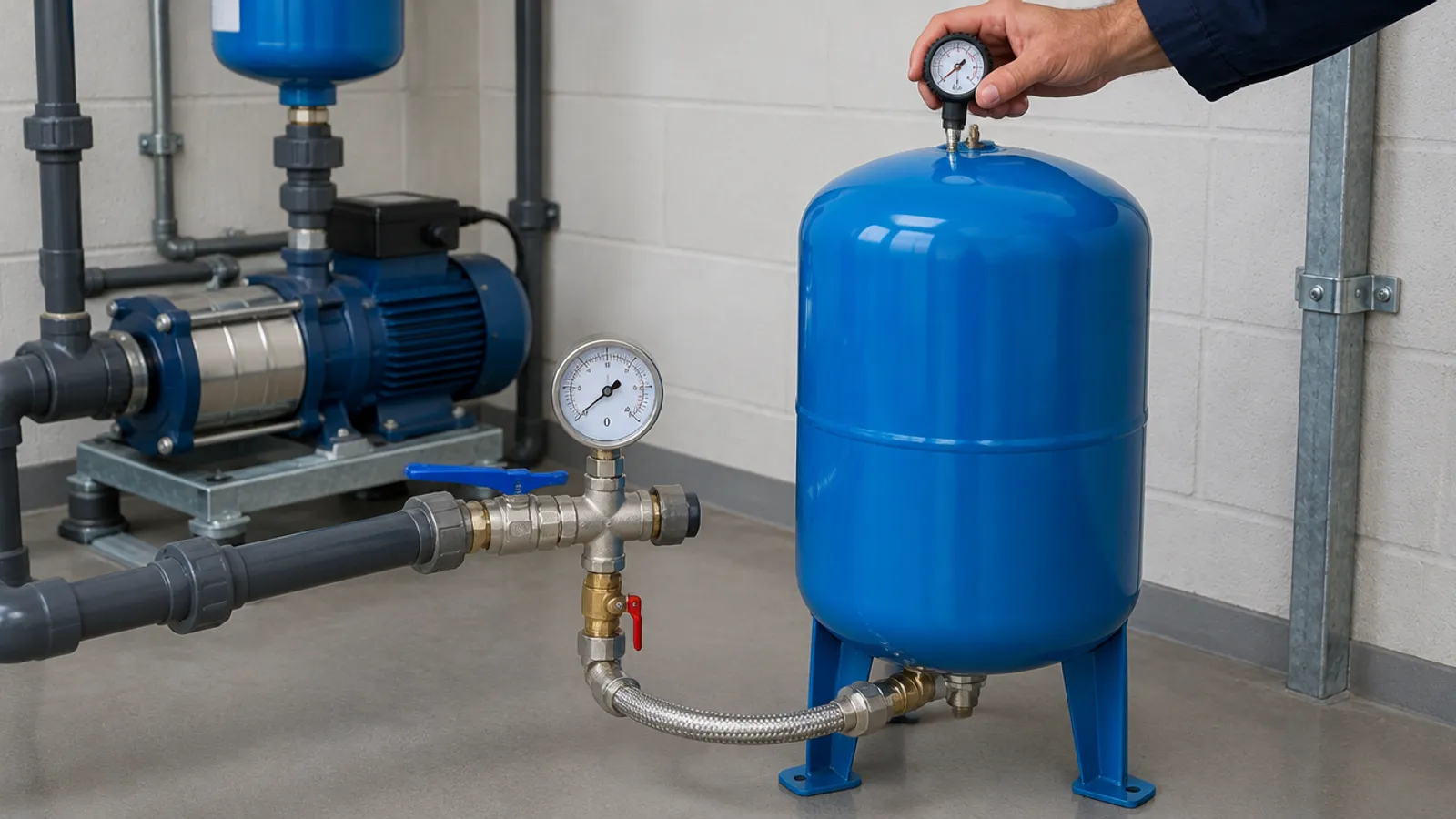
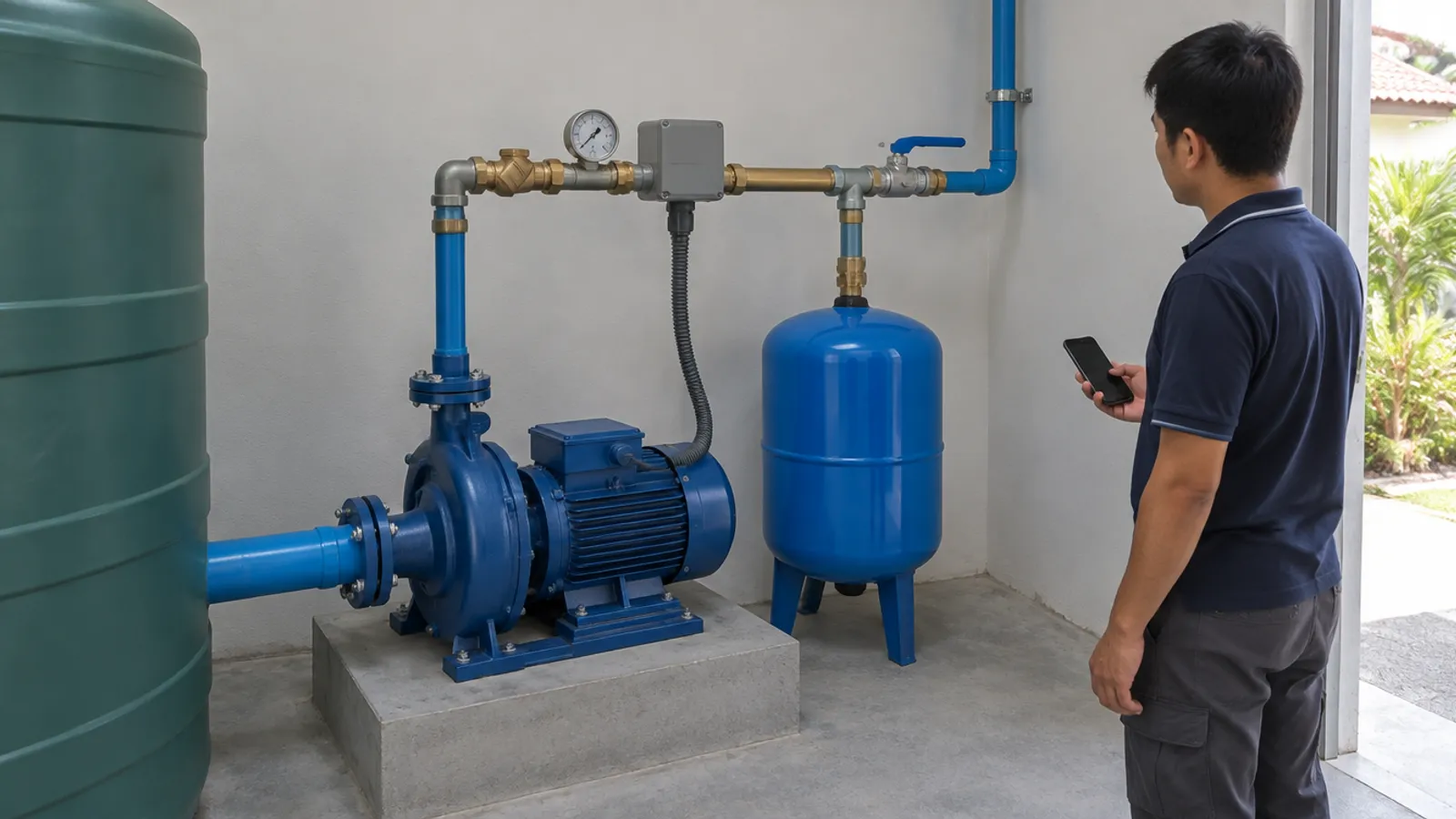
Electrics deserve the same care as hydraulics here. Properties at the end of long island supply lines see voltage sag and surges, so the control panel should carry overload, dry-run and surge protection sized to the motor. Single-phase pumps cover most households. Three-phase motors earn their place on resorts, shared systems and heavy irrigation, where the demand genuinely justifies them. What each protective device does, and how to keep water through power cuts, is covered in power cuts and electrical protection for well pumps.
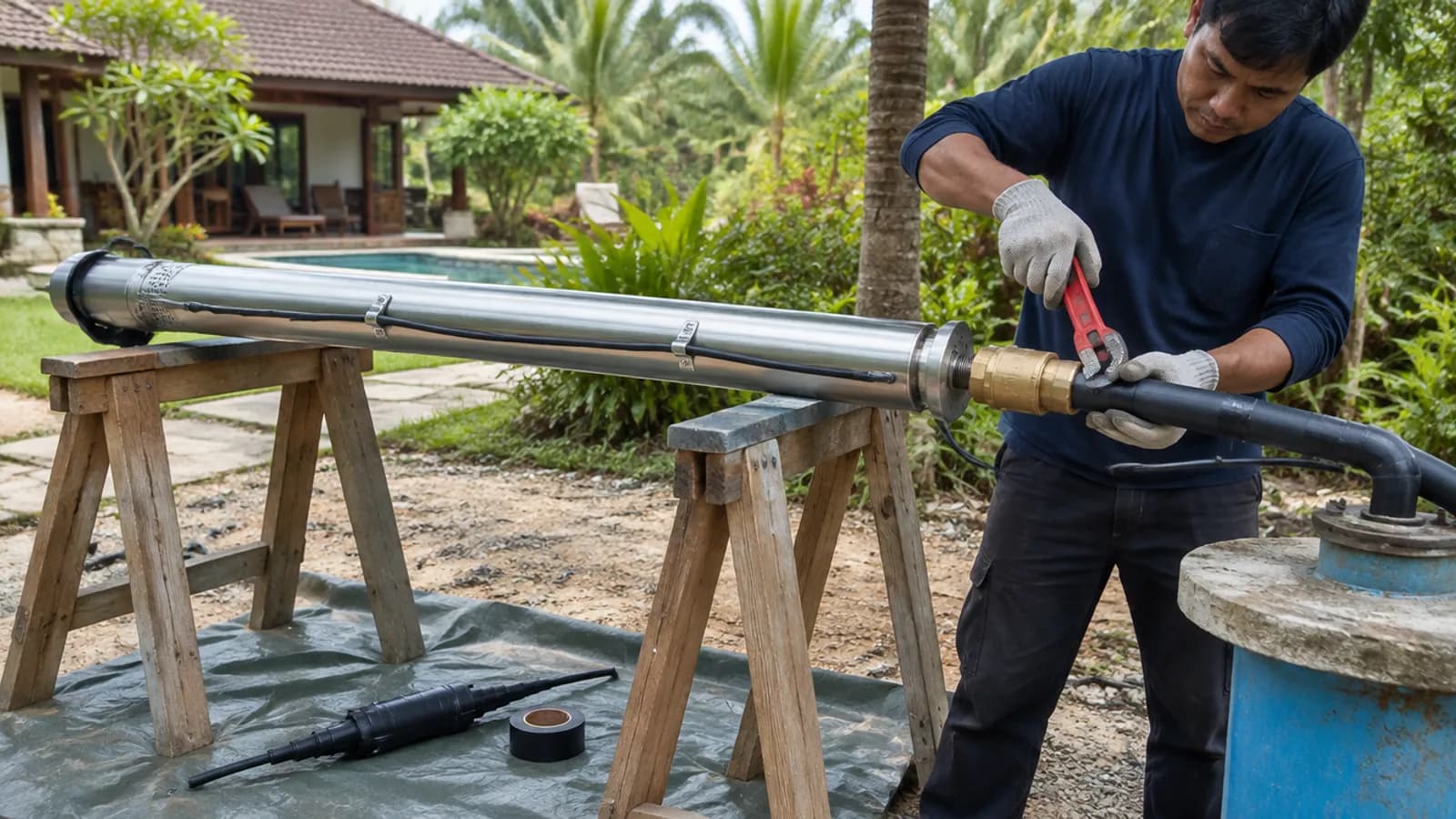
If the pump you are choosing replaces one that failed, size it from today's measurements rather than the old nameplate; replacing a submersible pump explains why the same model again is often wrong.
If you are sizing a pump for a new bore, or replacing one that keeps failing, pump installation starts with the well data. Where that data is missing, a free site survey is the quickest way to get it.
Common questions
Can I just replace my old pump with the same model?
If the old pump ran reliably for many years, a like-for-like swap can be reasonable. If it failed early or has failed more than once, copying it repeats the mistake. Check the well data before buying anything.
What is drawdown and why does it matter?
Drawdown is how far the water level drops between standing and pumping. It decides the depth the pump must lift from in real use. A pump sized to the standing level alone will underperform, or run dry, once the level settles lower.
Single-phase or three-phase?
Most villa and household pumps run happily on single-phase. Three-phase suits larger motors on resorts, developments and shared systems, and only where three-phase supply actually reaches the property.
Does pipe size really matter?
Yes. Friction in an undersized pipe eats head that the pump then has to supply. The pipe run between well, tank and house is part of the calculation, not an afterthought.