How well yield is actually measured, and why one flow number does not tell the whole story
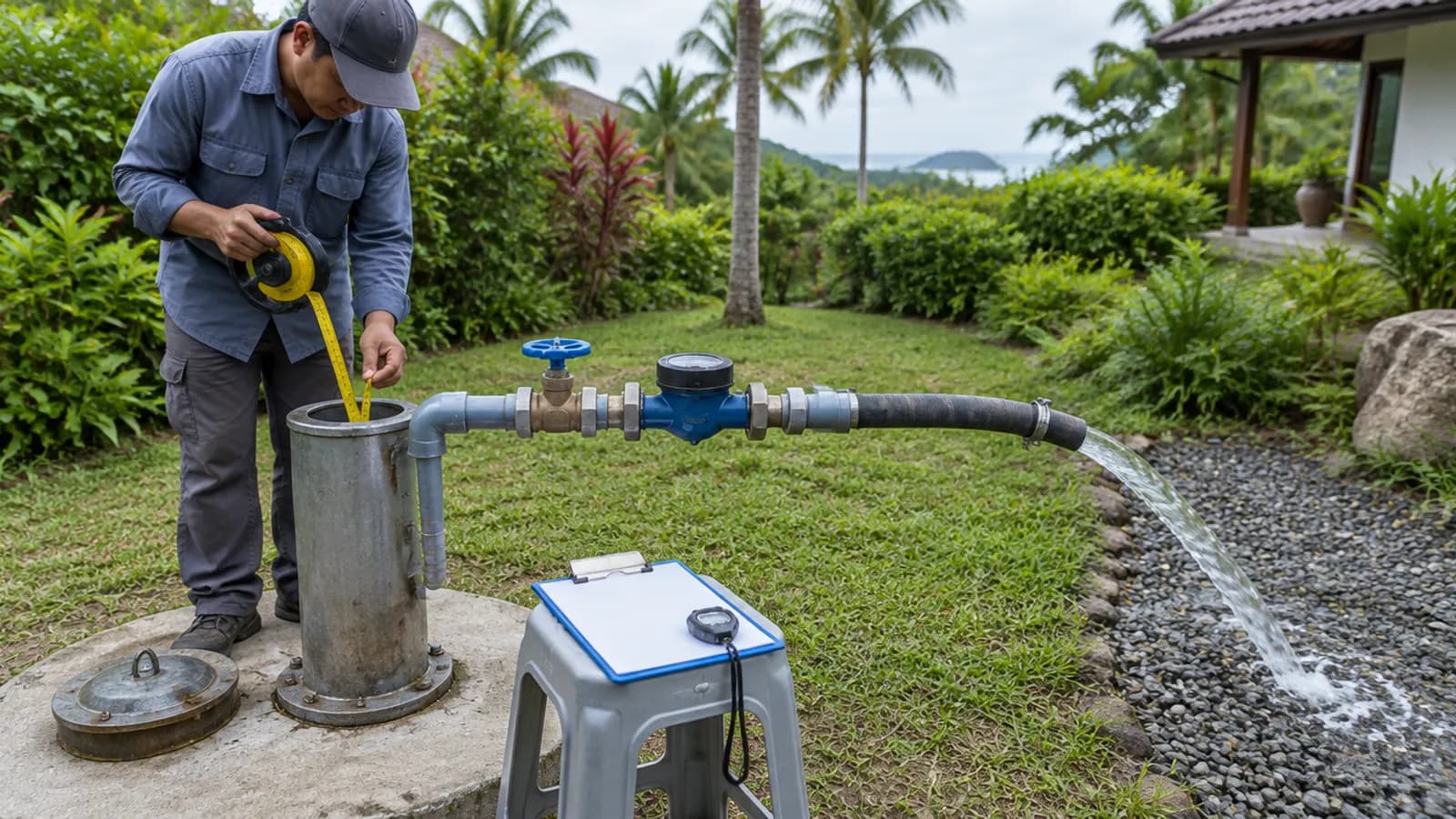
"The pump gave 40 litres a minute" sounds like an answer, but it describes the pump on one afternoon, not what the well can keep giving. Yield is read from the water level: how far it falls while pumping, whether it settles, and how it comes back afterwards.
July 10, 2026 · 9 min read
Imagine a new well where the pump was switched on and filled a bucket fast enough to work out 40 litres a minute. Five minutes later everybody is pleased. But for those five minutes most of that water came from the column already standing in the bore, not from the rock around it. Run the same pump for an afternoon and the level inside the well may keep falling until the pump runs dry, or it may settle and hold. Those two wells looked identical in the first five minutes. Telling them apart is what a yield test is for.
The numbers a yield test actually records
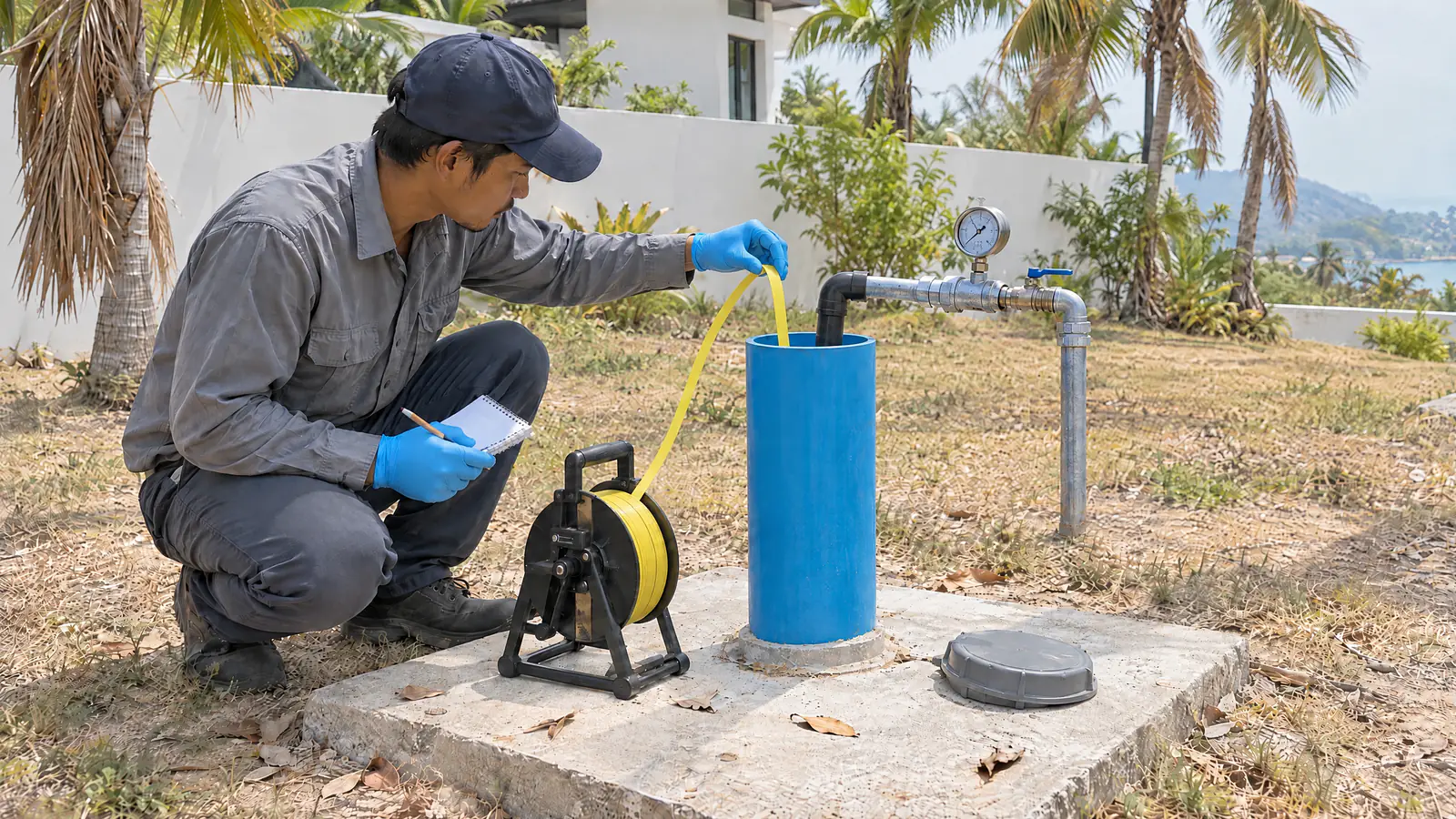
Static water level: how far below the ground the water stands after the pump has been off long enough for it to settle.
Pumping rate: how much water is being taken out, measured with a meter or by timing a known volume.
Pumping water level: where the level sits inside the bore while that rate continues.
Drawdown: the difference between the static and the pumping level. It shows how hard the bore is working at that rate.
Recovery: how quickly, and how fully, the level climbs back after the pump stops.
Time: every reading is written down against the clock, because the shape of the change matters more than any single value.
Conceptual drawing
What a yield test watches: the level, not the tap
Left, the bore while pumping. Right, the water level over the course of a test. The shapes are illustrative, not measurements from a real well.
1
Static water level
Where the water rests before pumping starts. Every other reading is compared with it.
2
Pumping water level
The lower level inside the bore while the pump runs at a steady rate.
3
Drawdown
The gap between the two. A small, stable drawdown means the rock is supplying the rate easily.
4
Pump
Set below the lowest expected pumping level, with a margin, so it never draws air.
5
Cone of depression
Pumping lowers the water around the bore too, steepest close to it.
6
Pump starts
The level begins to fall as water leaves faster than the rock replaces it.
7
Drawdown phase
A fast fall at first, while the water stored in the bore itself is used up.
8
Stabilisation
The level settles: the rock now supplies what the pump takes. This is the rate worth trusting.
9
Pump stops
The test ends, and the timing of the recovery begins.
10
Recovery
The level climbs back towards the static level. How fast, and how far, says how well the ground refills the bore.
11
A rate the bore cannot hold
The dashed curve never levels off. At that rate the pump would eventually run the well dry.
Conceptual. Real curves vary from well to well; the test length and rates are chosen for the bore and its intended use.
Why five minutes at 40 litres is not a yield
A bore is a column of standing water before the pump starts. The first minutes of pumping mostly empty that column, which is why almost any well looks generous at the start. What matters is the flow that keeps arriving through the fractures once that stored water has gone. A short burst cannot show it. A test long enough for the level to settle, or to show clearly that it will not, can.
Pump capacity is not bore yield
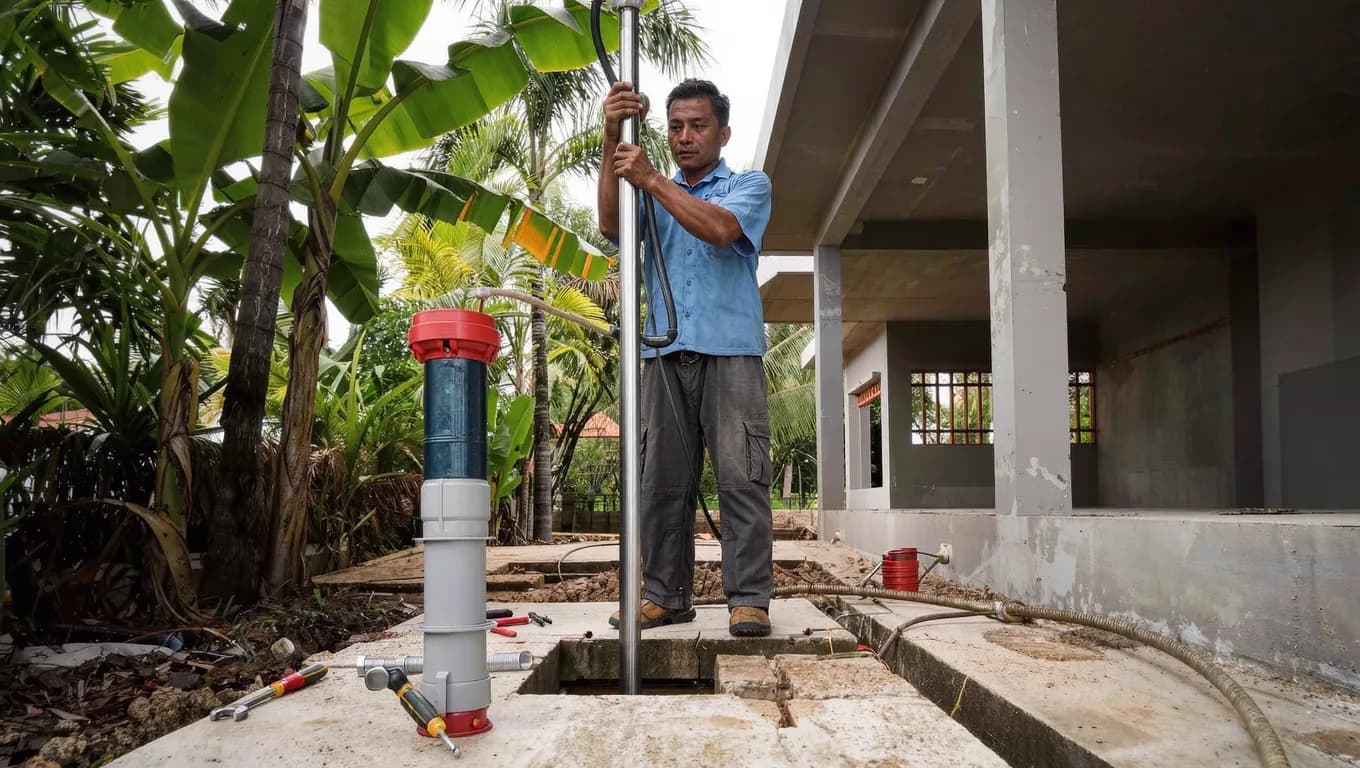
The test pump decides the rate being tried, so the result says as much about the pump as about the well. A large pump can pull a modest bore down to its intake in minutes and make it look poor. A small pump can hold a level comfortably and hide the fact that the bore could give more. The right reading is the rate at which the level stabilises with a sensible margin above the pump, not the most the pump could move. That rate is what the permanent pump is then sized to, as our guide to choosing a submersible pump explains.
Stabilisation: the number worth trusting
A useful test often tries more than one rate. At a gentle rate the level drops a little and settles. At a higher one it drops further and settles more slowly. At some point it stops settling at all. Plotting those steps shows where the bore is comfortable and where it is being forced. A longer run at the chosen rate then confirms that the level holds rather than creeping down hour after hour.
How long a test should run, and how many steps it needs, depends on the bore and on what it has to supply. A garden top-up and a resort with forty bathrooms do not deserve the same test. What matters is that the level has visibly stopped falling at the rate you intend to use.
Recovery tells you what the ground gives back
When the pump stops, the level starts to climb. A bore that returns most of the way to its static level quickly is well connected to water-bearing rock. One that crawls back, or stops short, is drawing on a limited supply, and will respond badly to long pumping sessions. Recovery readings cost almost nothing to take at the end of a test and are often the most revealing part of it.
Why a lower, steady rate often delivers more water
It seems natural that the pump which moves the most water fills the tank fastest. With a limited bore the opposite often happens. A pump that outruns the well draws the level down to the intake, trips its dry-run protection, waits, restarts and trips again. Over a day it runs for less time than it sits idle. A smaller rate the bore can hold runs for long, unbroken periods and delivers more litres by evening, with far less wear on the pump.
This is also where storage earns its place. The well works steadily at the rate it can sustain, the storage tank absorbs the morning and evening peaks, and the booster pump serves the house from the tank. Our guide to sizing a villa water tank covers that side.
A test is a snapshot of one season
Groundwater levels on the island move through the year, and a test in the wet months describes a well with more water above its fractures than it will have in April. A figure taken in the rains should be used with a margin, or checked again late in the dry season. How and why the levels move is the subject of our guide to wells in the wet and dry seasons.
Matching demand to what the bore can give
Yield becomes useful once it is set against demand. Work out roughly what the property uses in a day, including pool top-up and irrigation in the dry months, and compare it with the sustainable rate multiplied by the hours the pump can comfortably run. If the bore covers the daily total with room to spare, storage and pump sizing do the rest. If it does not, the options are to reduce or reschedule the heaviest uses, add storage, add another source, or look for more water. Neighbouring wells are a poor guide here: they tap different fractures and their owners rarely know their tested yield, as our guide to how deep a well needs to be explains.
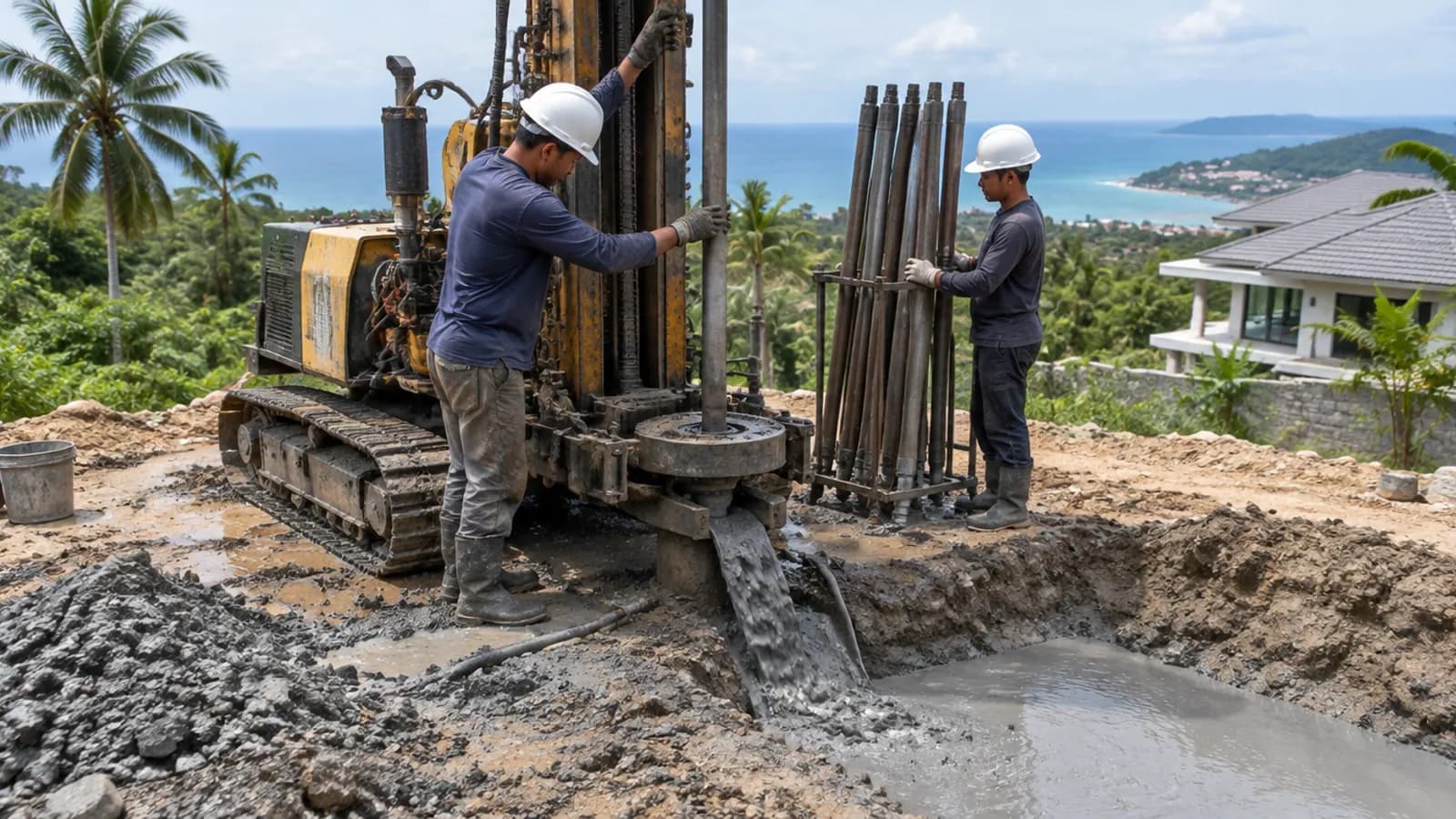
For an existing well, our well inspection measures the water level before, during and after pumping and records the sustained flow. For a new bore, the test is part of every drilling project. Tell us roughly how much water the property needs in a day and when it needs it most.
Common questions
Is pump flow the same as well yield?
No. Pump flow is how much the pump moves at a given moment. Yield is the rate the bore can keep supplying while the water level stays stable above the pump. A pump can exceed the yield for a while, then runs the well down.
Why does the water level recover after pumping?
Water keeps flowing into the bore from the surrounding fractures. When the pump stops, that inflow refills the bore towards its resting level. How fast it does so shows how well the bore is connected to water-bearing rock.
How long should a yield test run?
Long enough for the water level to stop falling at the rate being tested, and then for the recovery to be measured. That depends on the bore and on how much water it has to supply, so there is no single figure that suits every well.