How deep does a well need to be on Koh Samui, and why depth alone does not make a good well
“How deep?” is the first question about any new well, and it hides three different numbers: how far the bore is drilled, where the water stands in it, and where the pump hangs. This guide separates them, explains how the drilled depth is actually decided at the rig, and why a deeper bore is not automatically a better one.
June 15, 2026 · 9 min read
When a neighbour says their well is a hundred metres deep, it sounds like a description of where their water is. Usually it is not. It is the length of the hole. Their water may stand thirty metres below the surface, the pump may hang at sixty, and most of what it delivers may come in through a single fracture at forty-five. Those are three or four different depths, and confusing them is the root of most surprises about wells: the quote that seemed too deep, the pump that seemed too shallow, the deep well that still runs short in April.
Three depths that get confused
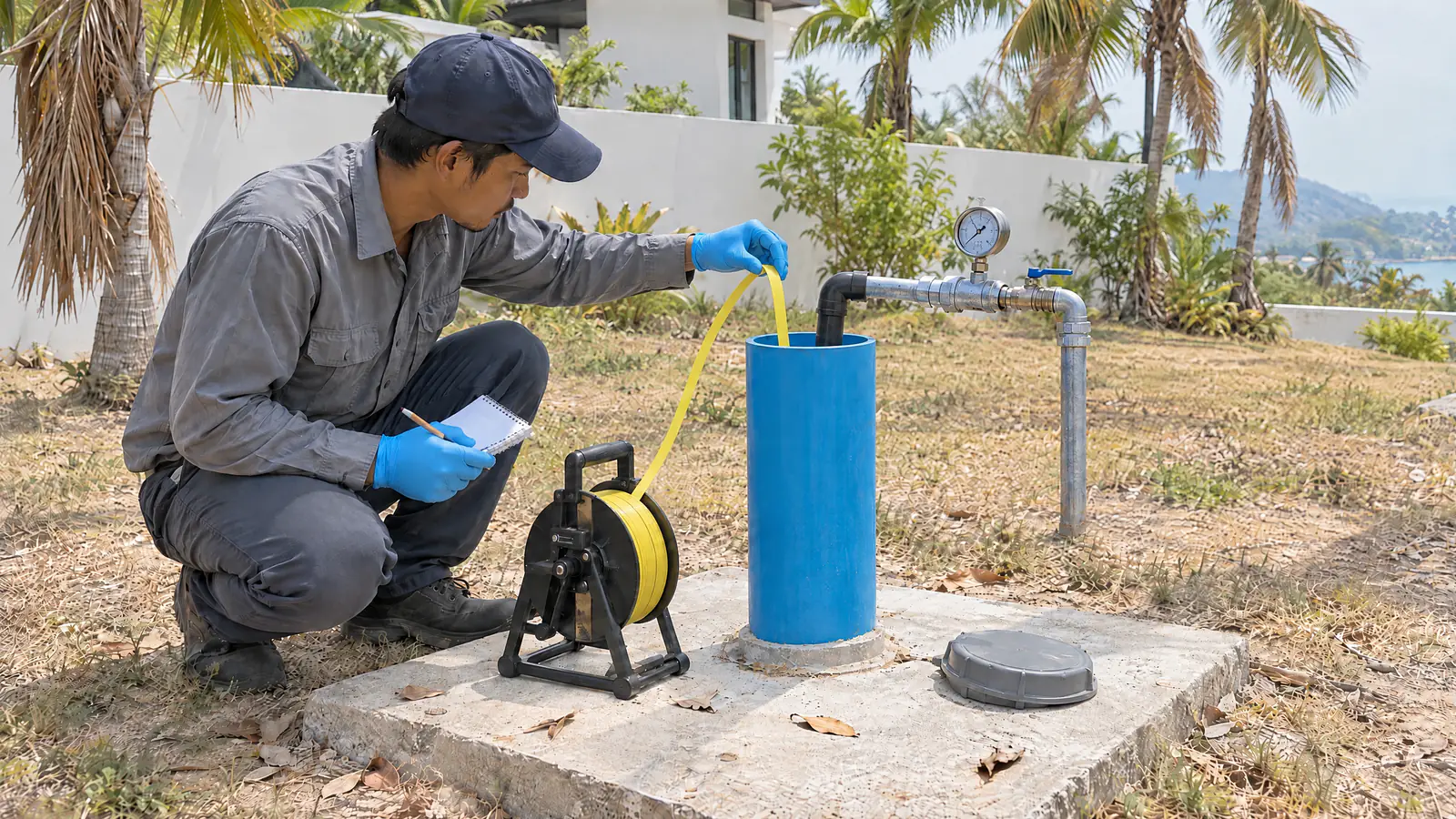
The drilled or total depth is how far down the bore goes. The water level is where water stands inside it, measured down from the ground: the static level when the pump has been off for a while, and the lower pumping level while it runs, because the well draws down as water is taken out. The pump depth is where the pump is hung, chosen to stay below the lowest pumping level with a margin, and above the bottom where sediment collects. The diagram below puts the three side by side.
Cross-section
Bore depth, water level and pump depth are different numbers
The brackets on the right are measured from ground level. Only the third one is the depth of the hole; the other two are what the owner actually lives with.
1
Ground level and wellhead
Every depth is measured down from here. The wellhead is sealed and sits slightly above the ground.
2
Casing
Lines the bore through soil and weathered rock that would otherwise collapse. How far it goes is decided by what the drilling finds.
3
Static water level
Where water stands with the pump off. It moves with the seasons, not with how deep the hole is.
4
Pumping water level
Lower than the static level while the pump runs. The gap between the two is drawdown, and it is the number that sizes the pump.
5
Water-bearing zones
Fractures or permeable layers where water actually enters the bore. A well may have one, several, or a deep one that adds little.
6
Pump
Set below the lowest expected pumping level with a margin, not at the bottom of the bore.
7
Bottom of the bore
Where drilling stopped. Below the pump, it collects fine sediment away from the intake.
8
Depth to water
Ground to static level: what the neighbour's well can roughly tell you about.
9
Pump setting depth
Ground to pump: what decides cable, riser and how hard the pump works.
10
Total drilled depth
Ground to bottom: what the drilling is priced on, and the number people usually quote.
Schematic, not to scale. No depths are given because they vary from plot to plot; the relationships are what matter.
Where the water actually comes from
Most Samui bores pass through soil, then weathered granite, then harder rock. Groundwater moves through the weathered zone and through fractures in the hard rock; solid granite between fractures holds almost none. So a well does not fill evenly along its length. Water enters at particular depths, where the bore crosses an open fracture or a permeable band, and those zones decide how much the well can give. A bore drilled to a hundred metres with one good fracture at forty-five behaves much like a bore drilled to fifty with the same fracture, as long as the pump sits safely above the bottom of each. The extra fifty metres did not add water; they added cost and storage volume in the hole.
Why a deeper bore is not automatically better
More water: only if drilling deeper crosses another water-bearing zone. Below the last useful fracture, extra depth adds little yield.
Cleaner water: depth helps only when the top of the well is properly cased and sealed. A deep bore with a poor surface seal can still take in runoff from above.
Less salt: near the coast, drilling too deep or pumping too hard can bring the well closer to salty groundwater rather than further from it.
More reliable: reliability comes from drawdown margin, meaning the pump sits well below the pumping level even in the dry season. That is a pump-depth decision as much as a drilling one.
Cheaper to run: a deeper water level means more head for the pump to lift, and more cable and pipe to hang it on.
How the depth is decided while drilling
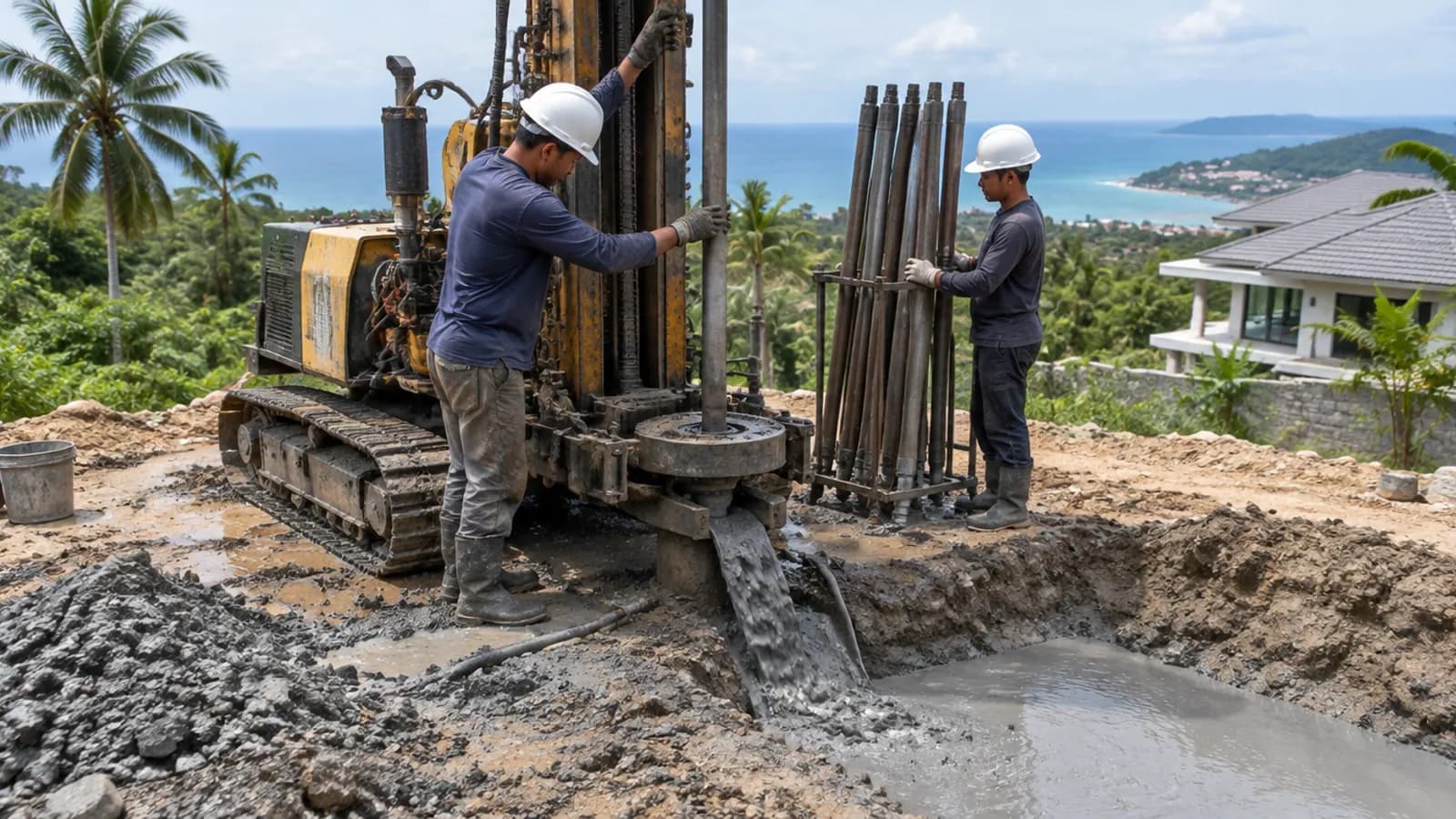
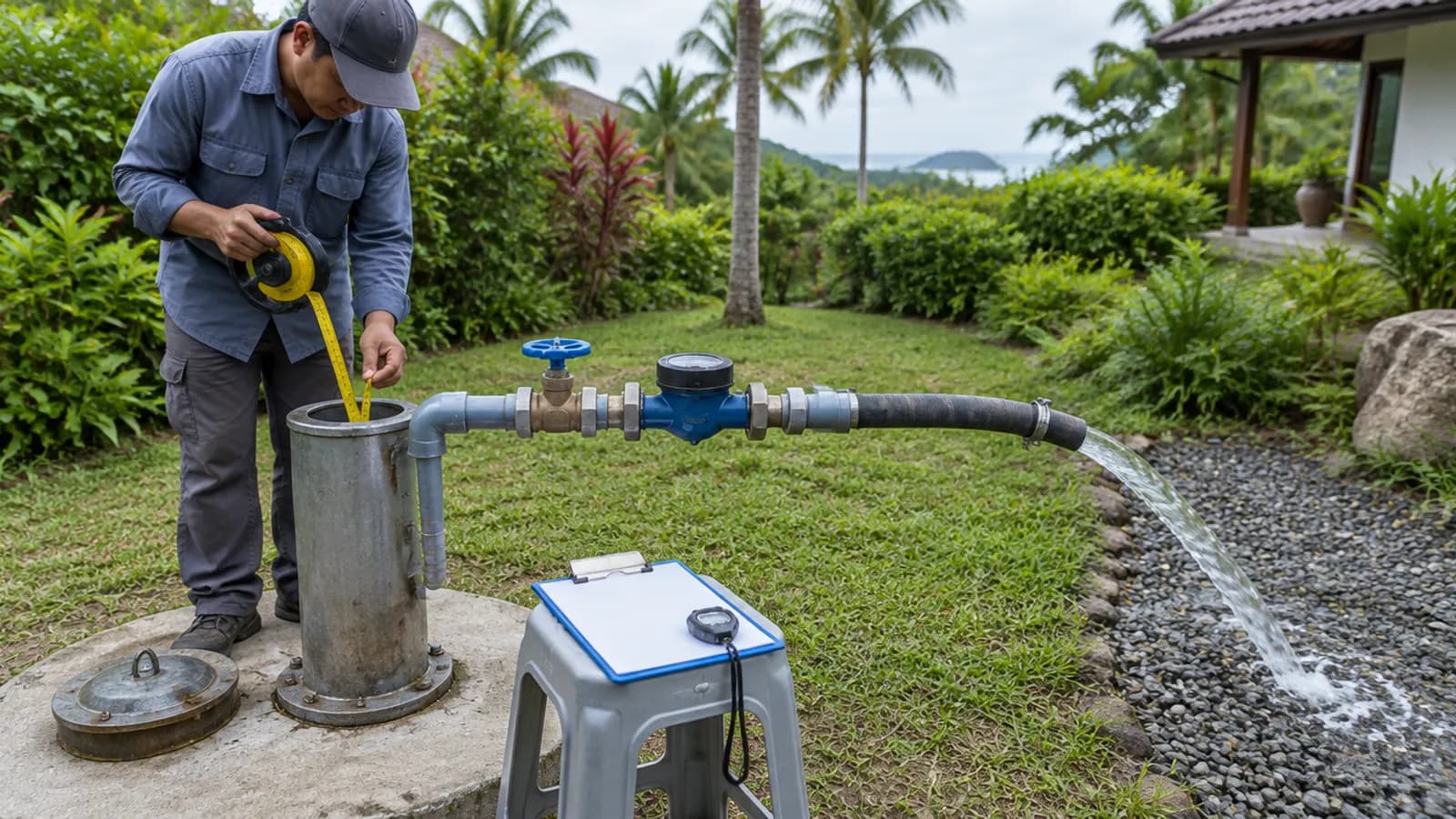
Nobody drills to a number chosen in an office. The driller reads the cuttings coming up to see where weathered rock gives way to hard rock, notes where water is struck and how strongly it flows, and watches whether the hole stays open. The aim is to get through the ground that would collapse and needs casing, then to cross enough water-bearing rock that the well holds up when it is pumped, with room below the pumping level for the pump. When the flow coming up suggests the well already meets the property's needs, drilling deeper is a decision taken with the owner, on what it is likely to add. When the flow is weak, continuing a little further can find another fracture, or can add nothing; experience on similar ground helps judge which. The real test comes afterwards, when the well is pumped for hours and the level is measured, as described in our guide to how much water a well produces.
What your neighbour's well can and cannot tell you
A nearby well is useful evidence. Its static water level is a reasonable hint of where water stands in the area, its depth gives a sense of how thick the weathered ground is, and its yield shows whether the rock here is generous or stingy. What it cannot do is predict the fractures under your plot, which can be absent fifty metres away. Two wells on neighbouring plots routinely differ in depth and yield, and a neighbour's well pumped hard every day can lower the water level around it. Treat their numbers as a starting range, not a forecast.
Coast and hillside are different depth problems
Near the beach, fresh groundwater sits on top of salty water, and the boundary moves when wells pump hard. The coastal question is less “how deep can we go” than “how deep should we stop”, with a pump rate the well can sustain and salinity checked during testing. Our guide to saltwater intrusion explains the mechanism. On a hillside the challenge is the opposite: the water level may sit far below the wellhead, so the pump hangs deep and lifts a long way, and the cost moves from the hole into the pump, cable and head. The drilling pad, the casing through thick weathered ground and the pump specification all need planning for that.
Seasons move the water level, not the bore
On Samui the water level in a well is typically highest after the rains and lowest towards the end of the dry season, when demand is also at its peak. A well tested in November can look much stronger than it will in April. That does not change how deep the hole is; it changes how much room there is between the pumping level and the pump. Setting the pump with a dry-season margin is part of answering the depth question, and our guide to seasonal groundwater shows how to monitor it.
Setting the pump: the depth that matters day to day
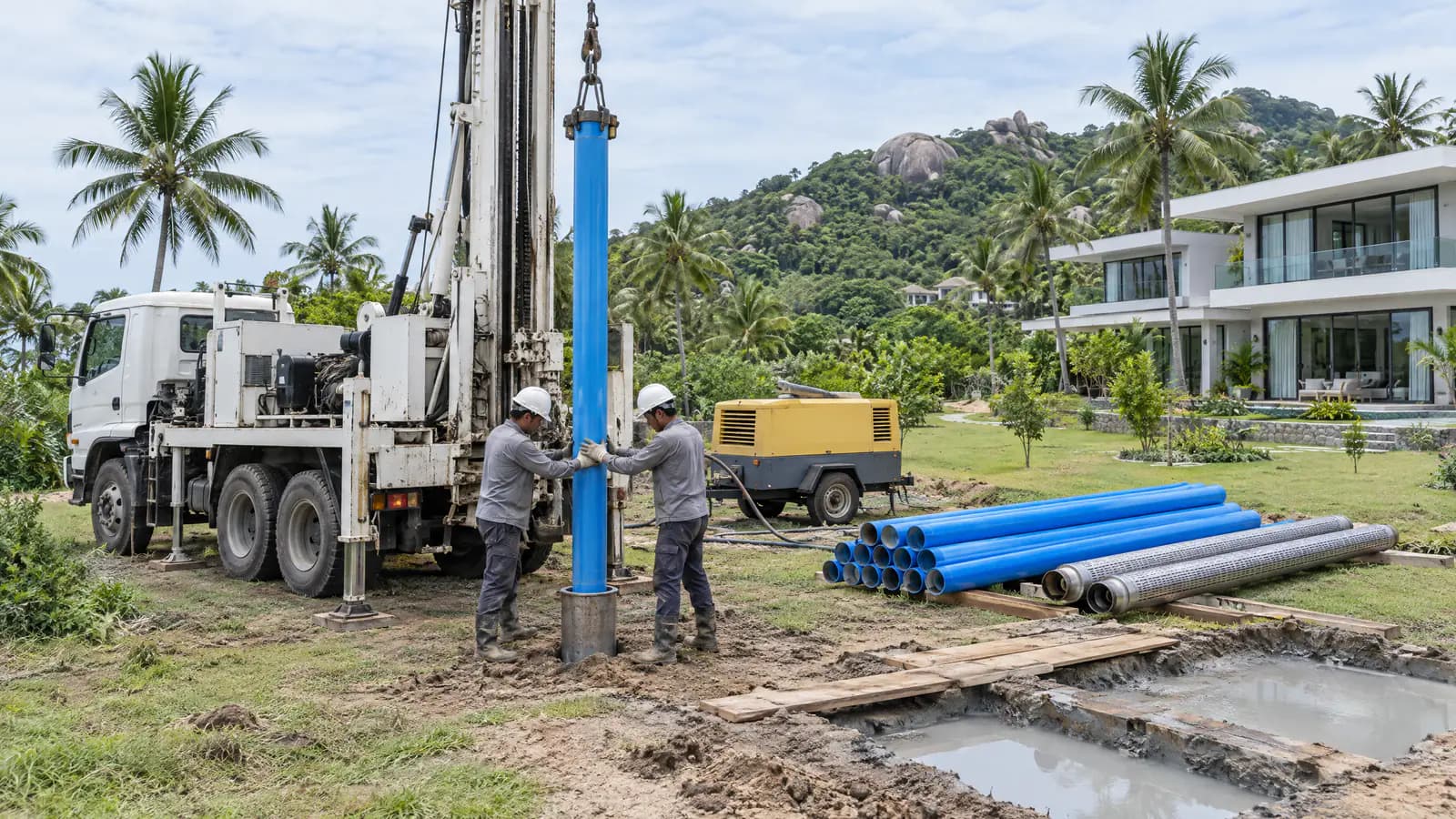
Once the yield test shows how far the level falls, the pump depth is chosen: deep enough that the lowest pumping level stays above the pump with a margin, shallow enough to keep clear of sediment at the bottom and of a water-bearing zone the pump would disturb. Hanging the pump at the very bottom does not buy more water and can pull in sand. Our guides to what is inside a deep well and to choosing a submersible pump cover the construction and the sizing that follow from it.
Planning a new well? Our drilling team can review the site and explain how the depth will be decided as the bore develops, and what the test will need to show before the pump is chosen.
Common questions
Does a deeper well always give more water?
No. A well gives water where it crosses water-bearing fractures or layers. Drilling deeper helps only if it reaches another one; below the last useful zone, extra depth adds cost and little yield. A yield test, not the drilled depth, tells you what the well can give.
Is well depth the same as water level?
No. Well depth is how far the hole was drilled. The water level is where water stands in it, measured from the ground, and it falls further while the pump runs. The pump is set by the water level, not by the bottom of the hole.
Can my neighbour's well depth predict mine?
Only roughly. A nearby well gives a useful range for depth to water and for how thick the weathered ground is, but the fractures that feed a well can change within tens of metres. Plan with their numbers as a starting point and let the drilling decide.