Why a deep well changes between Koh Samui's wet and dry seasons
The same well can give plenty in December and struggle in April without anything being wrong with it. A well isn't a tank of fixed size. Its useful supply rises and falls with the water around it, and the dry season is when that matters most.
October 8, 2026 · 9 min read
A common call in March or April goes like this: the well has worked for years, nothing has changed, and suddenly the tank takes all day to fill and the pump keeps stopping. Usually nothing is broken. The well is doing what wells do in the dry season. Understanding why is the difference between fixing the real problem and spending money on a bigger pump or a deeper hole that makes things worse.
A well is not an underground tank
It's natural to imagine a well as a fixed volume of water waiting to be pumped out. In Samui's granite, groundwater actually sits in fractures and in the weathered rock above them, and moves slowly through them. The borehole is a window into that system. What you can take from it at any moment depends on how high the water stands around it, how fast water flows back in as you pump, how hard you pump, and how long the well gets to recover between runs. All four change with the seasons.
Rain, recharge and the delay between them
Samui's main rains come late in the year: roughly late October to mid-December, peaking around November. February to April is the driest stretch. Only part of that rain becomes groundwater. Some runs off, some evaporates, and the rest soaks slowly through soil and weathered rock before it reaches the fractures a well draws from. That journey takes time, so water levels don't follow the weather day by day. In many wells the level keeps falling for weeks after the rains end and reaches its lowest late in the dry stretch, then recovers once the next wet season has had time to soak in.
How strongly and how quickly a particular well responds depends on its ground. Shallow water in weathered material reacts relatively fast to rain; water deeper in the rock reacts more slowly. Fractured granite often holds less water than the sound of "deep well" suggests, so wells in it can fall noticeably when recharge stops. These are general patterns, not a forecast for any one bore. The only way to know how yours behaves is to measure it.
Conceptual diagram
The same bore in the wet and dry seasons
Left: wet season. Right: dry season. Below: the delay between rainfall and water level. Conceptual only. The curve has no values and is not measured Koh Samui data.
1
Rain and recharge
Wet-season rain soaks down through soil and weathered rock and slowly replenishes the groundwater.
2
Higher static level
With the pump off, water stands higher in the wet season.
3
Modest drawdown
Pumping lowers the level near the bore, but it stays well above the pump and recovers quickly.
4
Lower static level
Late in the dry season the resting level sits lower, before the pump even starts.
5
Deeper drawdown, slower recovery
The same pumping rate pulls the level further down, and it takes longer to come back.
6
Shrinking margin above the pump
The space between the pumping level and the pump intake narrows, which is when dry-run trips begin.
7
Demand peaks in the dry months
Occupancy, pool evaporation and garden watering all rise just as the well has least to give.
8
Water level lags rainfall
Water levels respond weeks after the rain, so the low point often comes after the driest weather.
Conceptual illustration. Real timing and amplitude differ from well to well and from year to year.
Static level, pumping level and recovery
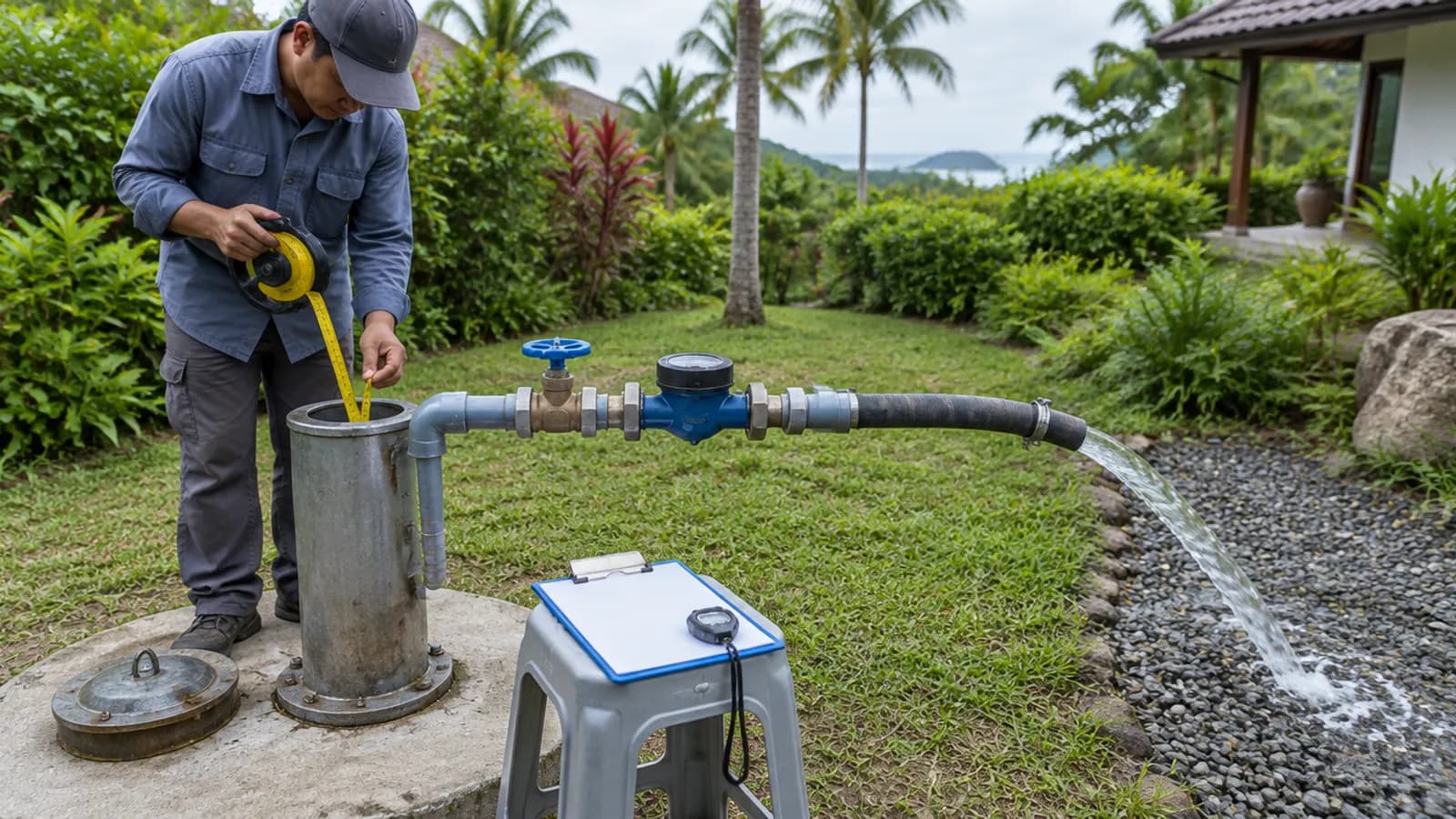
Three numbers explain most seasonal behaviour. The static level is where water stands when the pump has been off for a while. The pumping level is where it settles while the pump runs; the gap between them is the drawdown. Recovery is how quickly the level climbs back once the pump stops. A yield test records these when the well is new (our guide to how much water a well produces explains the test), but that test describes one point in the year.
In the dry season the static level starts lower, the same pump pulls the level down further, and recovery is slower. A pump set comfortably below the wet-season pumping level can find the water near its intake by April. Nothing about the pump has changed. The water around it has.
The dry season is also the busy season
On Samui, low groundwater coincides with peak demand. High season fills villas with guests, the sun evaporates pools faster, and gardens need water every day. A system that was comfortable in the wet months can be marginal in the dry ones, and the margin disappears all at once. Irrigation is often the biggest single draw, which is why our guide to watering a garden from a well puts the garden on its own supply. A pool topped up from the well adds to the same peak.
Why the neighbour's well behaves differently
Two wells a short walk apart can respond to the same season very differently. They may cross different fractures, sit at different depths, draw at different rates, or have pumps set at different heights. A neighbour reporting no problems tells you little about your own well. Measurements from your own well tell you a lot.
Wet-season rain recharges the ground slowly, through soil and rock. It should never reach the well directly: a raised, sealed wellhead and good drainage keep surface water out.
Will a deeper pump or a deeper well fix it?
Lowering the pump buys margin only if there is usable water column below its current position and the pump still sits safely above the screen and the sump. It doesn't make more water flow into the well; it lets you draw the level down further, which can pull in sediment or, near the coast, salt water. Drilling deeper is not automatically better either. A deeper bore may cross another water-bearing fracture, or it may not. On coastal plots it can bring the well closer to the salt water beneath the fresh.
The cheaper fixes usually come first: match the pumping rate to what the well recovers, add storage so the well can pump gently for longer, and take discretionary demand off the well in the driest months.
Pump control that suits the season
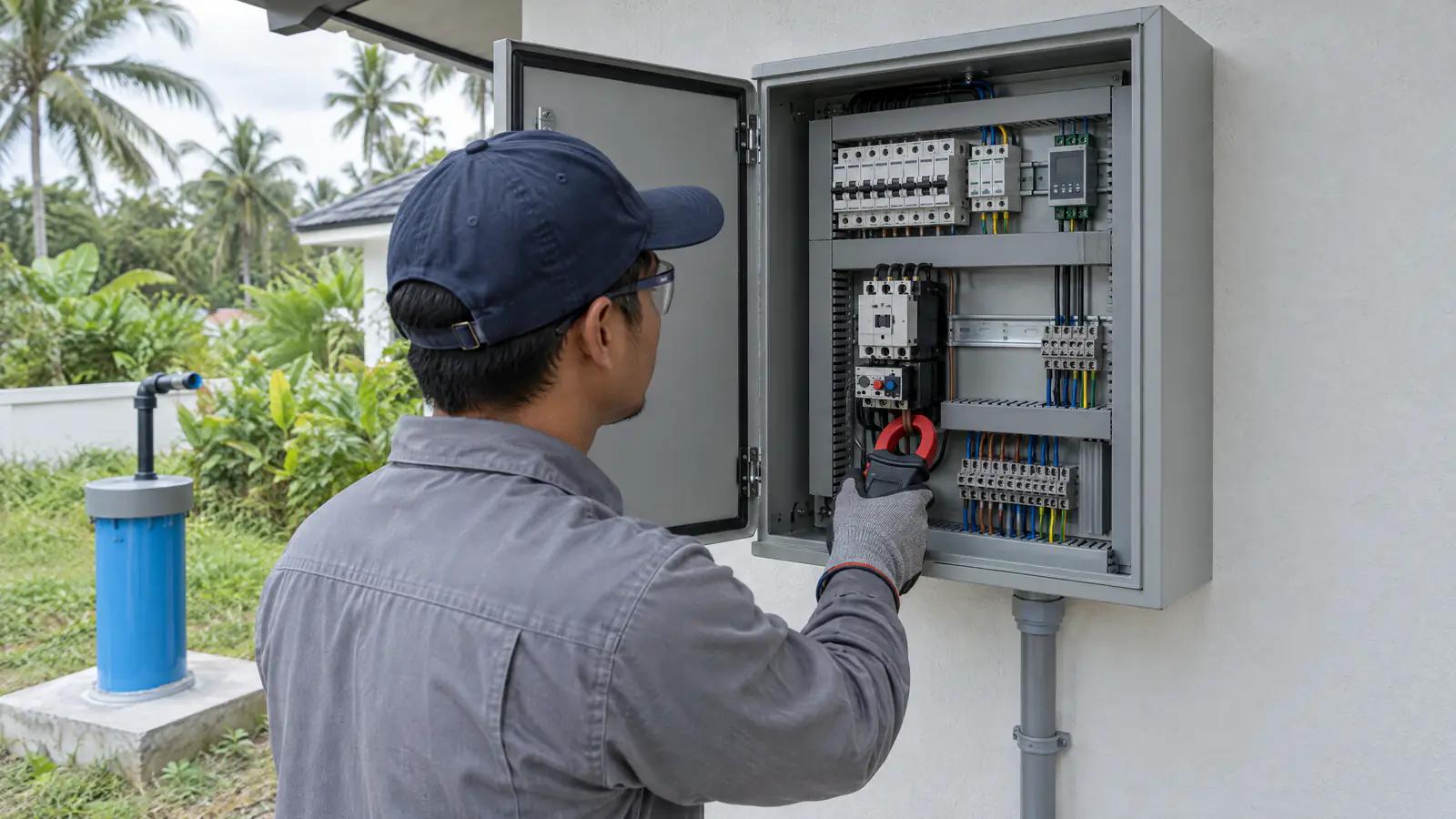
Tank level controls that run the well pump in steady cycles rather than chasing every tap.
A lower pumping rate over longer hours where the well recovers slowly, instead of short, hard runs.
Rest periods built in so the level can recover between runs.
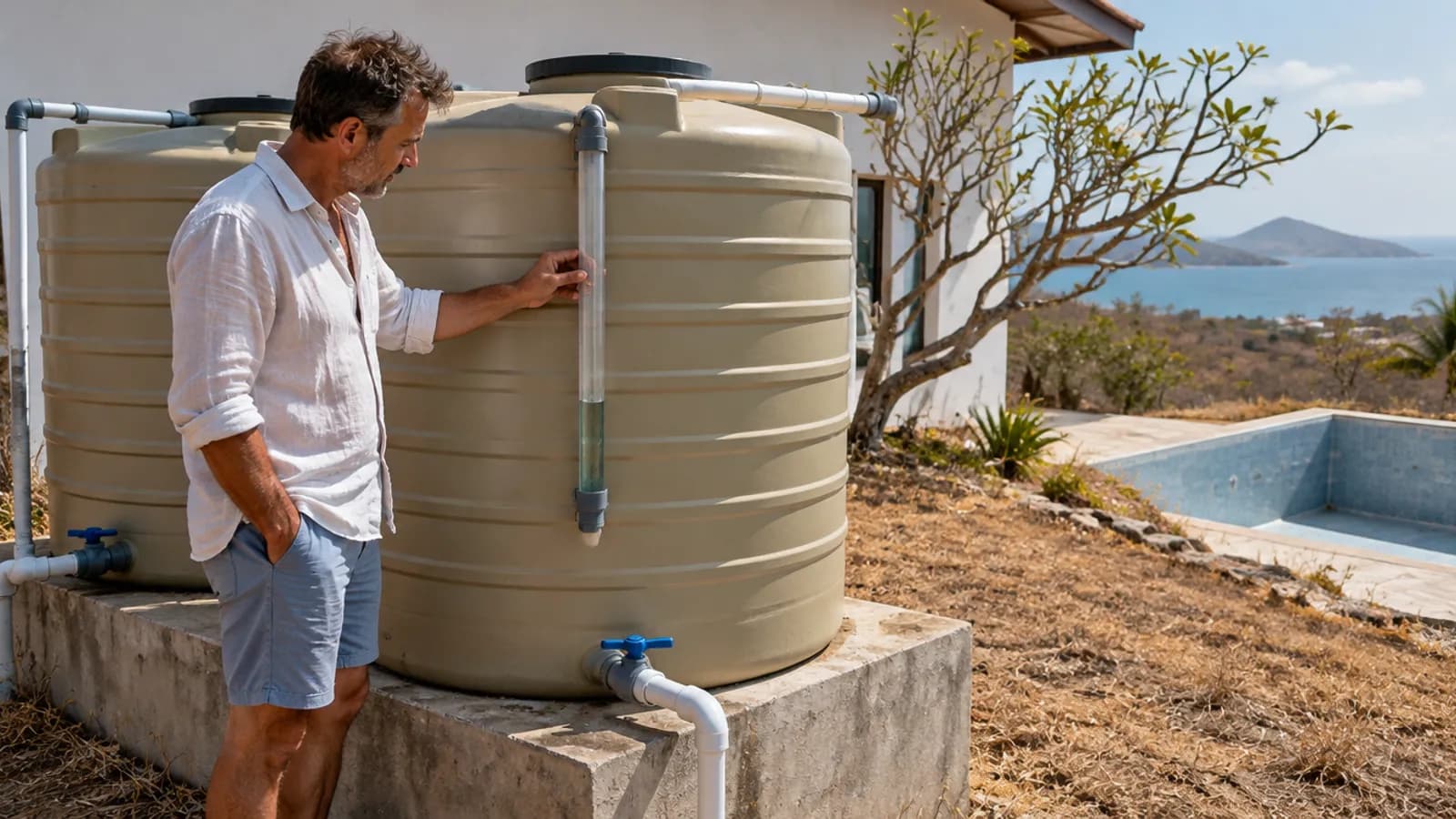
Enough storage that the house rides through the slow refill, as covered in our guide to tank size.
Measure it: simple monitoring through the year
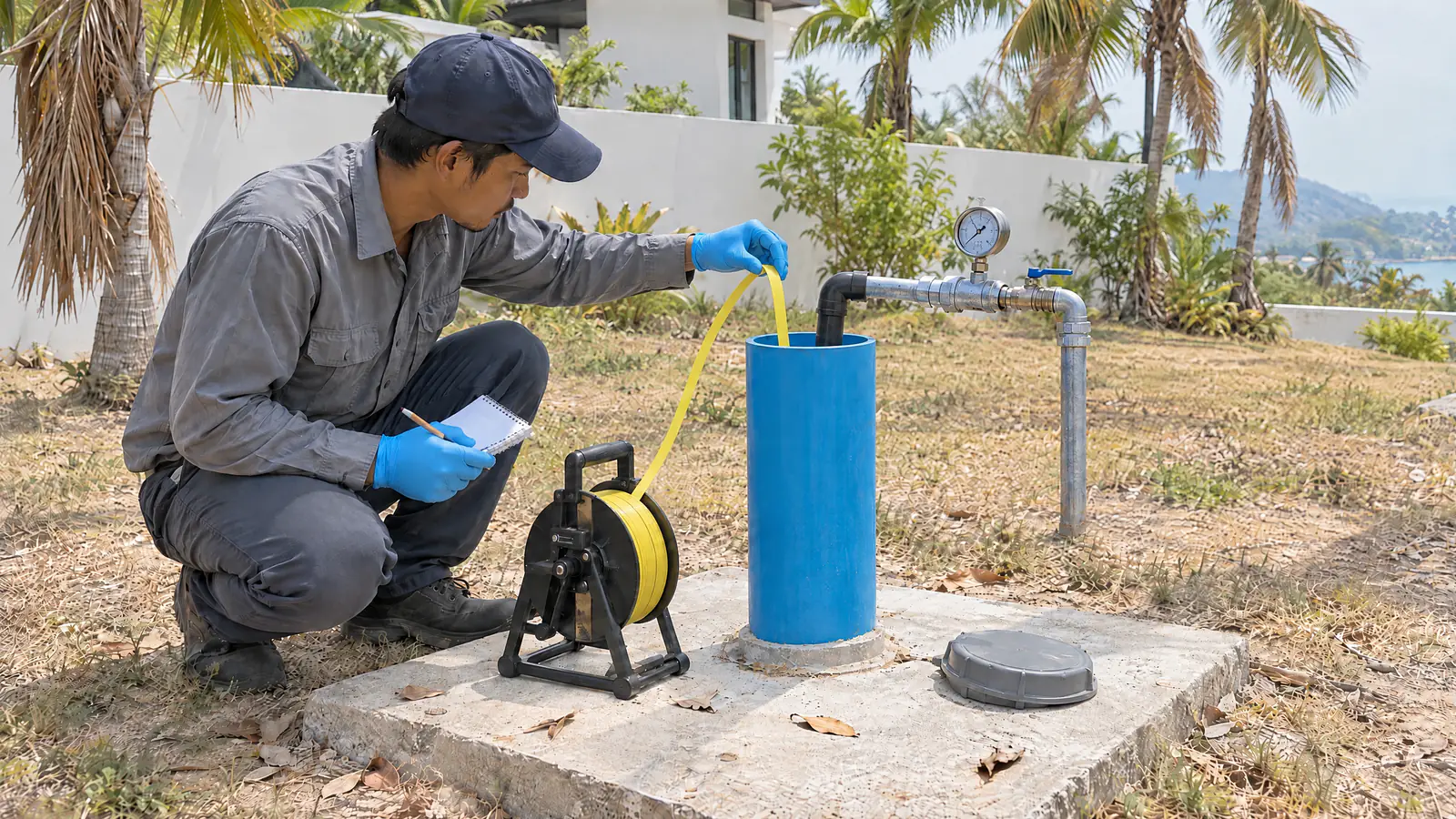
A dip meter reading once a month, taken after the pump has been off long enough for the level to settle, shows how the well moves through the year. Note how long the tank takes to fill and how long the pump runs each day. Compare December with April. The pattern tells you whether the well simply follows the seasons or is declining from one year to the next, which is a different problem covered in our guide to borehole maintenance.
Warning signs usually arrive weeks before the taps run dry: the tank takes longer to fill, the pump cycles more often, taps spit air, fine sediment appears after long runs, dry-run trips happen late in the day, and near the coast the water starts to taste flat or salty. Planning for the season itself, such as storage and delivery backup, is covered in preparing a villa for the dry season.
If your well gives less water in the dry season, we can check the well, the pump and the storage before anything is replaced. A well inspection measures the levels, the pumping rate and the recovery, and shows whether the answer is a different setting, more storage, or a change at the well itself.
Common questions
When is the best time of year to test a well's yield?
Late in the dry season, if you can. A test then shows the well close to its weakest, which is what the system has to cope with. A wet-season test is still useful, but its figures should be read with the season in mind.
Will the water level come back after the rains?
In most seasonal cases, yes, once the wet season has had time to recharge the ground. That recovery can lag the rain by weeks. A level that keeps falling year on year is a different problem and needs investigation.
Should I switch the pump off to let the well recover?
Built-in rest periods help, but they're better handled by the control system than by hand: level controls, timers and dry-run protection set to the well's real behaviour.