How to prepare a Koh Samui villa for dry-season water shortages
A villa rarely runs dry because of one thing. The well gives a little less, the house fills up, the pool and garden drink more, and the reserve that looked generous in October is gone by the second week of March. Preparing means knowing those numbers before the season, not discovering them during it.
May 20, 2026 · 9 min read
Most dry-season shortages on Koh Samui are not sudden. They are a slow imbalance between what the property uses each day and what its sources put back, running for weeks until the reserve is spent. The tank level tells the story long before the taps do, which is why preparation is mostly about measuring, deciding priorities and fixing weak points while there is still time. Why a well gives less water at this time of year is a separate subject, covered in how the wet and dry seasons affect deep wells.
Why supply becomes fragile from February to April
Several pressures arrive in the same weeks, and each is manageable on its own. Together they can turn a comfortable system into a marginal one.
The well gives less per day. The water level in the ground falls through the dry months, so the pump reaches its low-level cut-out sooner and the bore takes longer to recover between runs.
The house uses more. High season brings full occupancy, more showers and laundry, and guests who do not think about water.
The pool loses water to evaporation and splash, and an automatic top-up can quietly draw a large share of the daily supply.
The garden is at its driest, so irrigation runs longer just as every other demand peaks.
Where the property has a mains connection, pressure or continuity can be less dependable in the dry months in some areas. How often that happens varies from road to road, so judge it from your own property's history rather than general reports.
Work out the daily water balance
Three numbers decide whether a villa reaches the end of the season with water to spare: how much it uses on a full day, how much its sources can refill in a day, and how much is held in storage. If use is higher than refill, the difference comes out of the reserve every day, and the reserve sets how many days that can go on.
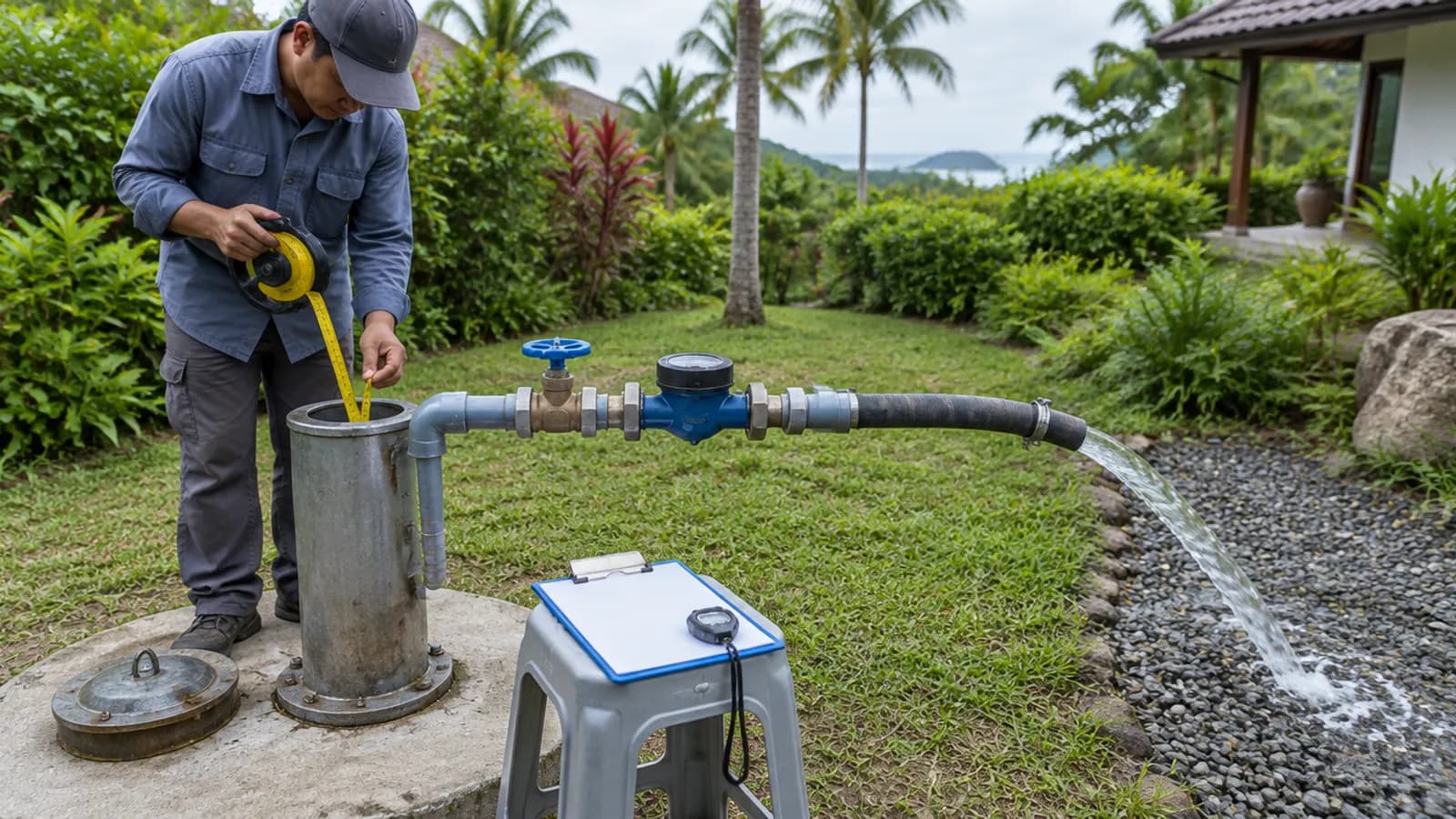
A simple example shows the arithmetic. If the house uses 3,000 litres on a full day and the well and mains together put back 2,000 litres, the tank falls by about 1,000 litres a day. A reserve of 6,000 litres lasts roughly six days of that before the taps feel it. The figures for your property are different, but the logic is the same, and it only works with real measurements: use read from a meter or from the tank level, and refill taken from a proper measurement of what the well can sustain, not from the pump's rated flow.
Before the season
Dry-season checks, part by part
What to look at before February, the early warning that something is wrong, and what follows if it is left until the dry months.
Storage tank
Check before February
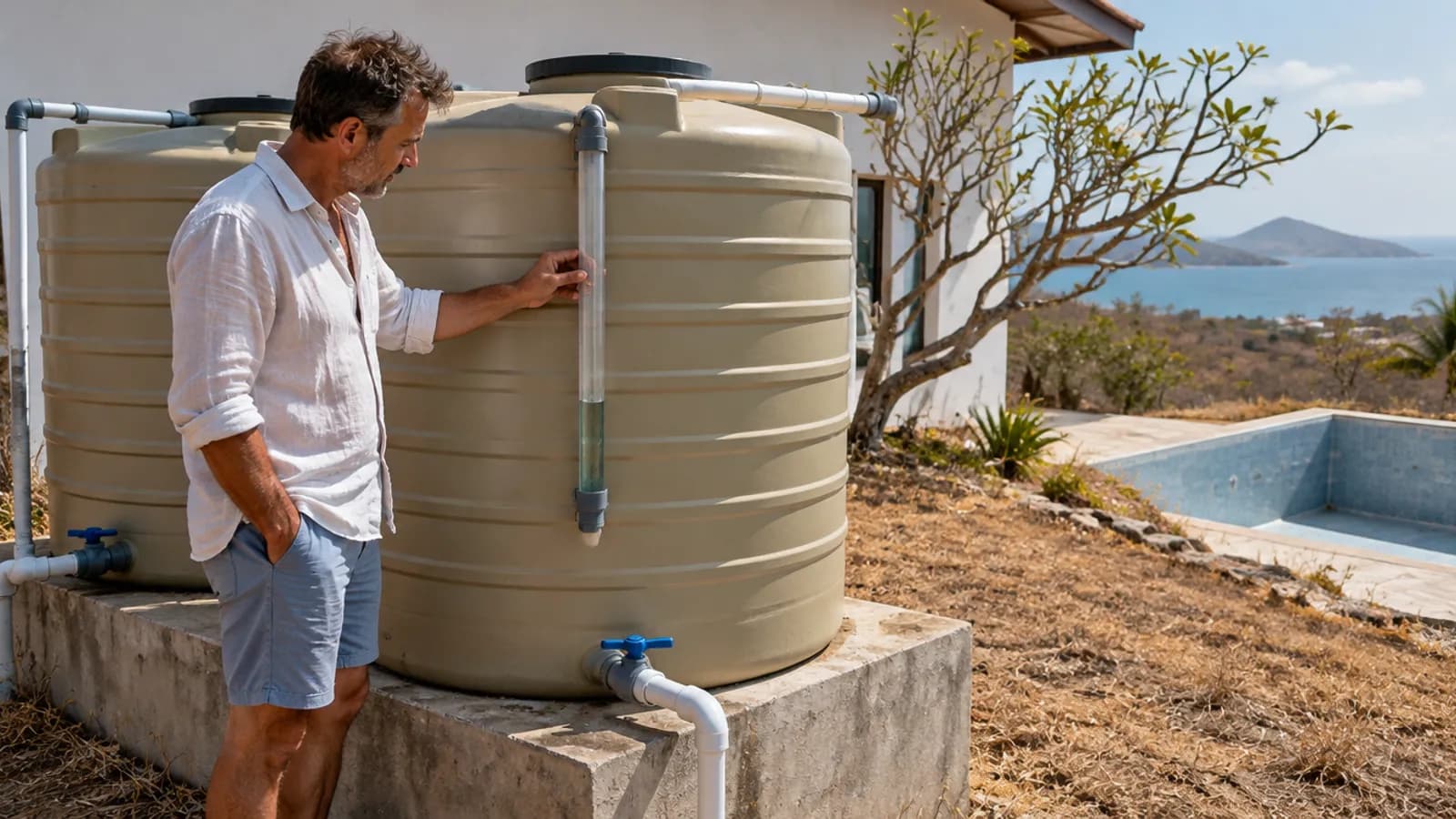
Real usable volume, a working level indicator, the inlet valve closing properly, sediment on the floor
Early warning
The level drops overnight with nothing running
If it is left
The reserve is smaller than everyone believes
Well
Check before February
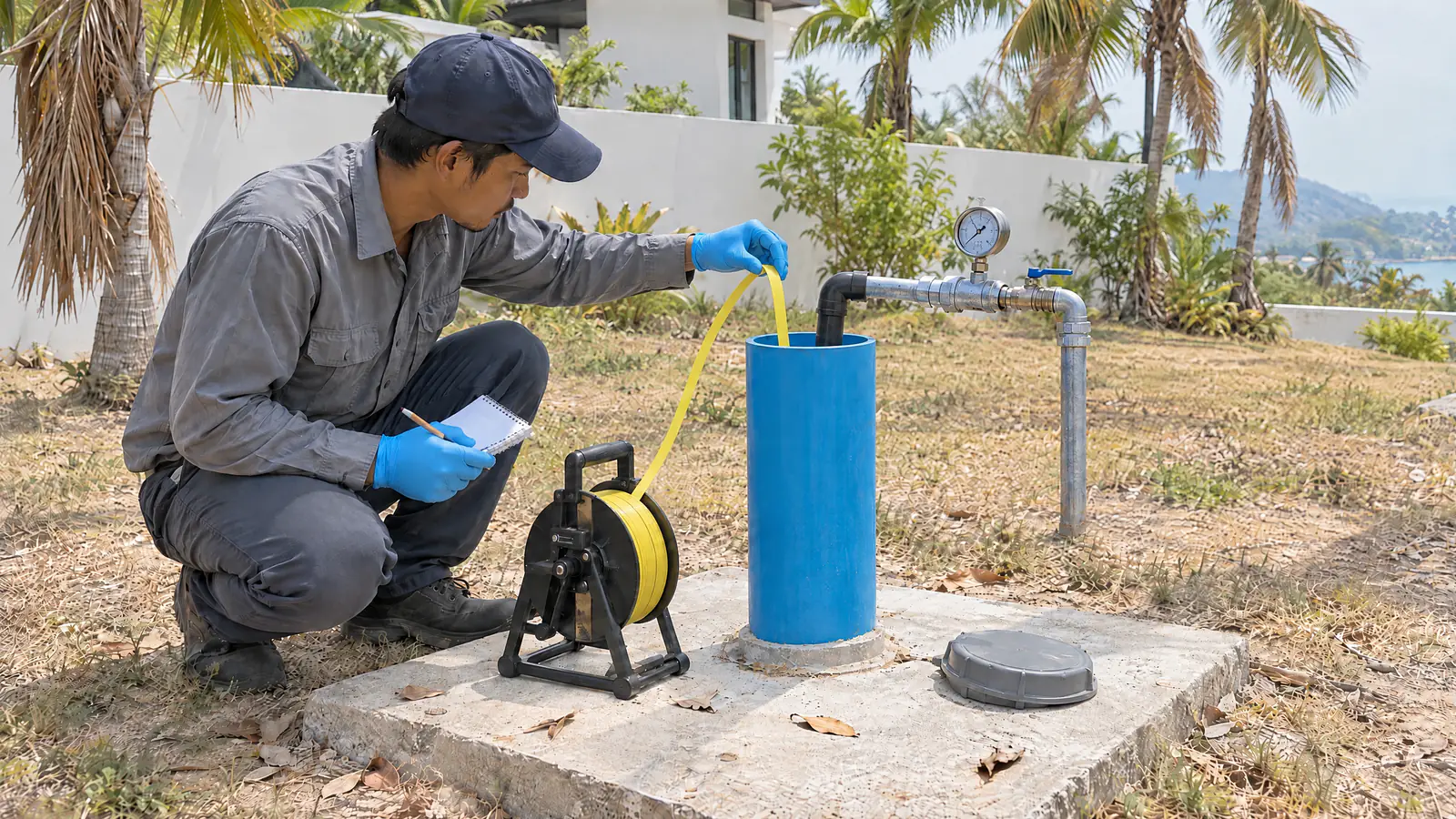
Resting water level and a sustained flow figure to compare with last year
Early warning
The pump stops on its low-level protection more often
If it is left
Refill falls short just as use peaks
Pump and controls
Check before February
A technician's check of current draw, protection and level switches
Early warning
Short runs, trips or unusual noise
If it is left
A breakdown at the busiest time of year
Mains connection
Check before February
The meter, the tank inlet and its float or solenoid valve
Early warning
The tank no longer tops up overnight
If it is left
A second source that is not there when needed
Demand
Check before February
Hidden leaks, irrigation timers, pool top-up and expected occupancy
Early warning
Meter readings rising with no change in occupancy
If it is left
Water lost to leaks and lower-priority uses
Pump and control checks belong to a qualified technician. Owners can read meters and tank levels and watch for the warning signs.
Decide the reserve in days, not litres
A tank size on its own says little. What matters is how many days the property can run on stored water if refill slows or stops: a pump waiting for a part, a mains interruption, or a well that needs a night to recover. Pick that number deliberately, based on occupancy and on how quickly a fault could realistically be fixed, then check the usable volume against it. Usable volume is less than the label on the tank: the outlet sits above the floor, and the float valve stops filling before the brim.
If the reserve comes out short, more storage is one answer, but not the only one. Cutting waste, holding back lower-priority uses and adding a second source can each buy days without a new tank. Sizing itself is covered in what size water tank a villa needs.
Watch the tank level, not the taps
By the time pressure drops at a tap, the reserve is already gone. A visible level indicator, a float-operated gauge or an electronic level sensor turns the tank into an early-warning system. Read it at the same time every day through the season, and write the figure down. A steady downward trend over several days shows that use is outpacing refill, while there is still time to act.
A low-level alarm is worth its modest cost on a rental villa, because the people living there are rarely the ones watching the tank. Where staff or a manager handles the property, agree who reads the level and who they call when it falls below a set mark.
Set the order in which water is used
Not every use is equal when supply is tight. Drinking, cooking, showers and toilets come first; pool top-up, irrigation, car washing and outdoor cleaning can wait. The simplest way to protect the house is to make the lower-priority uses depend on the reserve: irrigation and pool top-up run only while the tank is above a set level, and stop automatically below it.
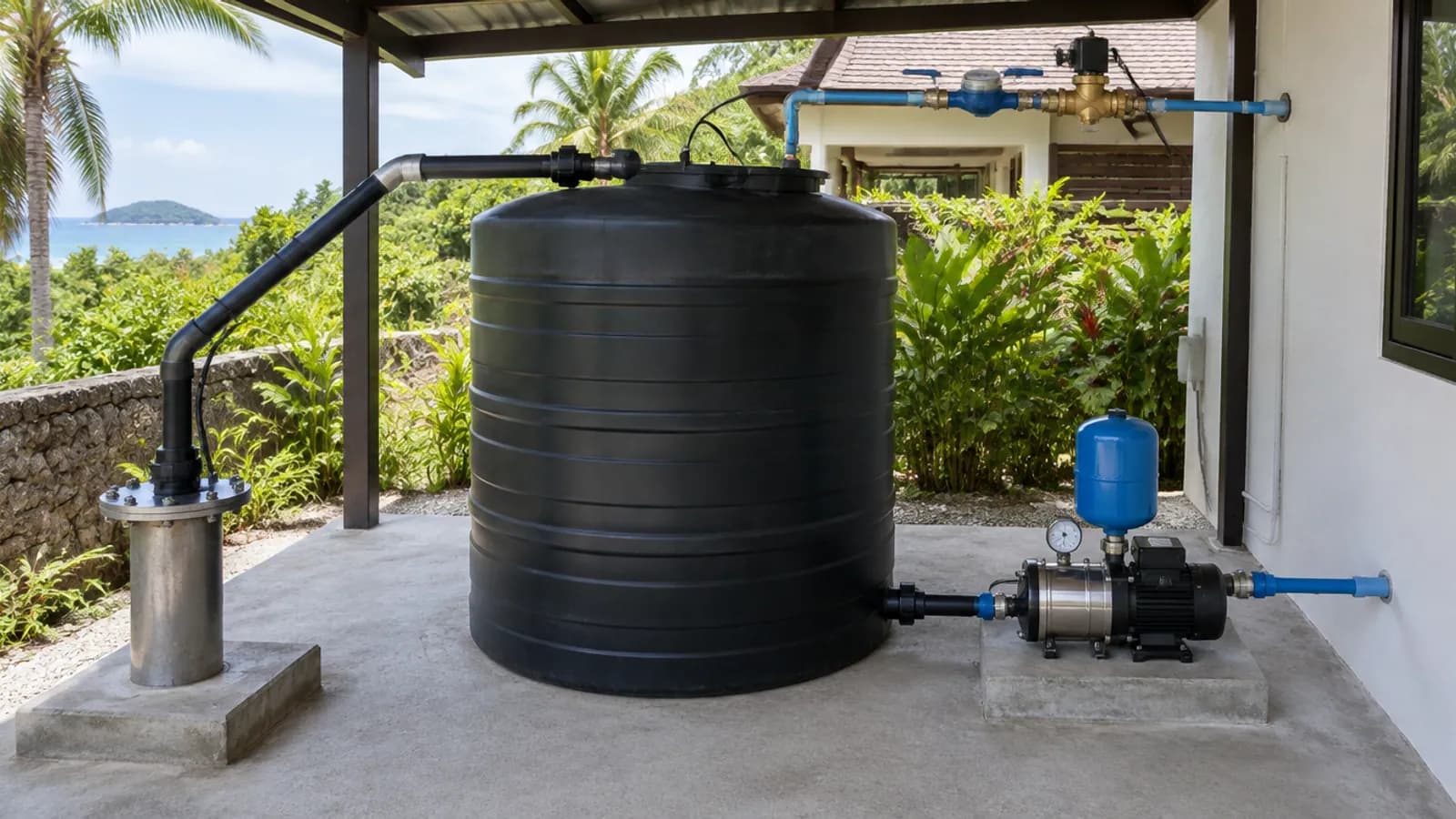
The same idea applies to the sources themselves. On a property with a well and a mains connection, level control decides which one refills the tank first and when the other takes over. How to arrange that properly, with a protected inlet for each source, is set out in running a well alongside mains water.
Give the well time to recover
A well that is pumped hard all day in March may produce less in total than one that is pumped steadily with rests. When the pump repeatedly hits its low-level protection, the bore is telling you that it is being asked for more than it can give at that moment. Longer, gentler runs, a lower pumping rate and refilling the tank overnight, when the house is quiet, usually suit the season better. A bigger pump does not create more water in the ground.
A second source is the strongest insurance
A property supplied only by mains water depends on that supply staying continuous. One supplied only by a well depends on one bore and one pump. Two sources that each refill the same tank cover each other's weak moments, and that is usually worth more than extra storage. Whether a well is worth adding to a mains-supplied villa in the first place is a separate decision, weighed up in is a private well worth it for your property.
What to do in October or November
Read the water meter last thing at night and first thing in the morning with nothing running. If it moved, there is a leak to find before the season.
Check that the tank level indicator works, that the inlet valve shuts off cleanly, and whether sediment on the tank floor needs cleaning out.
Have the resting water level and a sustained flow measured on the well, so this year's dry-season figures have something to be compared with.
Have a technician check the pump, its protection and the level switches. A fault found in November is a planned repair; in March it is an emergency.
Review irrigation timers and the pool's automatic top-up, and decide the tank level below which they should stop.
Agree with the manager, staff or guests who reads the tank level, how often, and who gets called.
If the tank is already low
Start with what costs nothing. Stop irrigation, pool top-up and outdoor washing at once. Check for running toilets, dripping taps and wet patches that could mark a buried leak. Tell the people in the house that water is short for a day or two; most will help if they know.
Then look at the sources. If the well pump keeps stopping on its protection, let the bore rest and refill the tank overnight rather than forcing it. Do not keep resetting a pump that trips repeatedly: that is a job for a technician. If the property has a mains connection, check that its valve is open and the tank inlet is actually filling.
Some owners buy water from private water-truck operators to bridge a shortage. That is a third-party arrangement with the operator, not a service Deep Well Samui provides. If you use one, ask where the water comes from, make sure the tank hatch and inlet are clean, and remember that trucked water may need the same treatment as any other source before drinking.
When the problem is the system, not the season
Some properties run short every year however carefully they are managed. The usual reasons are a well being asked for more than it can sustain, storage that holds far less usable water than assumed, a pump or control fault, or a single source with nothing behind it. These are design and condition problems, and they are easier to find with measurements than with guesswork.
If your villa is running short in the dry season, we can assess the source, storage and pump system and identify where the bottleneck is. See villa water systems for the design side, or well inspection to have the well itself measured before the next dry season.
Common questions
How much reserve water should a villa keep for the dry season?
Enough to run on stored water for the number of days you would need to fix a fault or wait for a source to recover. Decide those days from occupancy and how quickly repairs can realistically happen, then check the tank's usable volume, not its label size, against them.
Does a lower dry-season yield mean the well is failing?
Usually not. Most wells give less as the water level in the ground falls through the dry months. A sharp drop compared with previous dry seasons, or cloudy or salty water, is the sign that the well needs inspecting.
Is buying water from a truck a good way to get through the dry season?
It can bridge a short gap, as an arrangement with a private operator. It does not fix a daily imbalance between use and refill, so a villa that needs trucks every year usually has a storage, source or demand problem worth solving.