Filling a pool from a deep well: yield, storage and water quality
Many villa pools can be filled and topped up from the property's own well. Two separate questions decide whether yours can: whether the well can give that much water without starving the house, and what the water does once chlorine goes in.
October 8, 2026 · 9 min read
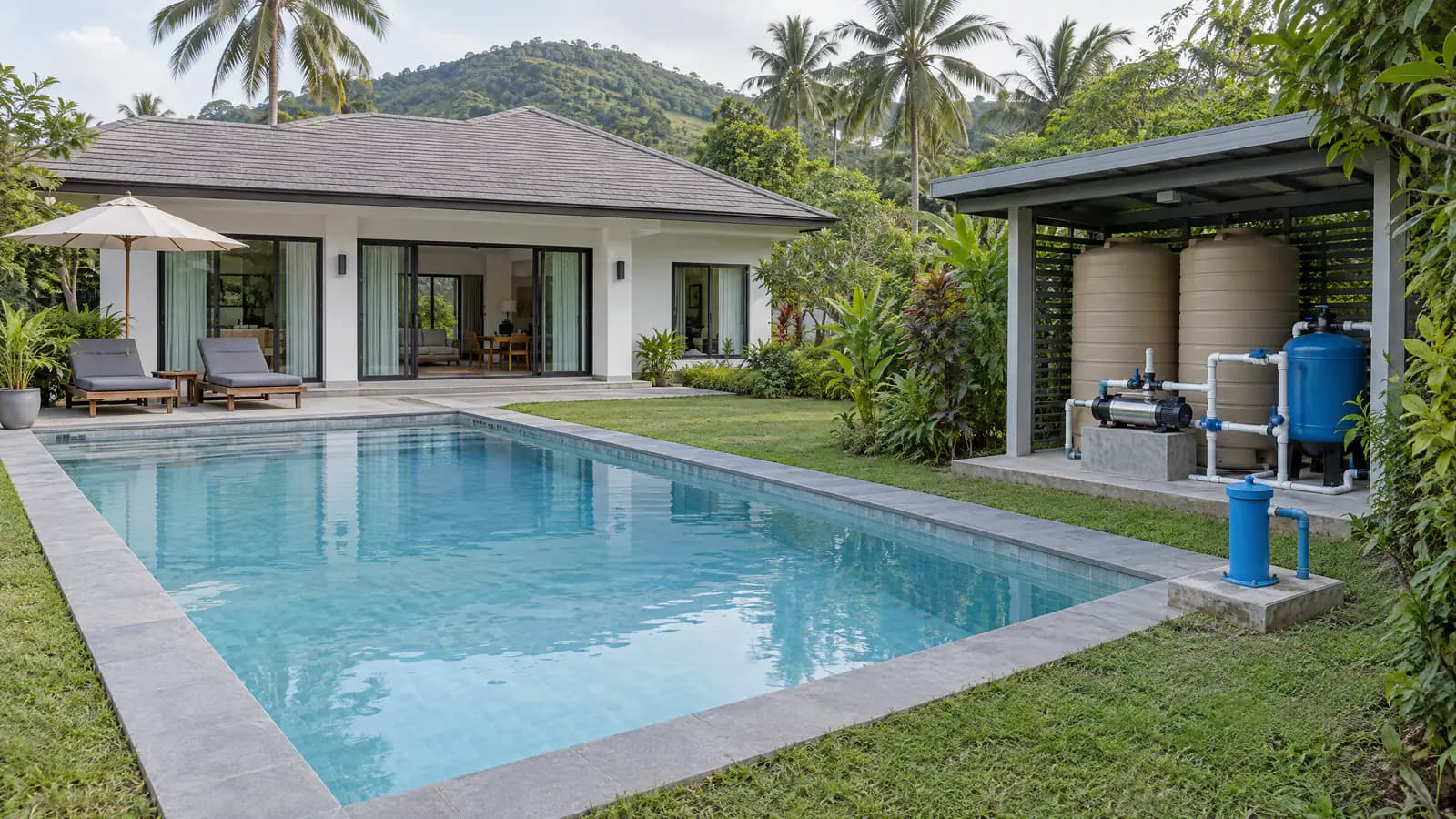
A private well and a pool look like a natural pair: the well has water, the pool needs a lot of it. Filling a pool from a deep well is common on the island and often works well. It goes wrong in two predictable ways. The well is asked for more water, faster, than it can give, and the house runs short. Or water that looked perfectly clear turns the pool brown the first time it is chlorinated. This guide covers the link between the well, the storage and the pool. Pool chemistry beyond that is a job for whoever maintains the pool.
Filling and topping up are different jobs
The first fill is a single large demand. A pool 10 m long and 4 m wide with an average depth of 1.5 m holds 60 m³, which is 60,000 litres. Most villa wells can supply that eventually, but not all at once. Topping up is the opposite: a steady replacement of what evaporation, splashing and filter backwashing take away. In tropical sun that is a noticeable daily volume, and it peaks in the dry months, exactly when the well has the least to give.
Treat the two separately. A fill is planned once, around the well's capacity. Top-up is a permanent part of the villa's daily demand and belongs in the water system design alongside showers and the garden.
How long a fill takes the well
The arithmetic is simple: pool volume divided by what the well can sustain. If a test pumping shows a well sustains 2,000 litres an hour, a 60,000-litre fill needs about 30 hours of pumping, and the house still needs its share during that time. A bigger pump doesn't change that. The limit is how fast water flows into the bore, not how fast the pump can empty it. Our guide to how much water a well produces explains how that sustainable figure is measured.
Pushing a low-yield well hard to fill the pool in a day draws the level down to the pump, trips the dry-run protection, can pull fine sediment through the screen and, on coastal plots, can draw in salt water from below. Spreading the fill over several days, at the well's own pace, protects the well and gives better water.
Fill from storage, not straight from the bore
The well should fill storage at a steady, sustainable rate, and the pool should draw from the system, never directly from the bore. That arrangement does three things. The house keeps a reserved volume that the pool can't take. Any treatment the water needs happens before it reaches the pool. And the top-up can run quietly, through a float valve or an automatic filler into the pool's balance tank, rather than a hose left running.
One detail matters more than it looks: the top-up inlet should discharge above the pool water level, with a clear air gap, so pool water can never be siphoned back into the villa's supply. Our guide to storage tank size covers how much buffer a villa needs before adding a pool to the sum.
System schematic
Supplying a pool from a well without starving the house
A typical arrangement. The exact system depends on the water analysis, the well's yield and the property's layout.
1
Well pump
Fills storage at the rate the well sustains, not at the rate the pool wants.
2
Storage buffer
Holds the volume the pool and the house draw on, with a reserve kept for the house.
3
Treatment where the analysis requires it
Iron and manganese removal, filtration or softening, only if the test results call for it.
4
House supply first
Level control keeps the villa's domestic reserve untouched by pool filling.
5
Top-up valve with an air gap
A float or automatic filler that discharges above the water line, so pool water can't flow back into the supply.
6
Pool
Receives water that has already been checked, and treated where needed, before any chlorine goes in.
Before choosing a layout, check: the well's yield, iron and manganese, hardness, salinity, pH and TDS, and the storage capacity available.
Clear well water is not automatically pool water
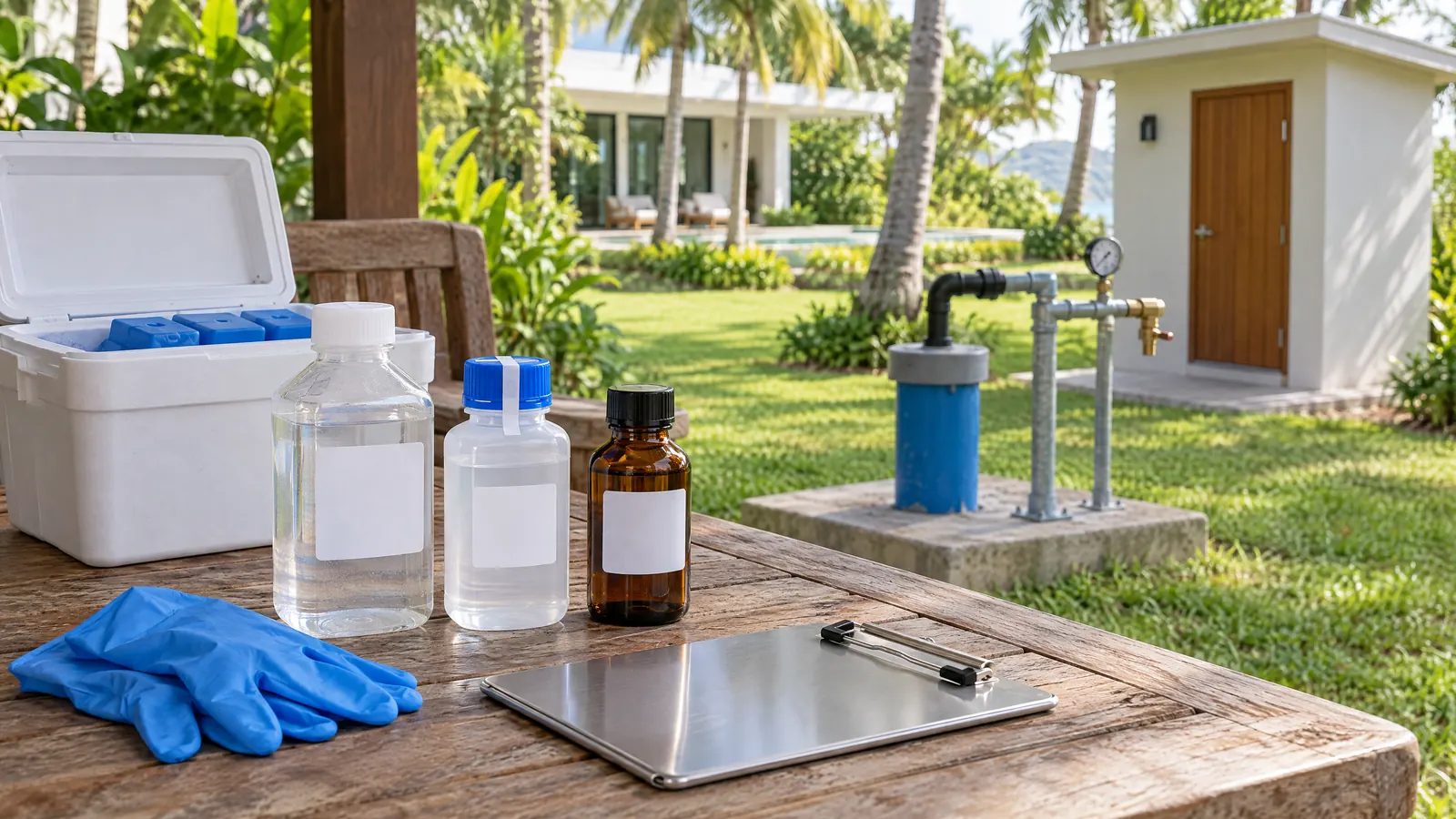
Water that looks perfect in a glass can behave very differently in a pool. Chlorine is a strong oxidiser, the pool sits in the sun, and evaporation concentrates whatever minerals the water carries with every top-up. A laboratory water test before the first fill shows what to expect. These are the results that matter for a pool:
Test result
What it can do in a pool
Usual response
Iron
Oxidised by chlorine: water turns tea-coloured or orange, rust-brown stains on surfaces
Remove before the pool; small residues can be managed with pool chemistry
Manganese
Dark brown to black or purplish staining, often slower to appear than iron
Remove before the pool, as with iron
Hardness (calcium)
Scale at the waterline and on heaters and salt-cell plates, worsening with evaporation
Know the level; balance the pool; treat only if it is genuinely high
Salinity / chloride
Uncontrolled salt plus other minerals; corrosive to metal fittings
Test, and check the well isn't being over-pumped near the coast
pH and TDS
Affects how well the sanitiser works and how much headroom the water has before it needs replacing
Measured at the start; managed by pool chemistry
Turbidity / sediment
Loads the pool filter and clouds the water
Sediment filtration, and fix the well if it is producing sand
Iron and manganese: why a pool turns brown after shocking
Dissolved iron is invisible until it oxidises. In a tank it happens slowly with air. In a pool, chlorine does it in minutes. The classic complaint is a pool filled with crystal-clear well water that turns tea-coloured or orange as soon as it is shocked, leaving stains on the tiles and grout that are much harder to remove than to prevent. Manganese does the same with darker staining. The chemistry is covered in brown or orange well water.
The same well water, before and after a little pool chlorine. A jar test like this is a quick warning sign, not a replacement for a laboratory analysis.
A simple jar test gives an early hint: fill a clear jar with well water, add a small amount of the chlorine the pool will use, and leave it for an hour. A colour change or a settled orange sediment means iron or manganese the pool will meet too. If it shows up, remove the metals before the water reaches the pool, through the villa's treatment system or a dedicated stage on the pool line. Don't rely on the pool's own filter. It may catch some oxidised particles, but the staining happens in the pool first.
Hardness, scale and pool equipment
Calcium is less dramatic and more persistent. Every top-up replaces evaporated water but leaves its minerals behind, so hardness creeps up over the months. Scale forms first where water evaporates or heats: the waterline tiles, heat-pump exchangers and the plates of salt chlorinator cells, where it reduces output and shortens cell life. A pool maintained from well water needs its hardness measured from the start and balanced deliberately.
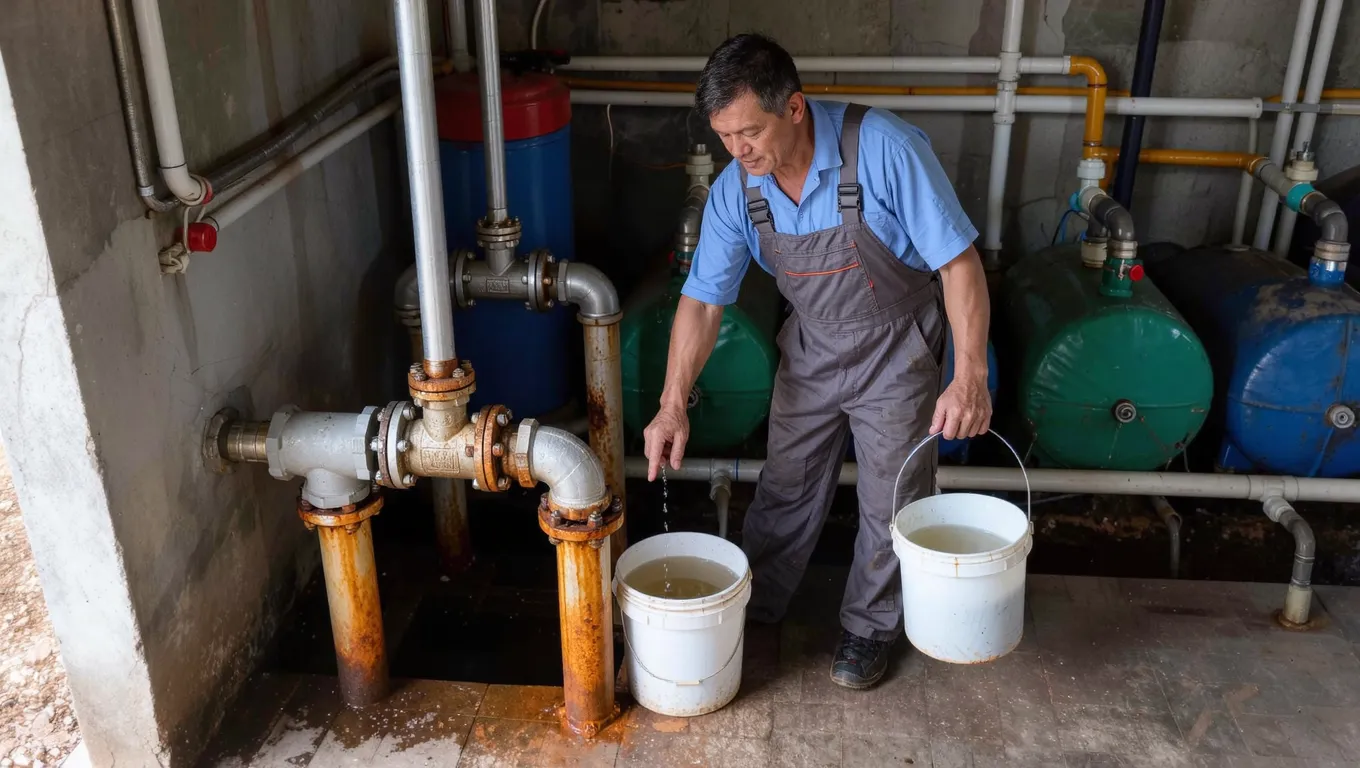
The slow signs: a white band of scale at the waterline and rust-brown staining around a return jet, both typical of untreated well water over time.
A salt pool and a salty well are not the same thing
Saltwater pools run a salt chlorinator that needs a salt level within the range its manufacturer specifies, reached by dosing clean pool salt. Brackish well water isn't a head start on that. Its salt content varies with the season and the pumping, and it arrives with hardness and other minerals that a dose of pool salt doesn't contain. If a well tastes salty, that is also information about the well: near the coast it can mean the bore is being drawn too hard.
When treated or trucked water is the better choice
The water test shows significant iron or manganese and no treatment is installed yet.
The well's sustainable yield barely covers the house, especially in the dry months.
A coastal well is already showing rising salinity.
A new pool has to be filled on a construction deadline that the well can't meet.
In those cases a common approach is to make the first fill with delivered water from a known source, then use the well for top-ups once treatment and storage are in place. The volumes are much smaller and the system has time to handle them.
Common mistakes
Filling straight from the well pump in one day and running the bore dry.
Letting the pool fill draw the house tank empty.
Skipping the water test because the water looks clear, then shocking the pool brown.
Treating brackish well water as "free salt" for a salt chlorinator.
Ignoring hardness until the heater or the chlorinator cell scales up.
Leaving a hose submerged in the pool, creating a path for pool water back into the supply.
Hardness affects the house as much as the pool; what it does to heaters and showers, and when softening the house supply is worth it, is in hard water and limescale in a villa.
Will the pool's own filter remove iron from well water?
Only partly, and too late. A pool filter can trap some iron once it has oxidised into particles, but the colour and staining happen in the pool first. Iron is best removed before the water reaches the pool.
Can the pool top up automatically from the villa supply?
Yes, with a float valve or automatic filler fed from storage, set up so the house keeps priority and the inlet sits above the water line with an air gap to prevent backflow.
Is a jar test with pool chlorine enough before filling?
It's a useful warning sign for iron and manganese, but it says nothing about hardness, salinity or pH. A laboratory analysis before the first fill is the reliable basis for deciding.