Hard well water and limescale in a villa: what hardness does, how to measure it, and when a softener is worth it
Scale on the shower screen, a water heater that takes longer every year, white crust on the pool tiles. Hardness is the mineral content most well owners never test for, because it is invisible in the glass and harmless to drink. It is not harmless to equipment. This guide explains where it comes from, how to put a number on it, and which of the treatment options actually make sense for a villa.
October 29, 2026 · 9 min read
Hardness is the one water-quality problem that arrives without a warning colour or smell. Iron announces itself in orange stains; salinity in the taste; sediment in the glass. Hard water looks and tastes fine, and the first sign is usually a tradesman's bill: a heating element replaced, a shower mixer that no longer turns, a pool pump seal gone, a kettle that boils slowly. By then the house has usually been drinking it for years, which is fine, because hardness is not a health issue. What it is, is a running cost that lands on every appliance that heats or evaporates water. This guide is about recognising it, measuring it and deciding, with real numbers, whether treating it is worth the money.
What hardness is, and why a well has it
Hardness is dissolved calcium and magnesium, picked up as groundwater moves slowly through rock and soil. Laboratories report it as milligrams per litre of calcium carbonate equivalent, and the classes most guidance uses run roughly: soft below 60 mg/L, moderately hard 60 to 120, hard 120 to 180, and very hard above 180. Island wells vary a great deal. Bores in weathered granite are often on the soft side; bores that pass through limestone-rich zones or coastal sediments, or that sit where mineral-rich water has been concentrated, can be hard or very hard. Two wells a few hundred metres apart can sit in different classes, which is why no one can tell you your hardness from the neighbour's experience. Our guide to testing well water covers what a proper analysis includes; hardness should be on it.
Where it shows: heat, evaporation and soap
Dissolved hardness is harmless until something changes its state. Heat it, and calcium carbonate drops out of solution as scale on the hottest surface, which in a villa is the heating element in the electric water heater or the heat exchanger in a gas unit. Evaporate it, and the minerals stay behind as a white crust: on the shower screen, around tap spouts, on the pool waterline and on the leaves of plants watered by sprinklers. Mix it with soap, and it forms the grey film that makes glass look permanently unwashed and leaves skin feeling tight after a shower.
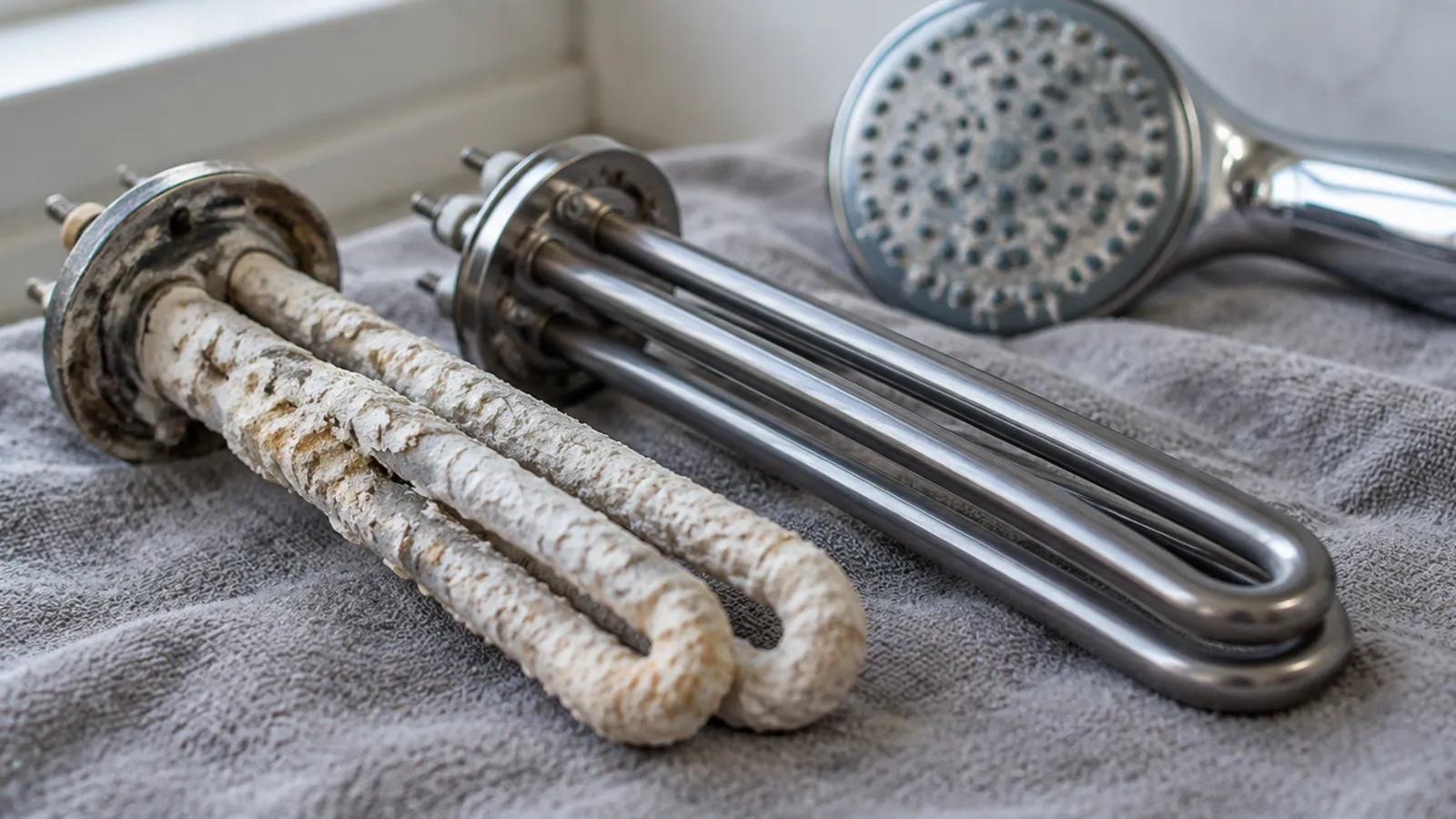
The expensive one is heat. A layer of scale on a heating element insulates it, so the element runs hotter to deliver the same water temperature, uses more electricity doing it, and fails earlier. The same film inside a pool heater, a dishwasher or a coffee machine does the same thing. In a villa with four or five bathrooms each on its own instant or storage heater, the cost of hardness is not one appliance, it is a steady procession of them.
The element on the left came out of a villa storage heater after three dry seasons on hard well water. The scale is an insulator: the element ran hotter, cost more to run and failed early.
Hardness is not iron, and the fixes are different
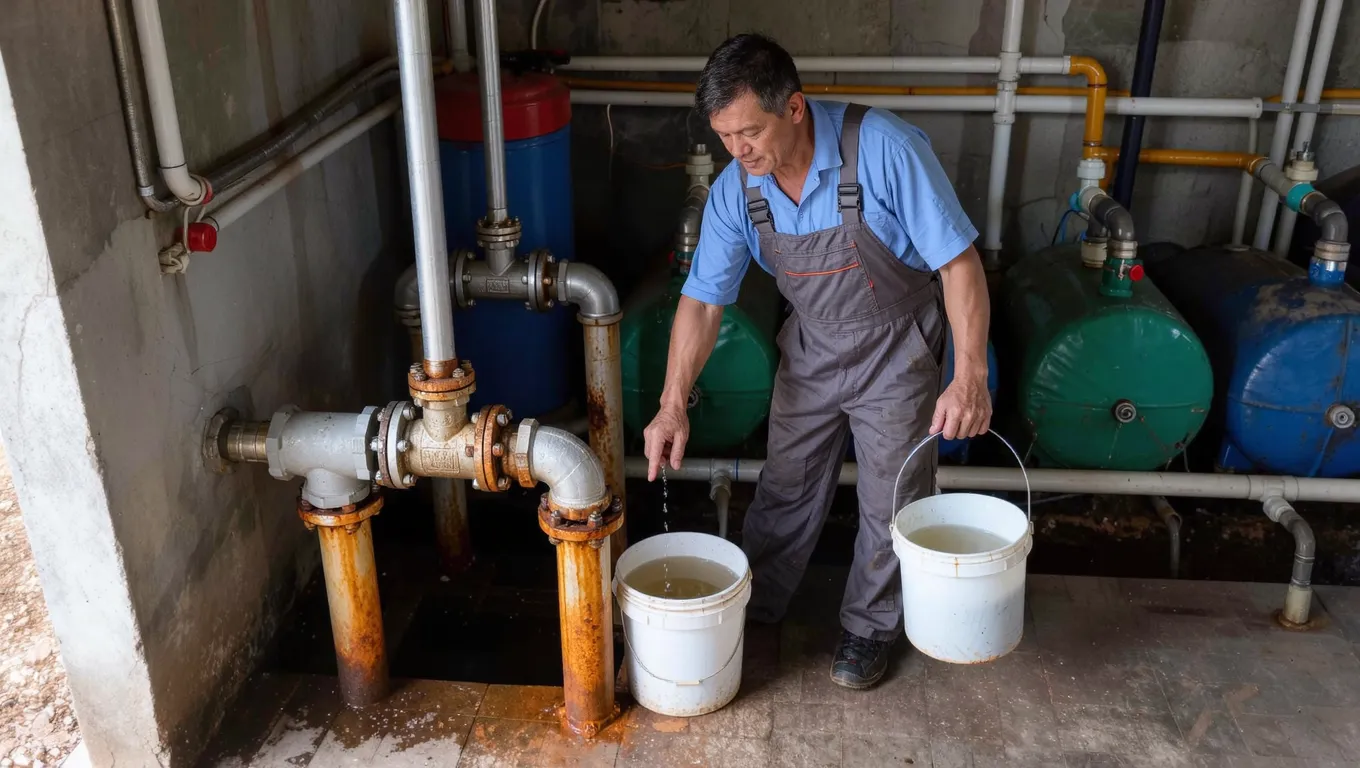
Hard water is often blamed for stains that are actually iron, and iron is often treated with a softener that was never designed for it. Hardness leaves white or grey deposits and clear water. Iron and manganese leave orange, brown or black stains and may colour the water in the tank. A softener's resin can hold a small amount of dissolved iron, but it fouls quickly when asked to carry a real iron load, and the house ends up with both problems and a dead softener. The order of treatment matters: iron and sediment are removed first, hardness after, on the clean water. If the analysis shows both, our guide to whole-house treatment design covers how the stages are sequenced.
Put a number on it before deciding anything
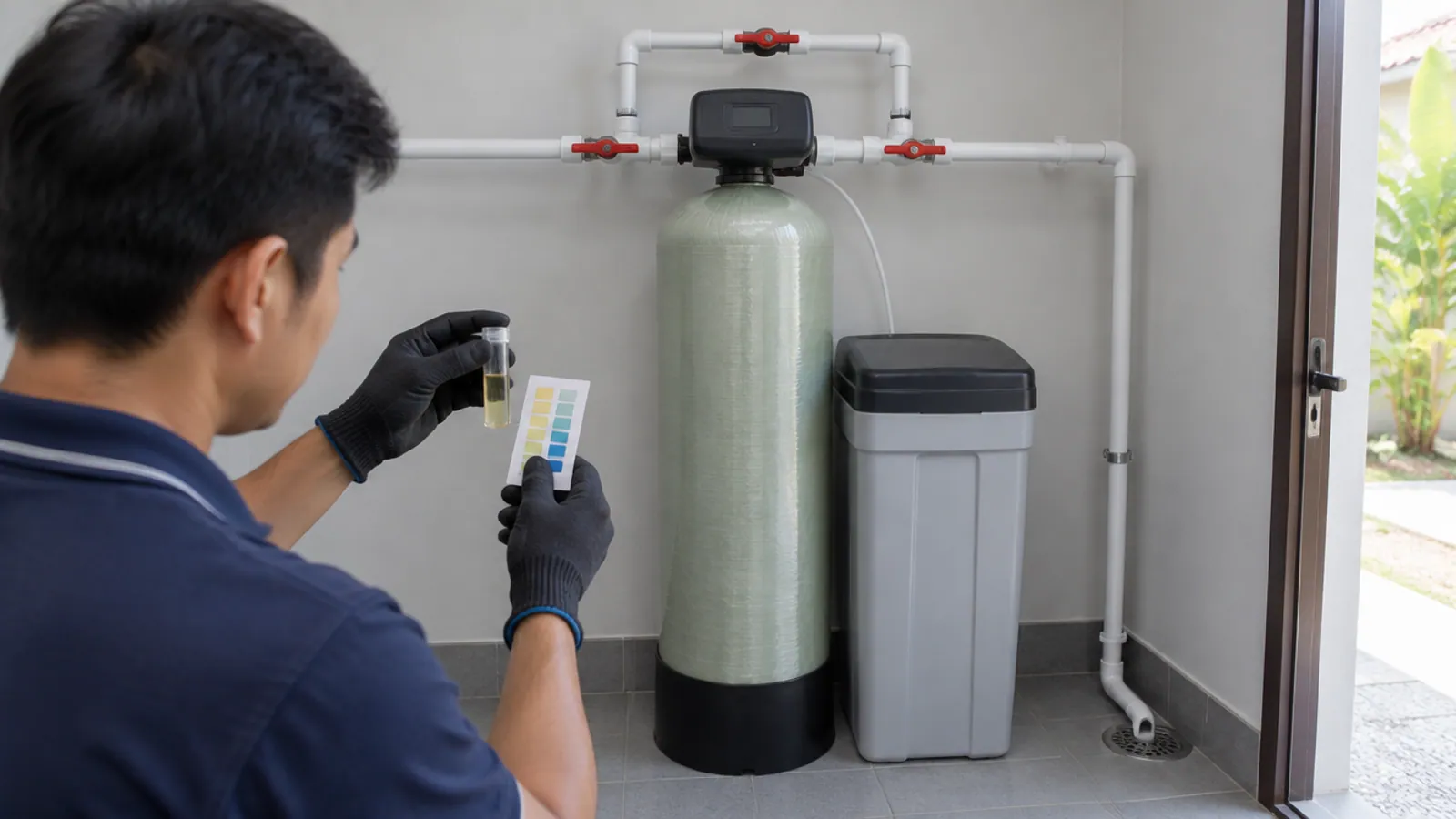
A test-strip from a pool shop gives a rough class; a laboratory analysis gives a number you can design to. Alongside hardness, ask for calcium, magnesium, alkalinity, pH, iron, manganese and total dissolved solids, because the softening decision depends on the combination. Water that is moderately hard with low alkalinity may deposit very little scale and need nothing. Water that is very hard with high alkalinity and a high pH will scale aggressively at quite modest temperatures. And the number moves with the season: a coastal well that draws in more mineral-rich water in the dry months can be a class harder in April than in October, so if you are going to size equipment, test at the worse end of the year.
Cause → effect → treatment
From the rock to the heating element, and what to do about it
Why hardness exists, where it costs money, how to measure it and which treatment belongs where. The branches at the end are the three realistic outcomes for a villa.
1Source
2Effect
3Measure
4Treat
/ /
Test first, treat the number
Hardness, alkalinity, pH and iron together decide whether scale will form and which stage removes what. Buying a softener from a symptom skips the only cheap step.
01 · Source
Calcium and magnesium from the rock
Groundwater dissolves hardness as it moves through weathered rock, limestone zones and coastal sediments. It varies bore to bore and with the season.
02 · Effect
Scale wherever water is heated or evaporates
Heating elements, heat exchangers, shower screens, tap spouts, the pool waterline and irrigated leaves. Heat is the expensive one: scale insulates the element.
03 · Measure
A laboratory number, not a guess
Hardness as mg/L CaCO₃ with alkalinity, pH, iron and manganese. Soft below 60, moderately hard to 120, hard to 180, very hard above. Test at the dry-season end of the year.
04 · Treat
Remove it, or protect what matters
A softener exchanges calcium and magnesium for sodium on a resin bed and regenerates with brine. Alternatives protect single appliances or drinking water. Iron is removed first, always.
Soften the whole house
Hard or very hard water, several heaters, a pool heater or steam room: a correctly sized softener, with a bypass for the garden and an unsoftened drinking tap.
Protect the hot water only
Moderately hard water, one or two heaters: a small softener or scale inhibitor on the hot-water feed, and a descaling routine for the rest.
Live with it, maintain it
Soft to moderately hard, low alkalinity: no treatment; descale elements and heads on a schedule and keep the pool chemistry in range.
Hardness has no health-based limit in drinking-water guidance; the decision is about equipment and comfort, not safety.
How a softener works, and what it asks of you
A conventional softener is a vessel of ion-exchange resin: as hard water passes through, calcium and magnesium stick to the resin and sodium is released in their place. When the resin is full, a control valve flushes it with brine from the salt tank, the calcium and magnesium are washed to drain, and the cycle starts again. It is reliable, well understood and genuinely removes hardness rather than hiding it. It also asks four things of the owner. Salt has to be bought and topped up. Regeneration sends a volume of salty water to drain, so the unit needs a drain and the drain should not be the garden or the septic tank. The water that comes out carries a little more sodium, which is why we leave the kitchen drinking tap and the garden on unsoftened water through a bypass. And the unit has to be sized to the real hardness and the real daily volume, not bought by the size of the house, or it regenerates constantly and eats salt.
On a villa with a pool, note what the softener does not do. The pool is filled and topped up from the villa supply, and softened water in a pool is not automatically better: pool chemistry needs some calcium hardness to protect plaster and grout, so the pool line usually comes off before the softener. Our guide to well water in a pool covers the pool side of hardness.
The alternatives, honestly
Scale inhibitors (polyphosphate dosing cartridges) on a single hot-water feed keep hardness in solution for long enough to get through the heater. Cheap and useful for one appliance; not a whole-house answer, and the cartridge has to be changed.
Template-assisted crystallisation and similar “salt-free conditioners” change how the minerals crystallise so that less scale sticks. Results reported by independent testing are mixed and depend heavily on the water; they do not reduce hardness, and we would not install one as the sole protection for a house of heaters.
Magnetic and electronic descalers clamped to a pipe have not shown reliable results in independent testing. We do not fit them.
Point-of-use reverse osmosis under the kitchen sink makes excellent drinking water from hard water, and is often the right answer for taste even where the house is not softened. It is not a solution for the heaters, because it only treats one tap.
A descaling routine (citric or acetic acid flush for shower heads and kettles, element inspection at service time) costs almost nothing and is the right answer for moderately hard water that is not worth treating.
A sizing example
Take a four-bedroom villa, six people in high season, using around 1,200 litres a day of softened water once the garden and the pool are bypassed. The analysis shows hardness of 250 mg/L as CaCO₃, which is very hard. The softener has to remove 250 grams of hardness per cubic metre, so roughly 300 grams a day. A resin bed of 25 litres has a working capacity in the region of 1,000 to 1,500 grams between regenerations depending on how it is set, so it regenerates every four to five days, which is a sensible rhythm: often enough that the resin stays healthy, rarely enough that the salt bill and the drain volume stay small. The same house on 120 mg/L water with one heater would be better served by a small unit on the hot-water line, or by a descaling routine, than by a whole-house softener regenerating once a fortnight.
Where it sits in the system
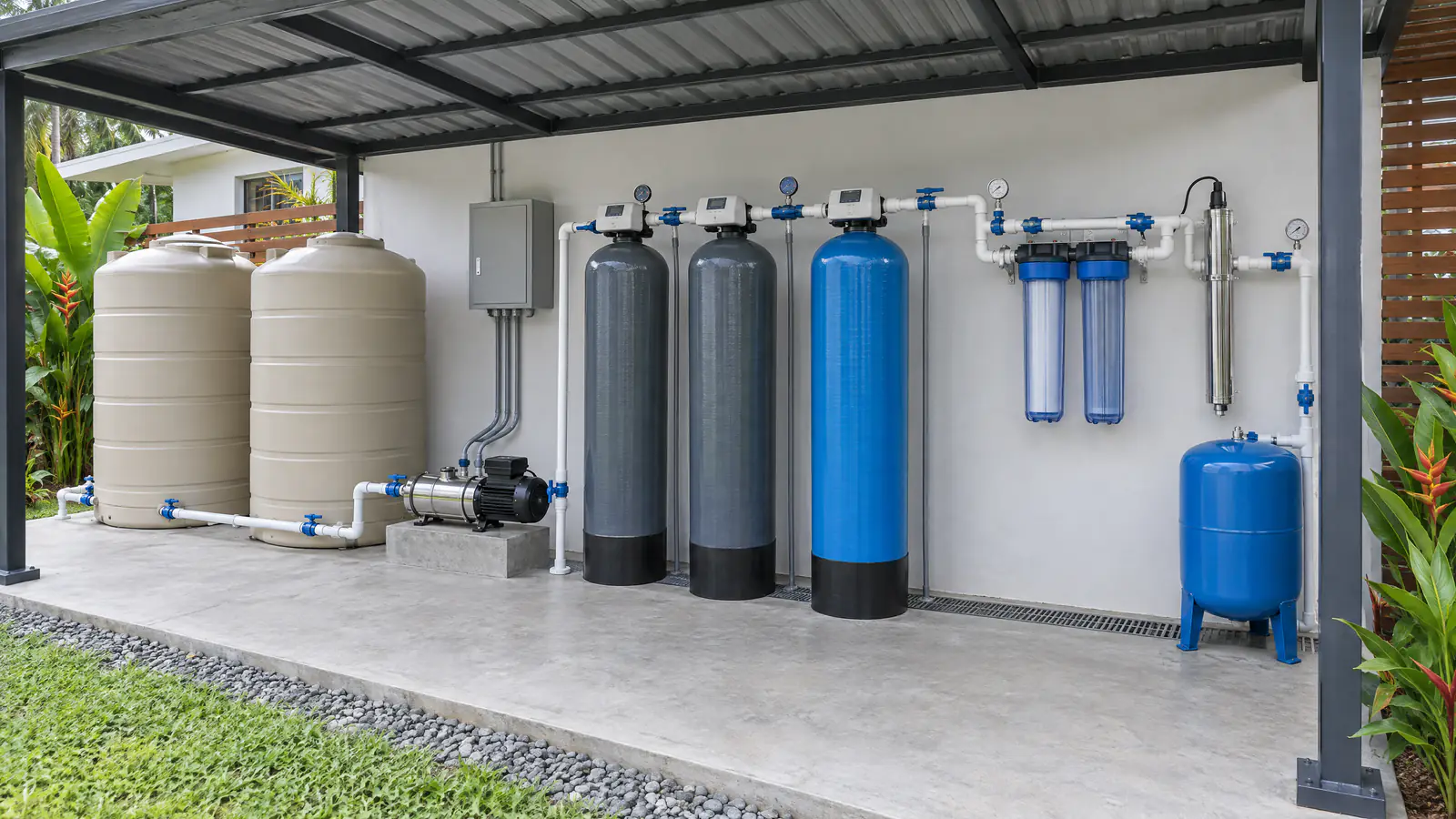
A softener goes after sediment and iron removal and before the hot water, on the treated side of the storage tank where the booster pump gives it a steady flow. It needs a bypass, so the house keeps water while the unit is serviced; a drain with an air gap; a power point for the control valve; and somewhere dry for the salt. Flow matters: a softener that is too small for the villa's peak flow lets hardness through in the shower rush and adds pressure loss that the furthest bathroom will notice. If the water also needs disinfection or polishing, those stages come after the softener. Treatment that is sized together works; treatment bought one symptom at a time usually ends up fighting itself.
If scale is costing you heaters or the test has come back hard, our water treatment team designs the stages from the analysis and sizes a softener to your actual hardness and daily volume, with the garden, the pool and the drinking tap routed the way they should be.
Common questions
Is hard well water bad for your health?
No. Drinking-water guidance sets no health-based limit for hardness; calcium and magnesium are nutrients. The reasons to treat it are scale on heated surfaces, appliance life, soap use and comfort, not safety.
Will a water softener also remove the iron in my well water?
Not reliably. Resin can carry a trace of dissolved iron but fouls with a real iron load, and the house keeps both problems. Iron and sediment are removed first by their own stage; the softener treats the clean water after.
Should softened water go to the garden, the pool and the drinking tap?
Usually not. The garden does not benefit and the salt-regenerated water is wasted on it; pools need some calcium hardness for plaster and grout; and many people prefer unsoftened or point-of-use treated water for drinking. A bypass routes those three around the softener.
Do electronic or magnetic descalers work?
Independent testing has not shown reliable scale prevention from clamp-on electronic or magnetic devices, and they do not change the hardness of the water. We do not fit them. Polyphosphate inhibitors on a single hot-water feed and conventional softeners are the options with predictable results.