Is deep well water safe to drink? Water testing and treatment for Koh Samui villas
Clear, cold and odourless tells you very little about whether well water is safe to drink. A laboratory test does, and it also keeps treatment affordable, because you stop paying for stages your water doesn't need.
October 1, 2026 · 9 min read
Is deep well water safe to drink? Sometimes it is straight from the well. Often it is after the right treatment. You can't tell which by looking at it. Groundwater on Koh Samui varies from one bore to the next, and the things that decide whether it is drinkable, bacteria above all, are invisible in a glass. That is why every sensible answer starts with a well water test, and why treatment should be designed from the results rather than from a shop's standard package.
Why clear water proves nothing
Bacteria have no colour, taste or smell. Water carrying surface or wastewater contamination can look perfect.
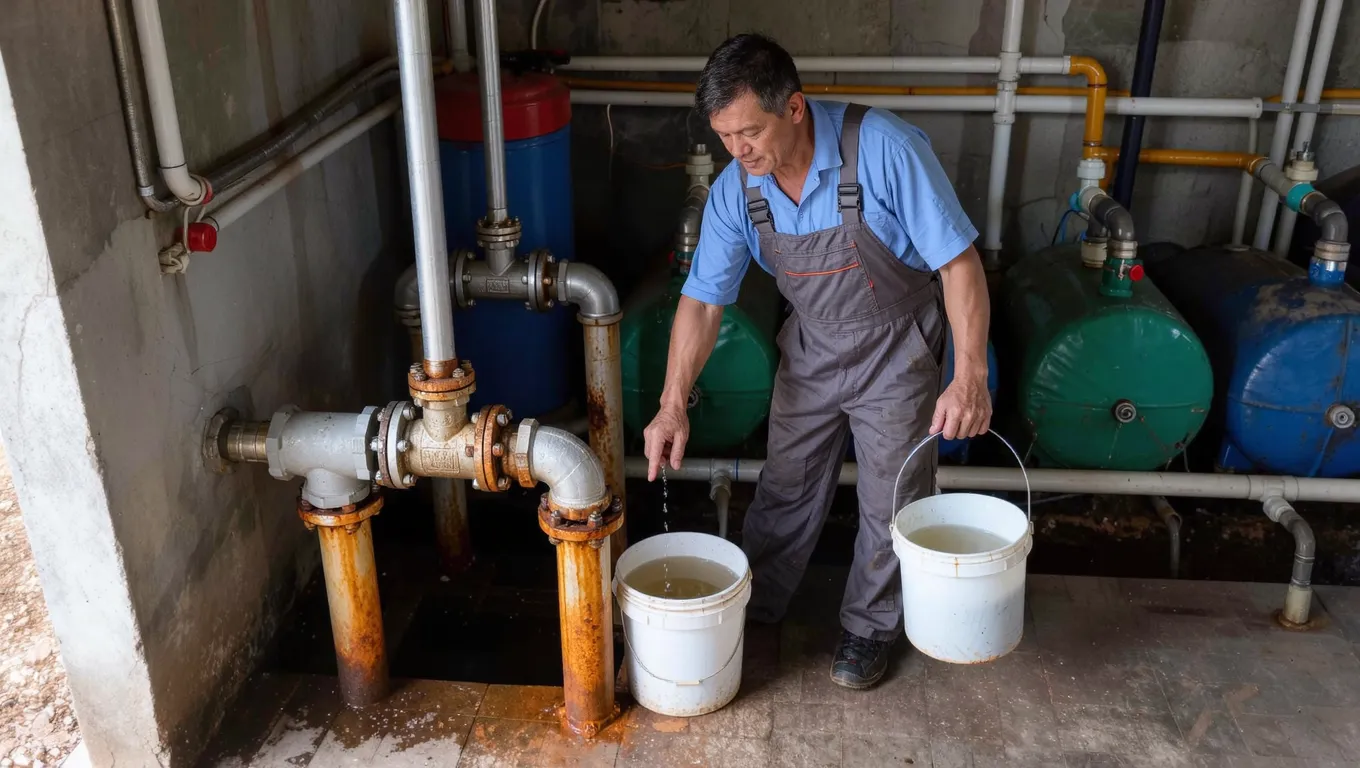
Dissolved iron is invisible until it meets air. Water that leaves the tap crystal clear can turn orange in a bucket an hour later.
Nitrate, a marker of septic or fertiliser influence, has no taste at the levels that matter.
Mild salinity in coastal wells is easy to get used to, while it slowly corrodes heaters and fittings.
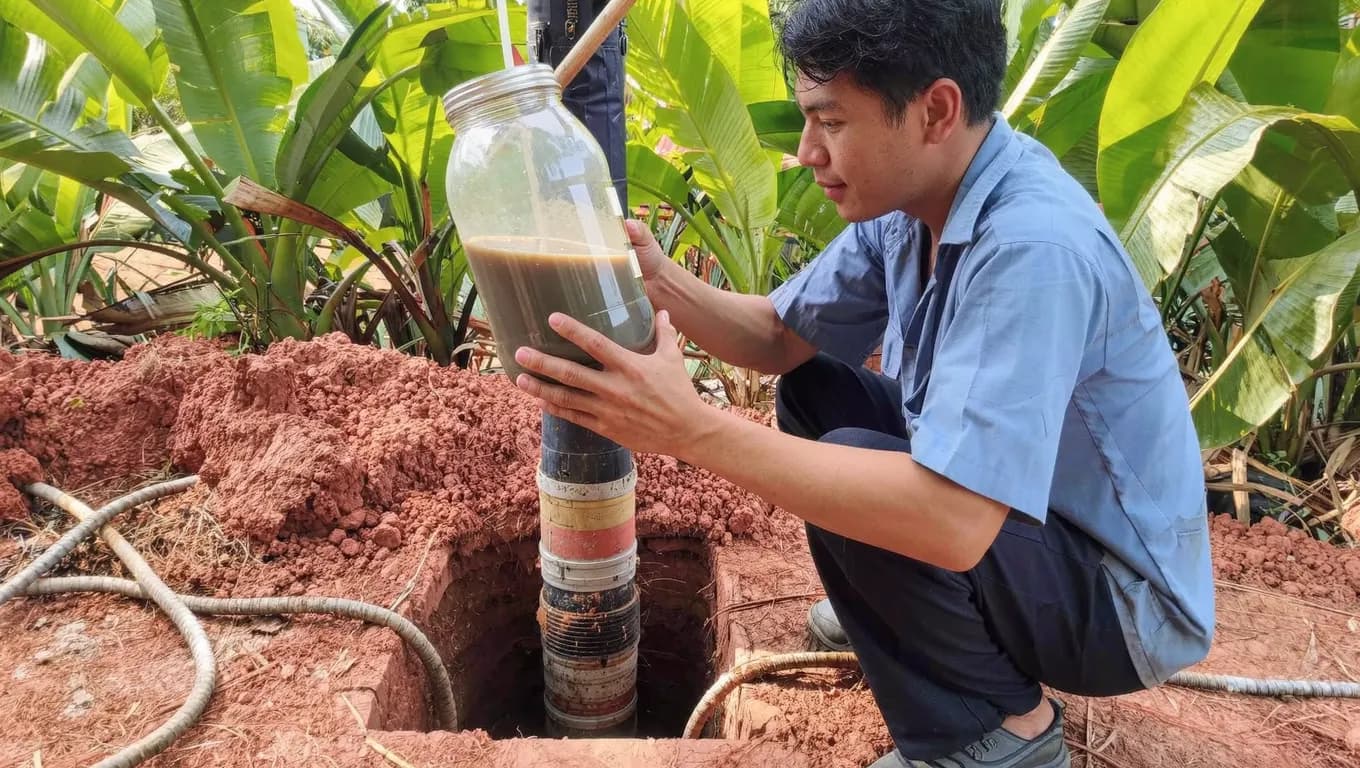
Cloudiness can be harmless minerals or a sign that rainwater is reaching the bore. The look is the same either way.
Washing water and drinking water are different standards
Not all water in a villa has to meet the same standard, and treating it as if it does is a common way to overspend. Water for the garden and toilets needs to be clear enough not to block anything. Water for showers, laundry and the pool should be free of staining minerals and microbiologically safe, because people are in contact with it. Water for drinking, cooking, ice and brushing teeth is the strictest category, and in most villas it is a small fraction of total use. Many good systems treat the whole house to a clean washing standard and add a dedicated drinking-water stage at the kitchen.
What a well water test should cover
Parameter
What it tells you
Why it matters for a villa well
Total coliforms and E. coli
Whether bacteria from the surface or from wastewater reach the water
The central question for drinking water, and invisible
Iron
Orange staining, metallic taste, sediment that appears after air contact
No taste or colour; a reason to check the well's surroundings
A smell of rotten eggs (hydrogen sulphide) is worth mentioning to the lab, as is anything known about the plot's history. The laboratory can advise whether a wider screen for metals or other parameters is worth adding. For drinking water, results should be reported against a recognised drinking-water standard, so you are reading pass or fail rather than raw numbers.
From well to glass
How a villa's water should be planned
1Deep well
2Water test
3Treatment
4Storage
5House
Washing / Drinking
Test first → design treatment second
Every stage after the water test is chosen from its results. Treatment bought before the test is a guess, and guesses tend to be either too much equipment or the wrong equipment.
01 · Deep well
The source
Raw groundwater, sampled from a tap close to the wellhead before any filter.
02 · Water test
Laboratory analysis
Bacteria, iron, manganese, hardness, TDS and salinity, pH, turbidity and nitrate, read against a drinking-water standard.
03 · Treatment
Treatment selected from the results
Only the stages the results call for: sediment, iron and manganese removal, softening, disinfection.
04 · Storage
Clean storage
A covered, cleanable tank. Treated water stored in a dirty tank picks up contamination again.
05 · House
Supply to the house
Pressure system feeding showers, kitchen, laundry and garden.
Whole-house water
Showers, laundry, pool and garden, treated to a clean washing standard.
Drinking point, where required
A point-of-use stage at the kitchen (UV, carbon or reverse osmosis), confirmed by a retest at that tap.
The order is conceptual. In a real installation UV usually sits as the last stage before use, after storage, so the water is disinfected after it leaves the tank.
A basic testing workflow
Decide what the water will be used for. A drinking-water test and a 'will it stain the bathroom' test cover different parameters.
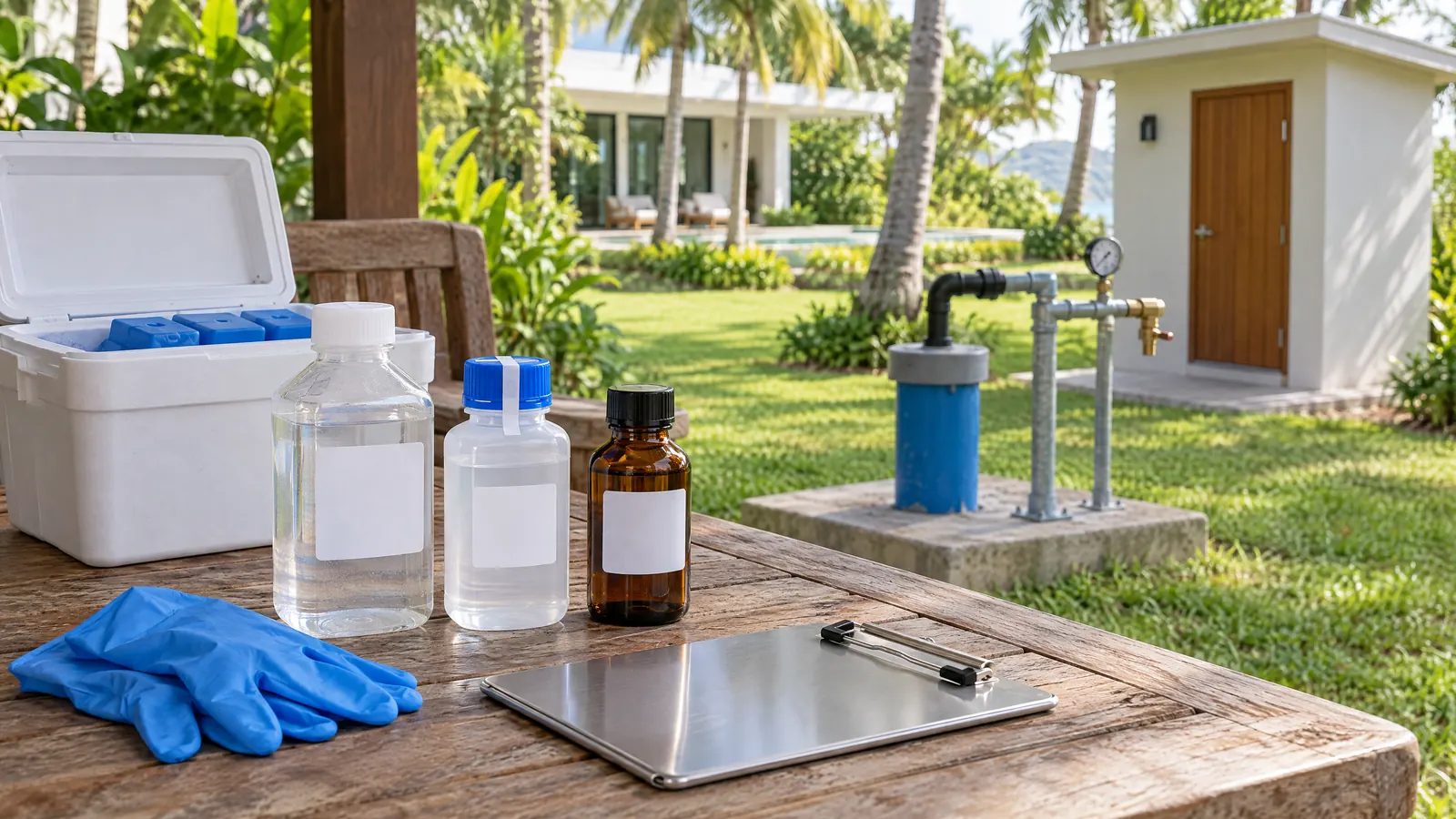
Get the right containers from the laboratory. Microbiological samples go in sterile bottles; chemical samples in clean bottles of the type the lab specifies.
Sample raw water from a tap as close to the wellhead as possible, before any filter, so you have a baseline that describes the well itself.
Follow the lab's sampling instructions exactly: usually run the water for several minutes first, don't touch the inside of the cap or bottle neck, and fill to the mark.
Keep samples cool and deliver them within the time the lab allows. Bacteria samples are time-sensitive, often the same day.
Read the results against the standard that matches the use: drinking, washing, or both.
Design treatment from the results, then retest treated water at the tap you actually drink from.
When to test a villa well
After drilling, once development has finished and the water runs clear. This is the baseline everything else is compared with.
Before anyone relies on the well for drinking water, even if a neighbour's well tested fine.
When buying a property with an existing well, whatever the seller's paperwork says.
After the villa has stood empty for a long period, or the system has been unused for months.
After a contamination event: flooding, a septic overflow nearby, work on the well or pump, or a broken wellhead seal. See what to check after flooding.
Whenever taste, smell, colour or clarity changes.
After treatment is installed, to confirm it works, and then periodically. At least once a year is sensible for bacteria where the well supplies drinking water.
Treatment follows the results
Test finding
Typical treatment
What to know
Sediment or turbidity
Sediment filtration (cartridge or backwashing media)
The first stage, protecting everything after it. Persistent sand is a well problem, not a filter problem
Iron and manganese
Oxidation followed by filtration through suitable media
Depends on pH and on the levels of each; cartridges alone clog fast
Taste, odour, some organics
Activated carbon
Improves taste and smell; does not remove bacteria, hardness or salts
Hardness
Softening (ion exchange), where scale is a real problem
Protects heaters and glass; drinking water is often taken before the softener
Bacteria
UV sterilisation, sometimes with chlorination
UV needs clear water, so filtration comes first. UV leaves no residual, so the tank must stay clean
High TDS, salinity or nitrate
Reverse osmosis, usually at a drinking point
Produces reject water. Whole-house RO only when the results clearly justify it
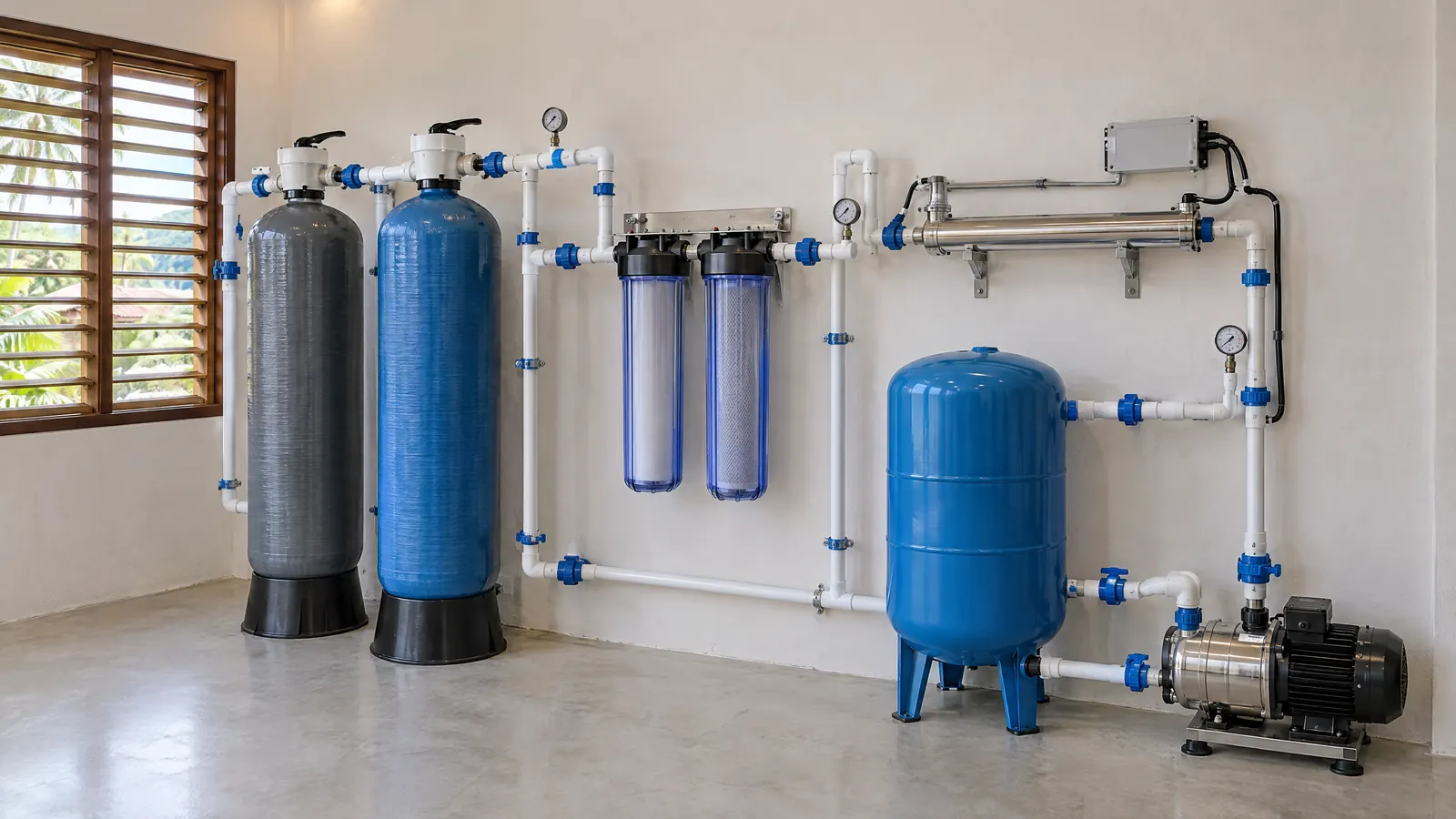
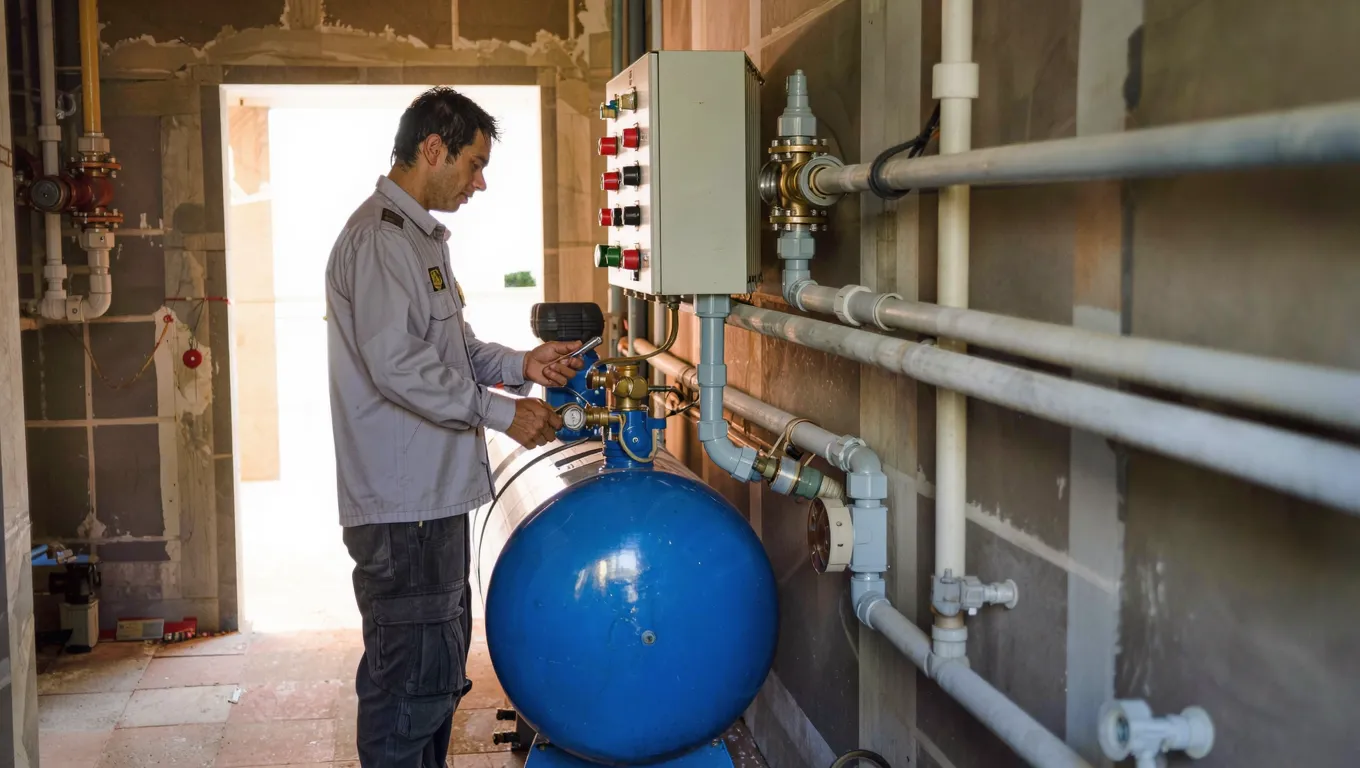
A staged treatment room: media vessels for iron and manganese, cartridge filters, UV disinfection, then pressure. Which of these a villa needs is decided by its water test.
Whole-house treatment or a drinking-water point?
Problems that affect every tap belong in whole-house treatment: sediment, iron and manganese, hardness where scale is damaging equipment, and microbiological contamination if people shower in the water. Problems that only matter for what you swallow, such as moderate salinity or nitrate, are usually cheaper and more effective to solve at a single drinking point under the kitchen sink. Reverse osmosis is the clearest example. At a drinking tap it is compact and efficient. Across a whole villa it is a large, wasteful plant that is rarely justified. How such a system is laid out and sized is covered in designing whole-house filtration for a villa well.
Whatever the design, maintenance is part of it. Cartridges load up, carbon is exhausted, media needs backwashing, UV lamps lose output over time and are replaced on a schedule. The maintenance schedule for a villa well should include the treatment equipment, and the filtration options are worth reading with your results in hand.
Common mistakes
Buying filters before testing the water, then discovering they treat the wrong thing.
Testing only after the filters, which leaves no record of what the well itself produces.
Treating one test as permanent. Groundwater changes with seasons, rainfall and nearby activity.
Using a cartridge to remove high iron. It clogs within weeks and the pressure drops.
Fitting UV ahead of the sediment stage, where cloudy water shields bacteria from the light.
Specifying whole-house reverse osmosis when only drinking water needed it.
Storing treated water in a tank that hasn't been cleaned in years.
Assuming the neighbour's results apply to your well.
Need to understand your well-water quality or treatment requirements? Contact our team. We can take samples correctly, have them analysed in a laboratory, go through the results with you and design water filtration around what is actually in the water, from a single drinking point to a whole-villa system.
Common questions
Can I just boil well water instead of treating it?
Boiling deals with microbiological contamination in the water you boil, but it doesn't remove iron, manganese, nitrate or salts. Some of these become slightly more concentrated as water evaporates. It is a stopgap for drinking water, not a substitute for knowing what is in the well.
Are home test kits and strips good enough?
They are useful for quick checks such as pH, hardness or iron, and for spotting a change between lab tests. They can't replace a laboratory analysis when deciding whether water is safe to drink, especially for bacteria.
Our well tested fine last year. Do we need to test again?
If the well supplies drinking water, yes. A yearly bacteria check is a sensible minimum, and you should test sooner after flooding, work on the well, a long period of disuse or any change in taste, smell or colour.