Depth protects well water from a lot, but not from the top. The few metres where the casing meets the ground are where rain, runoff and wastewater find their way in, and they are entirely within the owner's control.
October 8, 2026 · 9 min read
Owners of deep wells often assume that eighty metres of rock between the house and the water is protection enough. For most of the ground, it is. The weak point is the wellhead: the place where a pipe connects the ground surface to the aquifer. If water can run down that pipe, inside it or alongside it, the depth no longer matters, because the well itself has become the shortcut. On an island where a single afternoon downpour moves a lot of water across a garden, protecting a deep well from surface contamination is mostly about what happens in the first metre.
How surface water gets into a deep well
Down the outside of the casing. Where the gap between casing and borehole isn't properly sealed near the surface, water pooling at the casing can run straight down it. That seal is explained in what's inside a deep well.
Through the top. A loose or missing cap, or gaps where the riser pipe and pump cable leave the wellhead, let in rainwater, insects, small animals and debris.
Through damage near the surface. Casing cracked by a vehicle, by settlement or by an old repair opens a path below ground level, where nobody sees it.
By flooding. When the wellhead is submerged, any weakness at the top is underwater, and floodwater carries whatever it has picked up on the way.
Cross-section
How surface contamination can reach a deep well
Left: a protected wellhead. Right: the pathways a defective one leaves open. Same rain, same ground.
1
Casing above ground, sealed cap
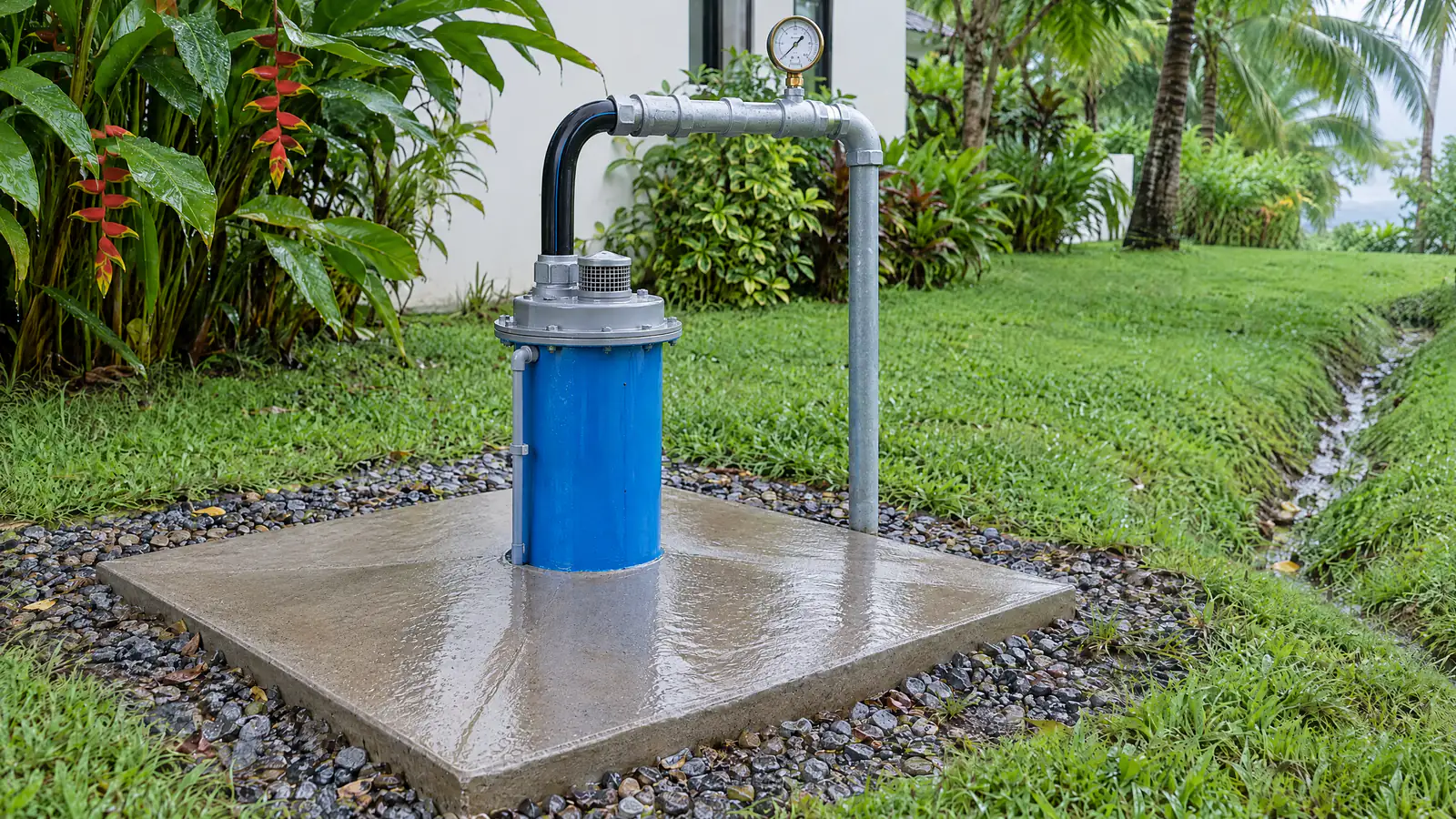
The casing ends well above the surrounding ground, closed by a sealed cap with a screened vent.
2
Concrete apron sloping away
Sheds rain away from the casing instead of letting it stand against it.
3
Sanitary (grout) seal
Cement or bentonite filling the gap around the casing near the surface, closing the path down its outside.
4
Runoff directed away
Ground graded so rainwater flows away from the wellhead, not towards it.
5
Ponding at the casing
A low spot that collects water right where the casing enters the ground.
6
Cracked or missing collar
Gaps between concrete and casing let standing water start its way down.
7
Path down an unsealed casing
Without a seal, surface water can travel along the casing to the water-bearing zone.
8
Loose cap and open penetrations
Rain, insects and debris enter through the top and around the pipe and cable.
9
Septic soakaway nearby
Wastewater soaking into the ground upslope adds a source for any of these pathways to carry.
Schematic, not to scale. In fractured rock or permeable soil, contamination can travel further than intuition suggests.
What a protected wellhead looks like
The casing ends above the ground and above any level where water collects or floods, not flush with the lawn and not in a pit.
A sealed sanitary cap closes the top, with a screened vent so air can move but insects can't.
The riser pipe and cable leave through sealed glands or fittings, never through a gap stuffed with a rag.
A concrete apron surrounds the casing and slopes away from it, bonded to the casing without cracks or gaps.
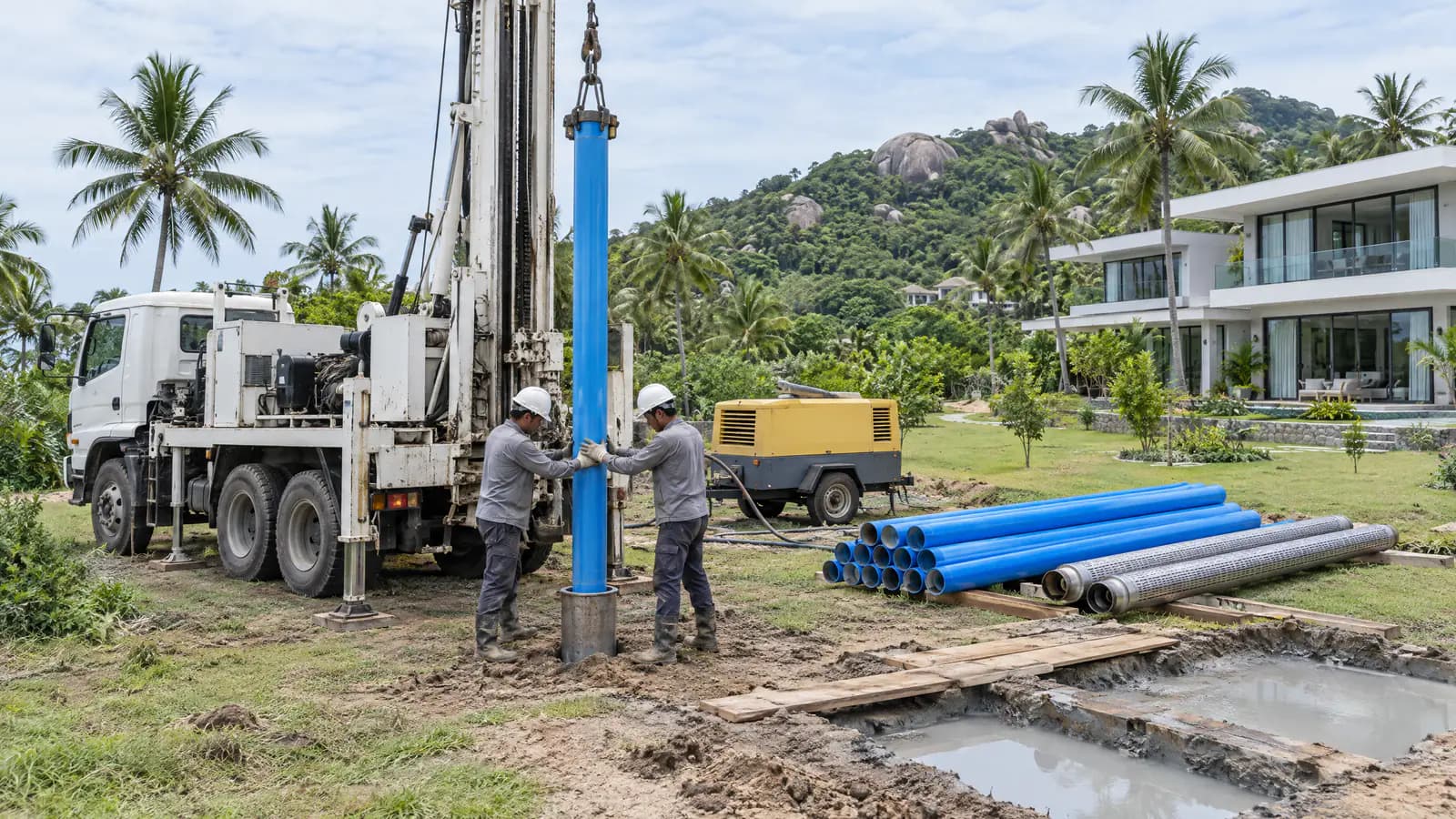
Underneath, a grout seal fills the space around the casing near the surface, installed when the well was built.
Public-health guidance on private wells, such as the US EPA's, describes the same basic picture: casing above grade, ground sloping away, and a vermin-proof sealed cap. Underground wellhead pits and chambers deserve a specific warning. They look tidy and keep the casing out of sight, but they collect water and put the top of the well below ground level, which is exactly where it shouldn't be.
Drainage around the well
Tropical rain arrives fast and in volume, and on a sloping Samui plot it travels. Walk the wellhead area after a heavy shower and watch where the water goes. It should be moving away from the casing. Common problems are easy to fix once seen: a roof downpipe discharging onto the lawn next to the well, a path or terrace draining towards it, pool overflow or backwash water released nearby, or an irrigation zone soaking the ground around the pad every evening. Regrading the ground, adding a gravel strip or a shallow swale, and moving downpipes usually costs little.
Keep chemicals away too. Pool chemicals, fertiliser, pesticides and fuel shouldn't be stored, mixed or spilled near the wellhead, and planting beds that are heavily watered and fed are better placed somewhere else.
Septic tanks, soakaways and why distance still matters
A septic tank or soakaway releases wastewater into the ground by design. Even when the well draws from deep rock, the horizontal relationship matters: a soakaway upslope of a poorly sealed casing gives contamination both a source and a shortcut. In fractured granite or sandy coastal soil, water can travel further than expected.
Many countries set minimum separation distances between wells and septic systems in public-health or building rules. The figures vary with jurisdiction, soil and system type. We don't quote one universal number, and any local requirement on Samui should be checked with the relevant authority alongside the groundwater permit. In practice, the site-specific answer is consistent: further is better, uphill of the well is worse than downhill, and a well-sealed wellhead matters most of all when the distance is short.
Several pathways in one picture: water ponding against the casing, a cracked collar, a loose cap with a rag in the gap, and a downpipe draining towards the well.
When the well is open: maintenance and building work
Wells are most exposed while someone is working on them. A pump pulled for service leaves the casing open; cover it whenever work pauses, and never overnight. Equipment going down the well should be clean, and sensible contractors disinfect anything that has touched the ground. After work, the cap, glands and seals should go back exactly as they were, or better.
Construction near an existing well needs a plan of its own. Fence the wellhead off, keep vehicles and excavators away from the casing, stop concrete washout and spoil from going near it, and don't let new paving or landscaping bury it or raise the ground around it. A wellhead that ends up below a new terrace is both hard to service and badly placed for drainage. Our guide to preparing for drilling covers where a new well should go in the first place.
A cracked, broken or missing apron, or a visible gap between concrete and casing.
A loose, cracked or improvised cap, or rags and tape around the pipe and cable.
Insects, roots or debris found inside the casing during service.
A change in taste or smell, or a positive bacteria result in a routine test.
After a flood
Switch off power to the well pump before going near a flooded wellhead.
Don't use the water for drinking, cooking or brushing teeth until it has been tested and found safe.
Once the water has gone down, inspect the wellhead: cap, glands, apron, and any sign of debris inside.
Have the well disinfected (shock chlorination) and flushed by someone experienced in doing it safely. Public-health guidance, including the CDC's, describes this procedure for flooded wells.
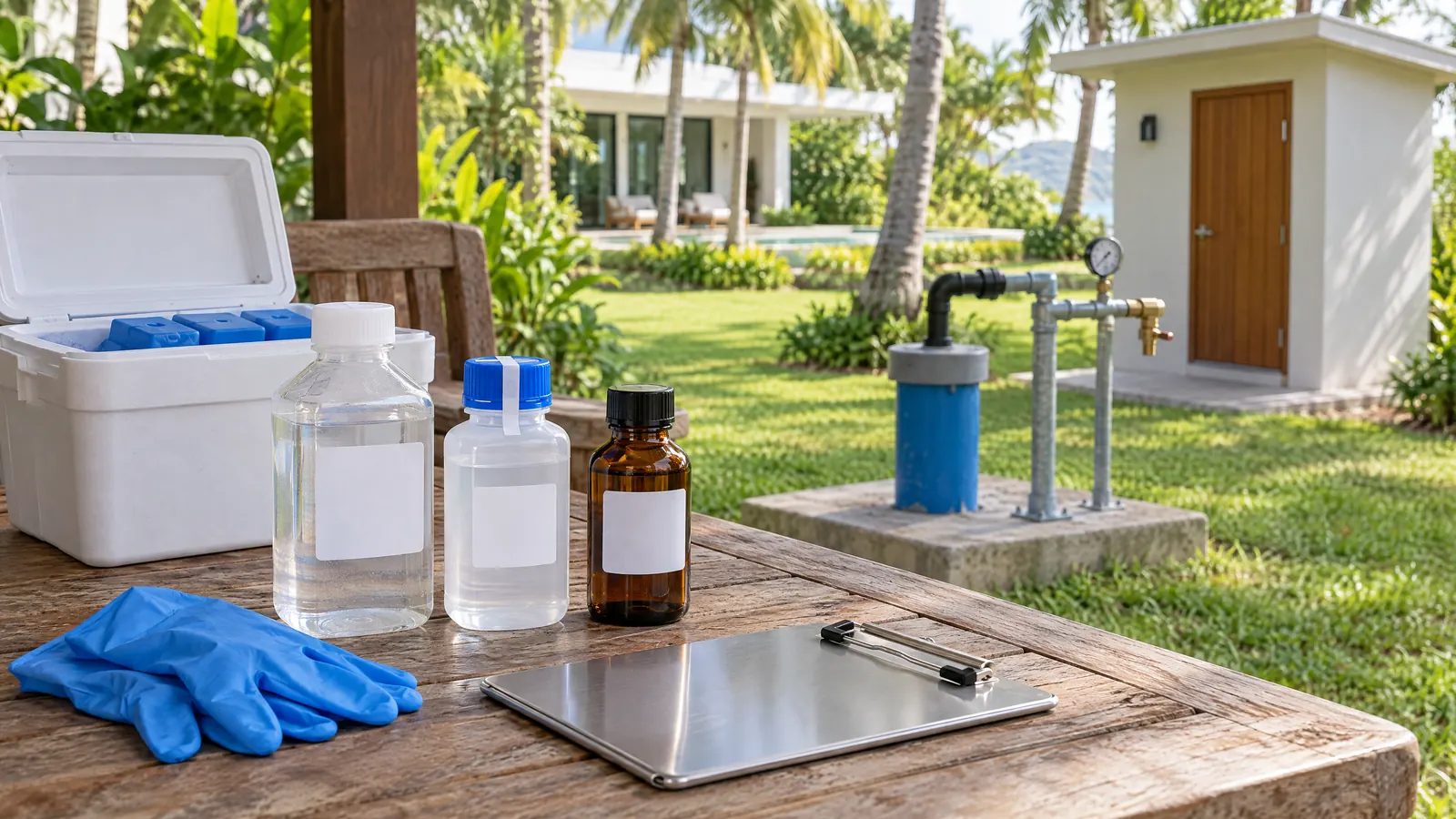
Take the sample for a laboratory water test only after the chlorine has been flushed out of the system.
Fix whatever let the water reach the wellhead, or the next storm will repeat it.
A bore that is no longer used is the extreme case of an unprotected wellhead. What to do with one, from keeping it safely to sealing it, is in our guide to unused and abandoned wells.
If runoff or flooding has reached your wellhead, ask us to inspect the installation. We'll check the cap, seals, apron and drainage, advise whether the water should be tested, and put right whatever let the water in as part of a well inspection.
Common questions
My well is very deep. Can surface water really reach the water I pump?
Yes, if the top of the well gives it a route. Depth protects the water from the ground in general, but a poorly sealed casing or an open wellhead connects the surface directly to the water-bearing zone.
Is it a good idea to put the wellhead in an underground chamber?
Generally not. Chambers and pits collect rain and runoff and place the top of the casing below ground level. A wellhead raised above the surrounding ground is far easier to keep protected.
How would I know if floodwater got into the well?
Often you won't by looking. Water can stay clear and still be contaminated. If the wellhead was submerged or surrounded by floodwater, treat the well as affected until it has been disinfected and a laboratory test is clear.