Unused and abandoned deep wells: preserve it, or decommission it properly
A well nobody uses does not simply sit there. Left open and unprotected, it becomes a pipe from the surface straight into the groundwater your neighbours drink. This guide covers what an idle bore turns into, how to keep one safely for later, and what proper decommissioning actually involves.
October 22, 2026 · 9 min read
Wells stop being used for ordinary reasons. The villa is connected to the mains, a new bore is drilled on a better spot, the land changes hands, a development's plant is centralised, or the pump dies and nobody gets round to it. What follows is almost always the same: the cap goes missing, the apron cracks, the grass grows over it, and a few years later the only person who knows the bore exists is the one who drilled it. This article is about that bore. It is not a do-it-yourself sealing recipe; decommissioning is a drilling contractor's job for reasons that will become clear. It is about understanding what you own, and choosing between keeping it and closing it.
Idle is not the same as abandoned
An idle well is one you intend to use again: the villa is on mains for now, the house is between owners, the pump is out for repair, or the bore is the backup in a dual-source system that has not been needed this year. An abandoned well is one nobody intends to use. The distinction decides what should happen next. An idle well needs to be kept in a condition where it can be put back to work, which is cheap and mostly a matter of keeping it closed. An abandoned well needs to be returned to something like the geology it was drilled through, which is a proper job. What neither should be is the third state: left open, forgotten, and slowly turning into a problem.
Why an unused bore becomes a contamination path
A deep well is an engineered hole through the layers that protect groundwater. On Samui that is typically topsoil and weathered rock sitting on fractured granite, and the useful water is in the fractures at depth. When the well was built, the casing, seal and screen were placed so that only the aquifer could enter the bore, and the cap and apron kept the surface out. While the well is in use, somebody is looking at it, pumping it and noticing changes. Once it is unused, nobody is, and the protection depends entirely on steel, cement and a lid.
Two things then go wrong. The first is surface entry: rain, runoff, septic leakage, garden chemicals, dead animals and debris get in through a missing cap or a cracked collar and drop straight into the water table, bypassing the metres of soil that would normally filter them. Our guide to surface contamination covers how that happens to a working well; an abandoned one is the same, with nobody watching. The second is vertical movement between formations. An open bore connects shallow, often polluted groundwater to deeper, cleaner water, and lets water move between fracture zones that the rock had kept apart. That flow does not stop at your boundary. A neglected bore on one plot can be the reason the well two doors down starts to test badly.
What deterioration looks like
The failure of an unused well is slow and visible, if anyone looks. The signs below are what an inspection records, roughly in the order they appear.
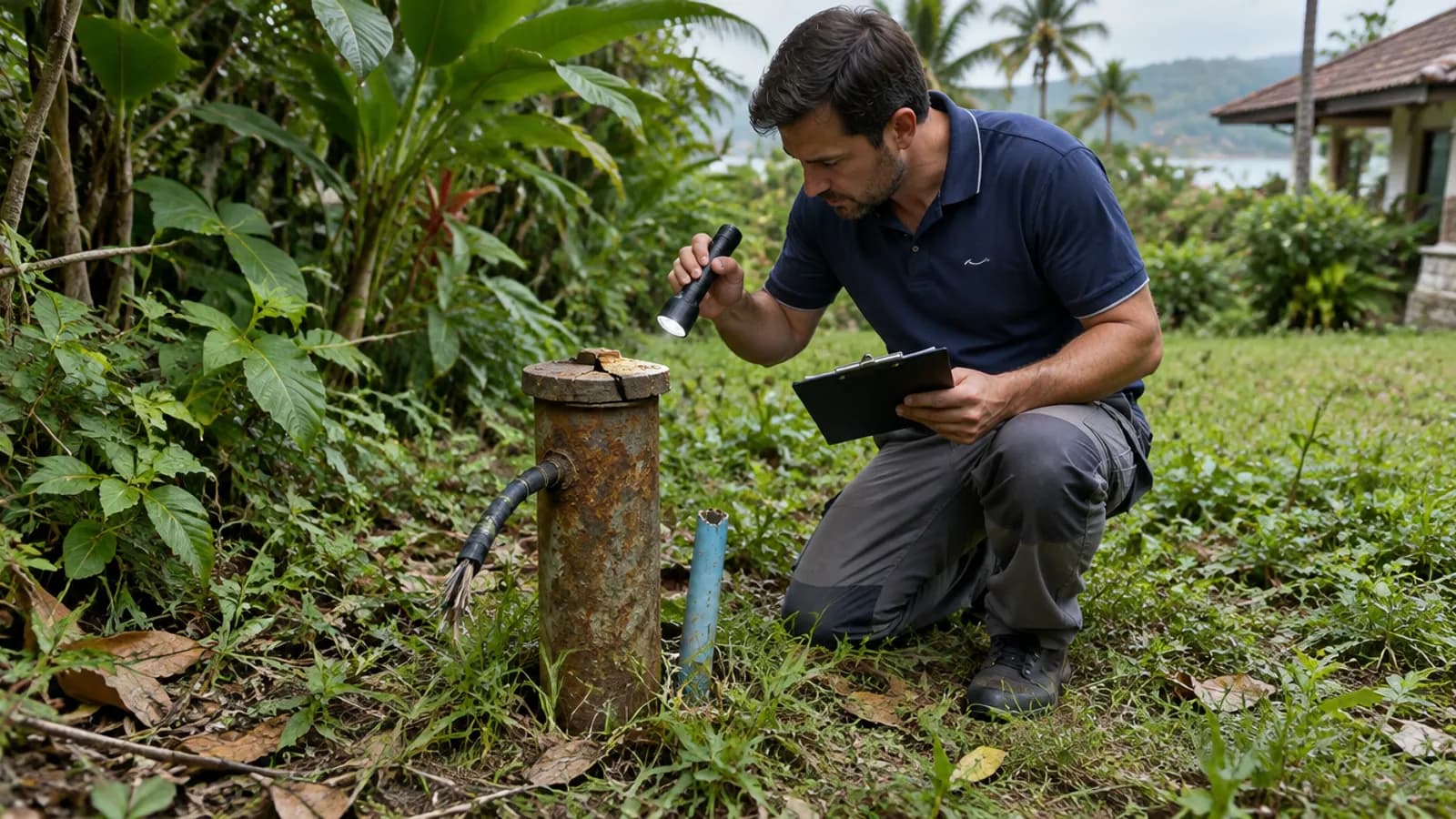
A missing, loose or corroded cap, or a cap replaced with a brick, a bucket or a plastic bag.
Casing corroding at the ground line, where the steel is alternately wet and dry; rust flaking from the rim and holes forming just below grade.
A cracked, sunken or absent concrete apron, so that runoff collects around the casing instead of draining away.
Old pump, cable and riser pipe still down the hole, or cut off at the top and left hanging.
Standing water, insects, nests or roots inside the casing collar.
Fill or rubbish tipped into the top of the bore at some point, which solves nothing and complicates everything that comes later.
Typical state of a bore a few years after its last use: cap askew, debris in the gap, corrosion at the ground line and a leftover cable. Everything that lands on this patch of ground now has a route to the aquifer.
The old pump, cable and pipe have to come out
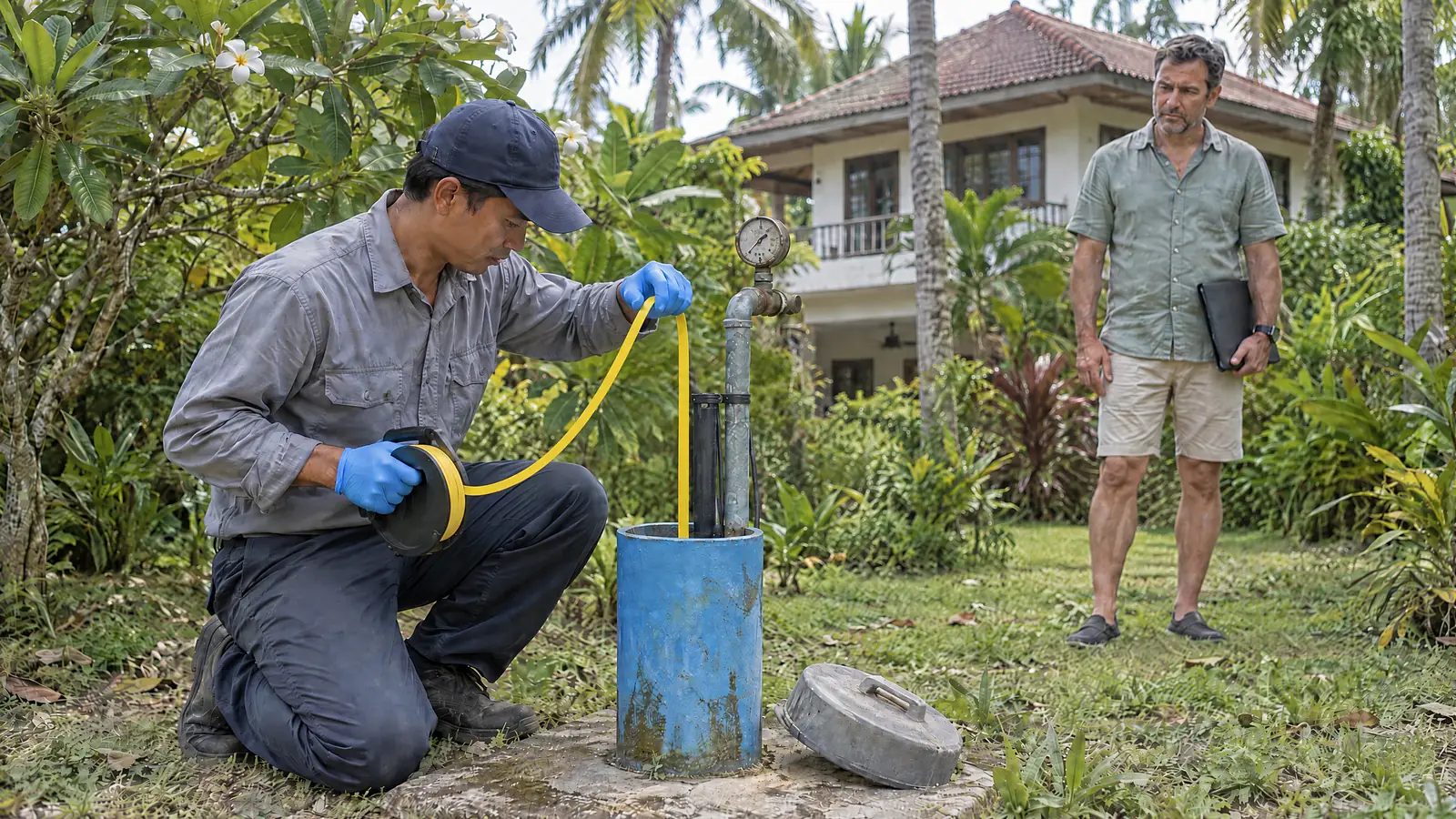
Whatever was left in the bore when it stopped being used is a problem for both futures. If the well is to be preserved, a seized pump and a corroding cable are contaminating the water and will have to be pulled before anything can be reinstalled. If the well is to be sealed, nothing can be left down the hole: a pump and riser pipe sitting in the bore leave voids that sealing material cannot fill, so the bore is never truly closed. Recovering a string that has been down a hole for years is sometimes straightforward and sometimes a fishing job with specialised tools, which is one of the reasons the work belongs with a drilling contractor rather than a general builder.
A professional assessment comes before the decision
Before choosing between preserving and decommissioning, it is worth knowing what the bore is. An assessment establishes its depth and construction, measures the water level, checks the casing with a camera where it is accessible, and takes a sample if the water is a candidate for future use. On a well with potential, a short pumping test tells you whether it is still worth having; on a well with no future, the same survey tells the contractor what sealing it will involve. Only with that in hand can anybody say whether the bore is an asset to keep, a candidate for rehabilitation, or a liability to close.
Preserving a well for possible future use
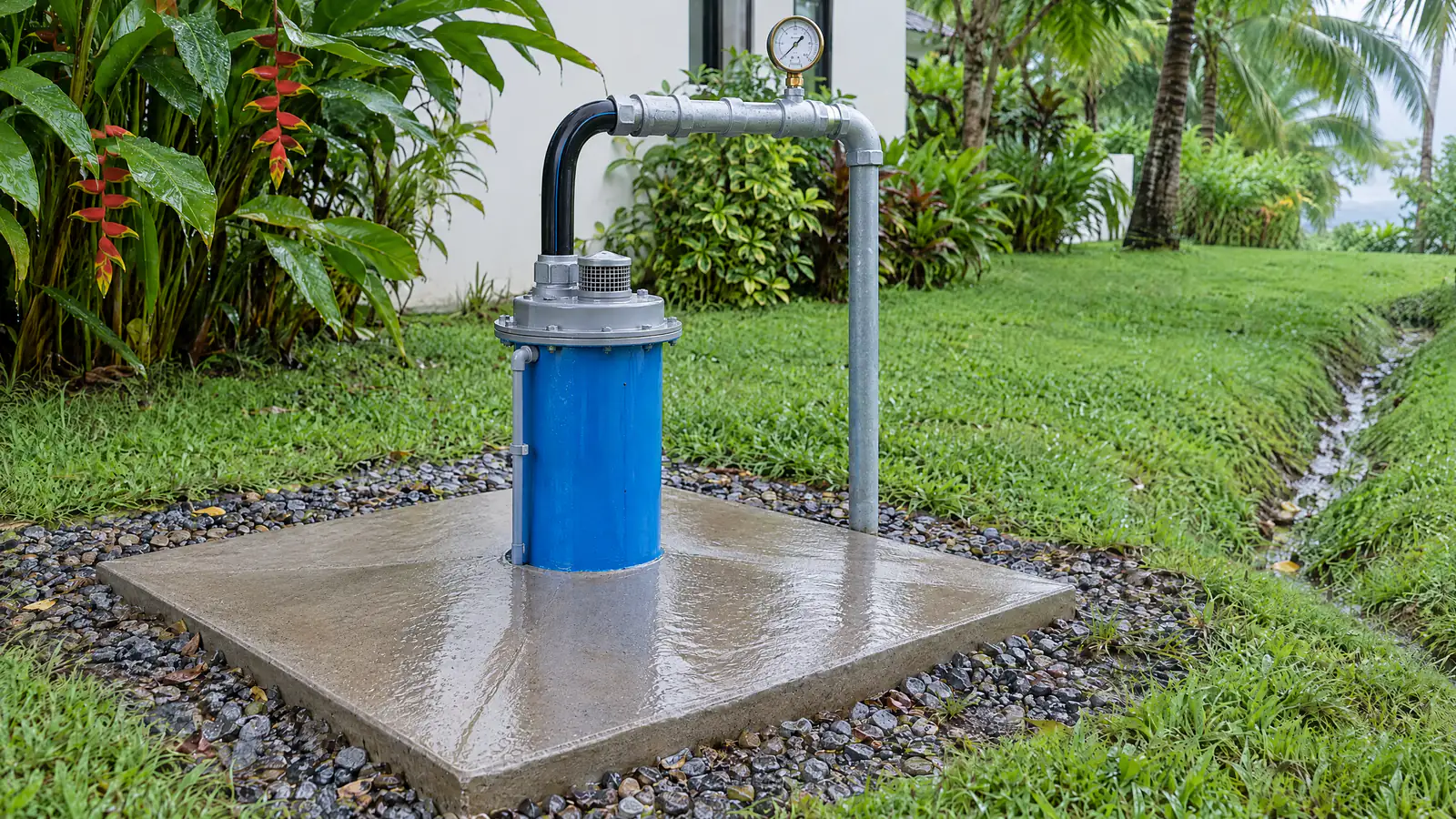
Keeping an idle well safe is not demanding. The casing should stand above ground, with a sound apron that sheds water away from it, and a proper well cap: sealed against the casing, vented, and lockable or bolted so nobody lifts it on a whim. The old pump should be out and the top of the casing should be in good condition. Electrical supply to the pump circuit should be isolated at the panel and labelled. The well should be marked on the property drawing with its depth and construction, so the next owner inherits a known asset rather than a mystery. Our guide to a borehole's lifecycle covers the documents worth keeping. Before the well is put back into service after a long idle period it should be inspected, cleaned, disinfected and tested, because stagnant water in an unused bore is not what the aquifer is producing.
How a bore is properly decommissioned
The purpose of decommissioning is to put back the separation the drilling removed: between the surface and the groundwater, and between the formations the bore passes through. That means filling the entire bore with a sealing material that stays in place, placed so that there are no voids, and finishing it so that nothing at the surface can find its way down. The accepted principles are the same in every guideline we work from. All pumps, pipe and debris are removed first. The sealing material, a cement grout or a bentonite clay product, is placed from the bottom of the bore upwards through a tremie pipe, so it displaces the water rather than falling through it and bridging halfway down. In some cases the casing is perforated or partly withdrawn so the seal bonds to the rock rather than only to the steel. The casing is cut off below ground level, the top is capped with grout or concrete, and the surface is restored so the well is no longer a feature of the plot.
Cross-section
Active, unprotected, decommissioned
The same bore in three states. Left: a working well, sealed at the top. Middle: unused and open, with the two paths contamination takes. Right: properly closed, with the separation between layers restored.
1
Cap and apron (active)
A sealed, vented cap and a concrete apron keep the surface out while the well is in use.
2
Grout seal in the annulus
Cement placed between the casing and the rock when the well was built; it stops shallow water running down the outside of the casing.
3
Pump and riser
Hanging below the water level; pumped regularly, the well stays flushed and any change is noticed.
4
Open top (unused)
A missing cap and a broken apron give runoff, debris and animals a direct route into the bore.
5
Corroded casing
Holes at the ground line let shallow, dirty groundwater straight into the column.
6
Vertical movement
An open bore connects layers the rock kept apart: shallow water moves down to the deep aquifer and between fracture zones.
7
Casing cut below grade, surface restored
The steel ends below ground and the top is sealed, so nothing at the surface can find the bore again.
8
Sealed from the bottom up
Grout or bentonite placed through a tremie pipe from the bottom, so the whole column is filled without voids.
9
Recorded
Depth, method, materials and date go on the property file, with the well's location on the plan.
Schematic, not to scale. Who must be notified when a well is sealed depends on the permit it was drilled under; check before work starts rather than assuming.
Why a bucket of concrete in the top is not a method
The most common attempt at closing a well is a plug of concrete, or a few bags of soil, pushed into the top of the casing. It looks finished and it achieves almost nothing. Below the plug the bore is still an open column connecting every layer it passes through, so water still moves between formations and anything that reaches the casing, through a corrosion hole for example, still goes down. Concrete shrinks slightly as it cures and pulls away from the casing wall, leaving a path around it. Loose fill bridges on the way down and leaves voids. And a plugged top hides the bore from the next person without closing it, which is the worst of both outcomes. Proper sealing is a continuous column from the bottom, which cannot be done from the surface with a shovel.
Documentation and the next owner
Whichever route the well takes, write it down. For a preserved well: location, depth, construction, date of last use, condition at the last inspection and the latest water test. For a sealed well: location, depth, the sealing material and method, who did it and when. Keep it with the property documents and show the well on the site plan. A buyer who finds an unexplained casing in the garden will, quite reasonably, price in a problem; one who finds a record will not. Our guide to buying a villa with a well looks at the same question from the other side. If the well was drilled under a groundwater permit, find out what that permit requires when the well is taken out of service; the rules differ by case and we do not summarise them here.
If there is a bore on your property that nobody uses, our well inspection team can assess its condition and tell you honestly whether it is worth preserving, rehabilitating or closing, and carry out the sealing properly if that is the answer.
Common questions
Can I just cap the old well and leave it?
If you may use it again, yes, provided the cap is a proper sealed, vented well cap, the apron is sound, the old pump is out and the well is recorded on your property plan. A brick, a bucket or a bag is not a cap. If the well will never be used again, it should be sealed, not just covered.
Why does an unused well matter if I'm not drinking from it?
Because the groundwater is shared. An open or corroded bore lets surface runoff and shallow polluted water into the aquifer, and lets water move between layers the rock kept apart. The effect shows up in neighbouring wells, and in your own new well if you drilled one nearby.
What does proper decommissioning involve?
Removing the pump, pipe and any debris, then filling the whole bore from the bottom up with cement grout or bentonite through a tremie pipe, cutting the casing below ground, sealing the top and restoring the surface. It is done by a drilling contractor with the equipment to place the seal correctly, and it is recorded.
Can an abandoned well be brought back into use instead?
Often, if the casing is sound. An assessment checks depth, casing condition and water level; the old string is pulled, the well is cleaned and disinfected, a pumping test confirms yield and a laboratory test confirms the water. Only then is a new pump worth installing.