Low water pressure in a villa: finding where the pressure is lost
Weak showers are a symptom with half a dozen possible causes between the storage tank and the tap. The fastest way to the right fix is to notice when the pressure is low, where, and whether the tank is full at the time. This guide turns those three observations into a diagnosis.
August 19, 2026 · 9 min read
Low pressure is usually reported as one problem and is usually one of several. A villa is a chain: water comes from a source into storage, a booster pump draws from the tank, a pressure switch or controller decides when it runs, the pipework carries it through filters and up the floors, and each fixture has its own valves, mixers and aerators. Pressure can be lost at any of those links, and each one leaves a different pattern. The patterns are what this guide is about.
Pressure, flow and water in the tank are three different things
Pressure is how hard the water pushes at a closed tap, measured in bar. Flow is how much comes out when the tap is open, in litres a minute. Availability is whether there is water in the tank to push at all. A booster can hold a fine pressure with one tap open and fail to keep it up when the villa demands more flow than it can give. A full tank says nothing about the booster, and a strong booster says nothing about whether the well is keeping the tank full. Most wrong fixes come from treating one of these as another: a bigger pump bought for a tank that is running empty, or a new well pump for a shower whose head is full of scale.
Diagnosis
Where is the pressure being lost?
Work down the questions in order. Each one points either to the next or to the part of the system worth a closer look. None of it needs opening electrical equipment.
1
Is the storage tank full when the pressure is low?
Check the level gauge or look in the tank at the time of the problem, not the next morning.
If yes
The source is keeping up. The problem is on the house side: carry on down.
If no
This is a supply problem, not a pressure one: the well, its pump or the refill control is not keeping up with use.
2
Is the pressure low at every fixture?
Compare a ground-floor tap, an upstairs shower and the kitchen.
If yes
Something common to the whole house: the booster, its setting, a filter or the main pipe.
If no
A local restriction: that fixture's mixer, aerator, valve or its branch pipe.
3
Does it fall only when several outlets run together?
One shower is fine, two showers and the kitchen are not.
If yes
The system cannot deliver the flow: booster duty, pipe size or a loaded filter.
If no
Pressure is low even at small draws: setting, control or a blockage.
4
Does the gauge at the booster read normal while the tap is weak?
If a gauge is fitted on the booster discharge, note what it shows during the problem.
If yes
The pump is making pressure; it is being lost on the way: filters, pipework, height, fixtures.
If no
The booster or its control is not producing pressure: a technician should check it.
5
Does the pressure surge and dip in a cycle?
Strong, weak, strong again every few seconds or minutes.
If yes
A pressure-vessel or switch problem, often with the pump starting too often.
If no
Steady but low pressure: look at the outcomes below.
Where it points
Local restriction
Clean or replace the aerator or shower head, check the fixture's isolating valve and mixer cartridge.
Pipework or filters
Loaded filter cartridges or media, a partly closed valve, or a pipe too small for the run and the height.
Booster and control
Pump duty too small, wrong pressure setting, worn pump, or a pressure vessel that has lost its charge.
Source and refill
The well, its pump or the tank fill control is not keeping the storage topped up.
Electrical panels and pump controls are for a qualified technician. Everything in this chart can be observed from a tap, a tank and a gauge.
Reading the symptom
Weak everywhere, all the time
If every tap is weak even when only one is open, the system is not making enough pressure in the first place. Look at the booster: is it set to a pressure that makes sense for the height of the house, does its gauge reach that pressure, is a valve on its discharge partly closed? Then look downstream for a common restriction such as a sediment filter that has not been changed or a softener that is overdue for service. Our guide to whole-house filtration shows how much pressure a loaded treatment train can take.
Strong at first, then fading
A shower that starts strong and weakens over a minute or two is usually draining a pressure vessel faster than the pump can refill the system, which means the pump cannot keep up with that flow. Occasionally it is the storage itself running low during a long draw. Watch the tank level and the gauge together during the shower: if the level holds and the gauge falls, it is the pump; if the level drops away, it is the supply.
Only one shower or tap
A single weak fixture is almost never the pump. Mineral scale in a shower head or aerator, a half-closed service valve under the basin, a mixer cartridge clogged with grit, or a long thin branch pipe to the furthest bathroom are the usual causes. On well water with iron or hardness, aerators and rain-shower heads clog first. The cure is local and cheap, and the rest of the system is fine.
It drops when two showers run
If one outlet is fine and the pressure collapses when a second or third opens, the system cannot deliver the combined flow. Either the booster was sized for a smaller demand, the main pipe is too small for the flow, or a filter in the line is restricting it. This is the classic symptom of a house that grew, or a booster bought by horsepower, and our guide to choosing a booster pump explains how the duty point should be worked out.
Pressure surges and dips in a rhythm
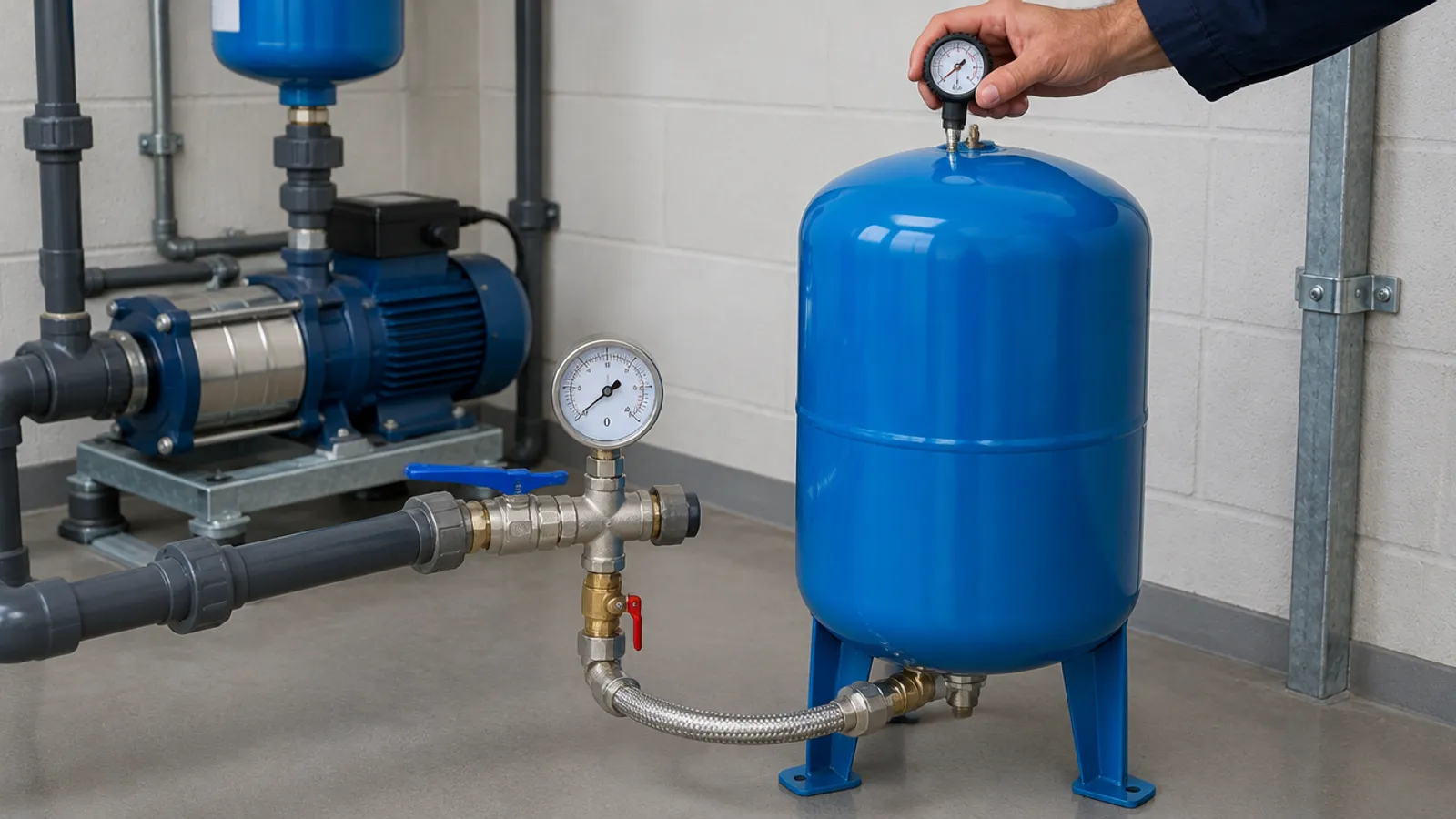
Pressure that swings between strong and weak in a regular cycle comes from the pressure control, not the source. A pressure vessel that has lost its air charge or a switch set with too narrow a gap makes the pump start and stop constantly. It is uncomfortable in the shower and hard on the pump. Our guides to pumps that keep turning on and off and to pressure tanks cover the fix.
The tank keeps running empty
If the storage is low or empty when the pressure fails, the booster is starved and nothing on the house side will fix it. The question becomes why the tank is not refilling: a well that gives less in the dry season, a well pump that is wearing or tripping, a float switch that stops the fill too early, or simply more use than the source can supply. That is a supply diagnosis, covered from the source side in our guide to how a villa water system works.
What you can safely check yourself
The tank level at the moment the pressure is low.
Whether the problem is everywhere or at one fixture, and upstairs more than downstairs.
Whether it gets worse when several outlets run together.
The reading on the booster's gauge, if one is fitted, during the problem and with all taps closed.
Shower heads and aerators: unscrew, rinse or descale, refit.
When the filters were last changed or serviced.
Leave the electrical side alone. Pump controls, pressure switches and panels carry mains voltage, and adjusting a switch without measuring the vessel's air charge can make cycling worse. Write down what you saw and when; it shortens the visit.
If you would like a technician to trace it, tell our pump team when the pressure drops and whether the storage tank is full at the time. That alone separates a source problem from a house-side one, and tells us what to bring.
Common questions
Why is my water pressure low even when the storage tank is full?
Because a full tank only means the source is keeping up. Pressure is made by the booster pump and lost along the way through filters, pipes, height and fixtures. Check whether the booster's gauge reads normal; if it does, the pressure is being lost downstream.
Is low water pressure always a pump problem?
No. Clogged shower heads and aerators, loaded filters, half-closed valves, undersized pipework and a pressure vessel without its air charge all cause low pressure with a healthy pump. A single weak fixture is almost never the pump.
Why does pressure drop when two showers run?
The system cannot deliver the combined flow. Either the booster's duty is too small for the villa's peak demand, the main pipe is too small, or a filter is restricting the flow. One shower works because it asks for less.